The $100,000 Condo in Phnom Penh: A Visa-Shaped Tier
Cambodia's CM2H visa sets its property minimum at exactly $100,000. That single number pulls supply and pricing toward this rung for reasons unrelated to value.
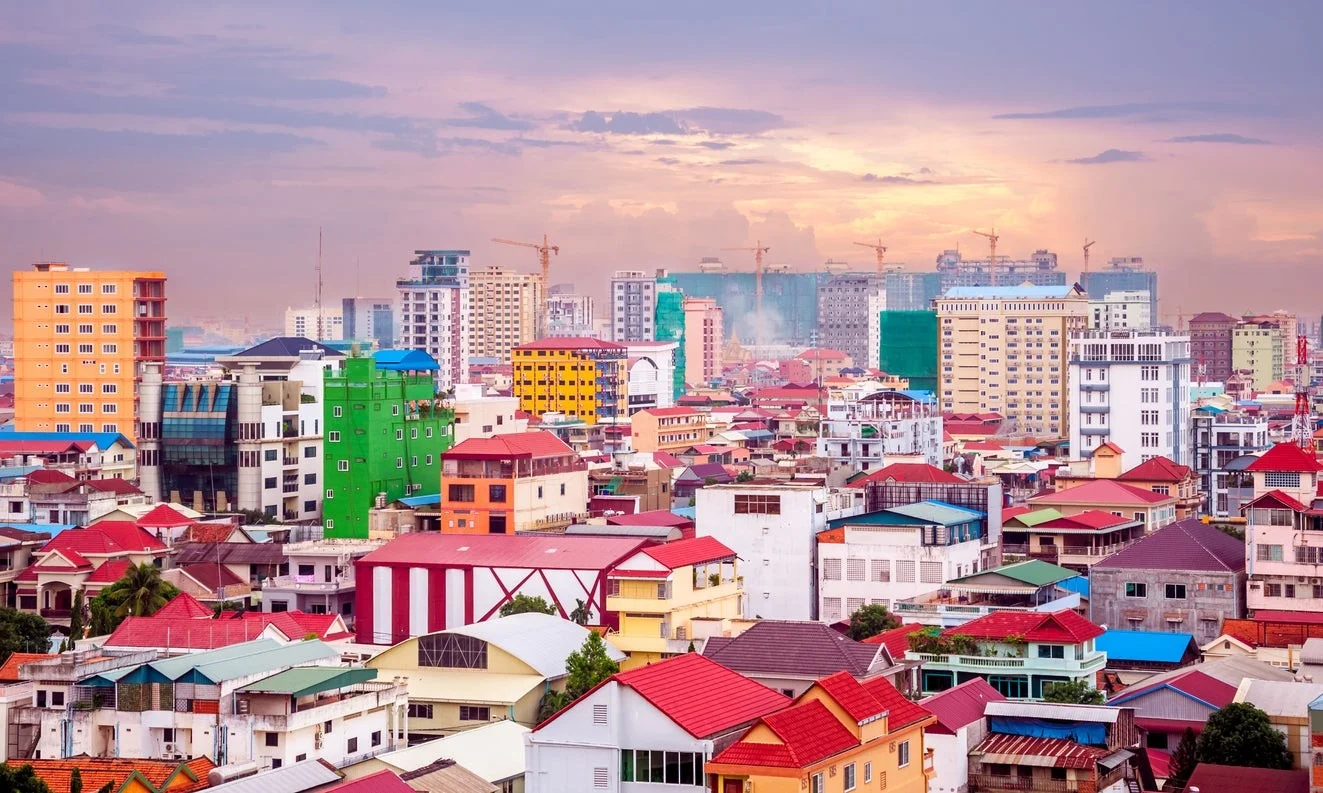
Quick answer: $100,000 is the busiest rung on the Phnom Penh ladder, and part of the reason has nothing to do with property. Cambodia’s CM2H long-stay visa sets its real-estate minimum at exactly US$100,000, so supply and pricing bunch against that bar. Buying here means competing with people who are not really buying an apartment.
Ask why Phnom Penh has so many one-bedroom units priced within a few thousand dollars of each other and the honest answer is not construction cost. It is a threshold in an immigration programme.
Why does so much stock cluster at exactly $100,000?
Cambodia My 2nd Home launched in July 2022, administered by the General Department of Immigration in partnership with the Khmer Home Charity Association. Its property route requires a minimum of US$100,000 into an approved real-estate project.
| CM2H element | Term |
|---|---|
| Minimum real-estate investment | US$100,000 into an approved project |
| Visa granted | 10-year renewable, multiple entry |
| Minimum stay | None |
| Work and study | Permitted, work with a work permit |
| Citizenship application | After 5 years of CM2H approval, against the standard 7-year route |
| Status | A long-validity visa, not permanent residency |
| Restricted nationalities | Iran, Iraq, Lebanon, North Korea, Syria |
A threshold like that does two things to a market. It gives developers a target to price against, so units get specified to land just above $100,000 rather than wherever cost and demand would have put them. And it introduces a group of buyers for whom the apartment is the means rather than the end.
The programme itself is covered in the CM2H guide, and the wider residency question in can you get residency by buying property.
What the visa threshold does to pricing
A buyer whose objective is a ten-year visa is not price-sensitive in the ordinary way. They need to clear $100,000 in an approved project; paying $103,000 rather than $96,000 is not a 7% overpayment to them, it is the difference between qualifying and not.
That has three consequences worth naming plainly:
The band immediately above the threshold is firmer than fundamentals justify, because it has a floor of demand that does not negotiate. The band immediately below it is softer, because a unit at $92,000 has lost the visa buyer without gaining anything else. And approved-project status becomes a pricing input in its own right, since qualifying purchases must sit in projects vetted through the approved list.
For an investor, that means the honest comparison is not between two $100,000 units. It is between a $100,000 unit inside the visa-driven band and a $92,000 unit outside it that may be better property. Vetting of the approved list is reported to cover developer financial standing, permits, title documentation and fund protection, worth having on a shortlist regardless of whether you want the visa.
What $100,000 buys, and why it all looks the same
| District tier | Price per sqm | What $100,000 gets you |
|---|---|---|
| Entry and outer | About $1,100 to $1,400 | 71 to 91 sqm |
| Citywide average | About $1,800 | About 55 sqm |
| Prime, BKK1 and Tonle Bassac | $2,300 to $3,200 | 31 to 43 sqm |
| BKK1 core | $2,800 to $3,500 | 28 to 36 sqm |
| Market one-bedroom, about 50 sqm | n/a | $80,000 to $110,000 |
The last row is the whole problem. The market’s standard one-bedroom lands squarely on this budget, so the overwhelming majority of buyers at this rung buy the same object: roughly 50 square metres, one bedroom, mid-rise to high-rise, volume tower, mid-market district.
Identical products compete on one variable. Your unit does not have a better kitchen than the 200 others in the same building: it has a lower asking price, or it does not let.
The rung below is covered in condos under $50,000, the rung above in the $200,000 crossover, and the product itself in the one-bedroom guide.
How do you differentiate a commodity unit?
The only defences are things a competing unit cannot copy.
| Differentiator | Can the next tower replicate it | Worth paying for |
|---|---|---|
| Outlook that cannot be built out | No, it is a fact about the site | Yes, the strongest one available |
| Corner or dual-aspect layout | Only if it has corners left | Yes |
| Floor level with genuine scarcity | Rarely | Moderately |
| Building with a funded sinking fund and a spending record | Not quickly | Yes, and it is underpriced |
| Fit-out and appliances | Trivially, and cheaper | No, it depreciates |
| Furniture package | Immediately | No |
Buyers at this level consistently overpay for the bottom two rows and underpay for the fourth. A building whose reserve fund has actually spent money on maintenance over five years is worth more than a marble lobby, and almost nobody prices it that way.
Shortlisting at $100,000? We will separate the units priced for the visa bar from the ones priced on merit, read the sinking fund's spending record, and tell you which differences will still exist at resale.
Sort the shortlistWhat net yield survives at this ticket?
| Step | Effect | Running |
|---|---|---|
| $100,000 one-bedroom at $500 a month, fully let | $6,000 a year | 6% gross |
| Vacancy of about 15% citywide | Minus $900 | $5,100 |
| Service charge near $1.50 per sqm on 50 sqm, all year | Minus $900 | $4,200 |
| Withholding at 14% on gross rent, non-resident | Minus $714 | $3,486 |
| Net on price, before management | About 3.5% | |
| Resident owner at 10% on gross rent instead | About 3.7% |
For context on the rent assumption: the citywide average for an unserviced one-bedroom is about $375 a month, a modern prime one-bedroom runs $400 to $700, and BKK1 listings reach $650 to $1,350. A $500 assumption at this budget is reasonable in a good mid-market building and optimistic in a weak one, and the difference between $400 and $500 moves the net by more than a point.
Advantages and disadvantages of the busiest price point
The advantages are liquidity and choice. This is the deepest part of the market, so a buyer has genuine negotiating leverage, a wide shortlist, and the largest pool of potential tenants and future buyers of any rung. Financing exists here in a way it does not lower down: observed foreign-buyer programmes price near 7% in the first year and a point above that afterwards, on 30% to 40% down. And the CM2H route is available if the buyer wants it.
The disadvantages follow from the same depth. The product is standardised to the point of interchangeability, so rent growth is capped by the neighbour who will undercut you. Part of the price is a policy threshold rather than value, and that support would disappear if the programme’s terms changed. Empty stock across Phnom Penh runs to somewhere between 15,000 and 20,000 units against annual absorption of 3% to 4%, and this rung holds the bulk of it. Net yields in the 3.5% range are unremarkable against the risk.
What happens to this tier if the threshold moves?
A price point propped up by a policy number carries a risk the rest of the ladder does not, and it deserves to be stated rather than assumed away.
CM2H is four years old. Its terms, the $100,000 minimum, the 10-year visa, the 5-year citizenship eligibility, are administrative rather than statutory, and programmes of this kind across the region have been repriced, tightened and occasionally suspended at short notice. Cambodia’s separate permanent-residency track is reported capped near 500 approvals a year, which is a reminder that the state manages these volumes deliberately.
Three scenarios are worth pricing. If the minimum rises, today’s $100,000 stock falls below the bar and loses its visa buyer, while stock at the new level gains one. If the minimum falls, the support spreads downward and this rung loses its distinctiveness. If the property route is narrowed to a shorter approved list, units outside it are repriced on fundamentals alone.
None of these is a forecast, and the programme may well run unchanged for a decade. The point is that a buyer at this rung should be able to say what their unit is worth without the visa attached, because that is the number they own. If the answer is uncomfortable, buy at a rung where the price is made of property.
Who is your exit buyer at $100,000?
Three pools, and it is worth knowing which one you are relying on.
The visa buyer is the most reliable, provided your unit is in an approved project and clears the threshold at resale, which means a unit bought at $100,000 and resold at $97,000 has lost that buyer entirely, an asymmetry unique to this rung.
The foreign investor is comparing your unit against new stock with a payment plan, and will need a discount to prefer yours.
The Cambodian owner-occupier is a real and growing pool at this level but still prefers landed property at similar money, so treat it as upside rather than as the base case.
Exit mechanics are set out in resale liquidity.
What to verify at this level
At $100,000 you are buying in the deepest and most competitive band in the city, which means comparable evidence exists and there is no excuse for accepting a projection. Pull the district figures from district rental yields, the deduction sequence from net versus gross yield, and the ownership mechanics from foreign ownership and strata title before you shortlist anything.
Establish whether the unit is in a CM2H-approved project and whether that matters to you, because you may be paying for the status either way. Ask for the building’s foreign quota by area, dated. Get three years of sinking-fund accounts and look at what the fund has spent, not just what it holds.
Then do the thing almost nobody does at this rung: count the directly comparable units. Walk the building and the two towers nearest it, and write down how many units of matching size and specification are on the market today, to let and to buy. That number is your competition on both rent and resale, and it is the single best predictor of how this purchase performs.
The order to work through it in is set out in due diligence.
Frequently Asked Questions
Cambodia My 2nd Home, the long-stay visa launched in July 2022, sets its real-estate minimum at exactly US$100,000 into an approved project. Developers price to clear that bar, so a band that would otherwise be continuous has a step in it.
It gets a 10-year renewable multiple-entry visa with no minimum-stay requirement, not permanent residency. CM2H also opens a citizenship application after 5 years against the standard 7-year route, though approval stays discretionary. The purchase must be in an approved project.
About 55 square metres at the $1,800 citywide average, but only 28 to 36 square metres in BKK1 at $2,800 to $3,500. Market pricing for a one-bedroom of around 50 square metres runs $80,000 to $110,000, which is why this rung is dominated by a single product.
About 3.5% for a non-resident. A $100,000 one-bedroom letting at $500 a month grosses 6%; 15% vacancy, a service charge running all twelve months and 14% withholding on gross rent take it to roughly 3.5% before management.
The product is close to identical across hundreds of units: a 50 square metre one-bedroom in a volume tower. Identical products compete only on price, which caps rent growth and makes resale a matter of being the cheapest listing rather than the best one.
Buy what the next tower cannot replicate: an outlook that cannot be built out, a corner or dual-aspect layout, a floor level with real scarcity, and a building whose sinking fund has a spending record. Fit-out is the weakest differentiator because it is the easiest to copy.
Get a Cambodia property shortlist
Share your budget, target district (BKK1, Koh Pich, Koh Norea, Siem Reap), and goal. We reply within one business day with matched stock and next steps.