Can Foreigners Buy Land in Cambodia? Routes and Risks
Foreigners cannot own land in Cambodia. The four routes that give land exposure instead, compared on control, annual cost and exit risk for 2026.
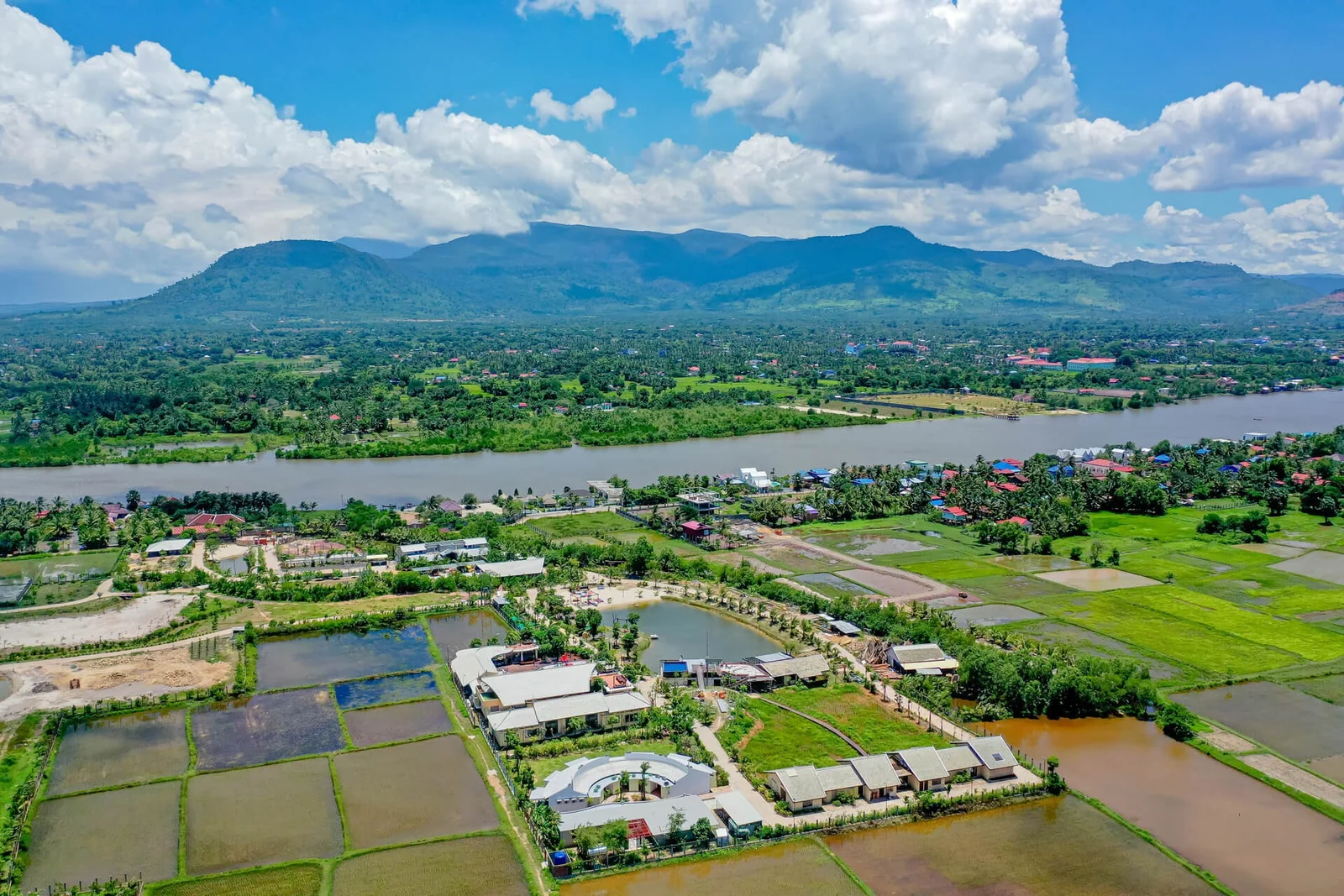
Quick answer: Foreigners cannot own land in Cambodia. Land freehold is reserved for Cambodian nationals and Cambodian-majority entities. The four practical routes to land exposure are a registered long lease of 15 to 50 years, a landholding company with 51% Cambodian shareholding, a licensed trust, and a nominee arrangement that we advise against.
This page is about land only. If you are looking at a condo, the answer is simpler and better, and it lives in the eligibility guide.
Land is where Cambodian property law is least flexible and where foreign buyers most often talk themselves into a structure they do not fully understand. The routes below all work, in the sense that they are used daily by serious investors. What separates them is how much control you actually hold and how cleanly you can exit.
Can foreigners buy land in Cambodia?
No foreign national may hold land freehold in Cambodia, and no structuring changes that rule. What foreign buyers can hold is freehold strata title on private units above the ground floor, under the Law of 24 May 2010 and Sub-Decree No. 126 (2009), capped at 70% of total private-unit area. Land itself stays closed.
| Route | What you hold | Typical term | Exit route |
|---|---|---|---|
| Registered long lease | A registered right to use and develop | 15 to 50 years, renewable | Assign the lease |
| Landholding company | Up to 49% of a company that owns the land | Indefinite | Sell shares or the asset |
| Licensed trust | A beneficial interest held by a trustee | Per trust deed | Transfer beneficial interest |
| Nominee arrangement | A private promise, weakly enforceable | Undefined | Depends on goodwill |
| Strata unit above ground floor | Freehold title in your own name | Indefinite | Standard resale |
Read the five routes as a buyer scenario ladder rather than a menu:
- Lease is the cheapest and the only one with an expiry date.
- Company is the most flexible and the most expensive to keep alive.
- Trust is the most regulated and the narrowest to resell.
- Nominee is the cheapest and the weakest, and we advise against it.
- Strata unit is freehold in your own name and is not land at all.
The last row is included deliberately. A significant share of buyers who arrive asking about land are trying to solve a problem that strata title already solves, and they end up in a complex structure for an outcome they could have had in their own name.
Long lease: what 50 years actually gives you
A registered long lease of 15 to 50 years gives foreign buyers the right to occupy, develop, sublet and assign the land, without any transfer of title. Registration against the title at the cadastral office is what separates a lease that survives a dispute from a private contract that does not.
| Lease feature | What to insist on | What it costs you if missing |
|---|---|---|
| Registration on the title | Annotation, not a signed contract | Unenforceable against a future owner |
| Term | The full 50 years available | Shorter term, weaker resale |
| Renewal mechanism | Defined price and process | Renewal at the owner’s discretion |
| Assignment right | Free assignment to a buyer | No exit route |
| Improvements at expiry | Written treatment | Buildings revert with the land |
Leasehold is the closest thing to ownership that Cambodian law offers a foreign national over land, and its weaknesses sit at the two ends of the term. At the start, an unregistered lease is a private agreement whose enforceability against a third party, including a future buyer of the freehold, is questionable. At the end, a renewal option is only as good as the counterparty and the drafting: a term of 50 years signed in 2026 runs to 2076, in a legal environment nobody can forecast. Buyers who intend to build should model the improvement value at expiry, because most drafting returns the improvements with the land. Practical mitigation is a registered lease, a term at the 50 years maximum, a renewal mechanism with defined pricing, and a residual value of zero in your model rather than a negotiating point for your heirs.
Registration is the whole difference between a right and a promise.
Three checks before you sign a lease:
- Ask to see the annotation on the land title, not the lease document.
- Confirm the term is the full 50 years, with a renewal mechanism priced in the deed.
- Model the improvement value at expiry as zero unless the deed says otherwise.
Insider tip: check whether the lease is registered against the title itself or merely signed between the parties. Ask your lawyer to show you the annotation on the land title, not the lease document. Sellers frequently conflate the two, and only one of them binds a future owner of the land.
Send the plot, the structure on the table and the draft documents. We flag control, renewal and exit gaps before you commit.
Review my land structureLandholding company: the 51/49 structure
A landholding company is a Cambodian company in which nationals hold at least 51% of the shares and foreign buyers up to 49%, with the company itself owning the land outright. Control comes from the constitution, the share classes and registered security, rather than from the 49% shareholding.
| Element | What it does | What to insist on |
|---|---|---|
| Share classes | Separates economic and voting rights | Defined reserved matters |
| Company constitution | Sets who decides what | Foreign veto on asset disposal |
| Share pledge or mortgage | Secures the foreign position | Registered security, not a side letter |
| Local shareholder identity | Determines counterparty risk | Institutional or professionally advised |
| Annual compliance | Keeps the structure alive | Budget for audit, filings and tax |
Percentage is not control here; documents are. In our underwriting a 49% stake with registered security beats a 49% stake with a warm relationship every time.
This is the compliance checklist that keeps the structure alive:
- Register the security over the 51% shareholding, not a side letter.
- File annual accounts and complete the audit every year without exception.
- Keep reserved matters in the constitution, including any disposal of the land.
- Budget the recurring cost before you buy, in writing.
The structure is legitimate and widely used, and it is also the most expensive route on this page to maintain.
Registration fees, annual audit, statutory filings and the tax treatment of a Cambodian company all add recurring cost that a strata purchase at 4% transfer tax simply does not carry, and the cost continues in every year the land produces no income. Structures fail for two mundane reasons rather than any legal ambush. Either the security over the 51% shareholding was never registered, leaving the foreign investor with a side letter, or nobody budgeted the annual compliance and the company drifted into default while the investor assumed the lawyer was handling it. Both failures are cheap to prevent at formation and expensive to fix afterwards, which is why a written annual cost estimate belongs in the decision before the plot is chosen. Compare the routes in detail in lease versus nominee versus trust.
Trusts: the newest route and its 2026 numbers
A trust is an arrangement in which a licensed Cambodian trustee holds land for a foreign beneficiary. The mechanism has scaled quickly: by early 2026 the Trust Regulator reported more than $2.46 billion of assets under trust, with real estate the majority and foreign investors a substantial share of beneficiaries.
Fees are annual, so the structure carries a running cost of its own, typically quoted as a percentage of asset value. Our clients treat that figure as part of the purchase price rather than an administrative extra.
Four questions decide whether a trust suits your plot:
- Is the trustee licensed by the regulator, and can you see the licence?
- What is the annual fee, and does it rise with the value of the asset?
- Who can instruct a sale, and what happens on your death?
- Who is the realistic buyer of a beneficial interest at exit?
The trust route is the newest of the four and carries a real checklist:
| Trust element | Practical effect |
|---|---|
| Licensed trustee | Regulated counterparty instead of a private individual |
| Trust deed | Defines control, distributions and succession |
| Annual fees | Ongoing cost, quoted per year rather than once |
| Beneficial interest | What you sell at exit, a narrower market than title |
| Registration | Trust registered with the regulator |
Trusts are attractive because they separate legal ownership from beneficial interest through a regulated intermediary, which addresses the central weakness of the nominee route. Annual trustee fees replace the one-off cost of a lease, the trustee must be licensed by the regulator, and the deed does the work a company constitution does in the corporate route. Assets under trust reached $2.46 billion by early 2026. What the structure does not do is turn land into a freely tradeable asset. Selling a beneficial interest is a narrower market than selling a $150,000 strata unit, and the buyer pool for a trust-held plot is smaller again than the pool for the same plot sold to a Cambodian national at any price. The trust structure guide covers the mechanics and the fee load.
Nominee arrangements and why they fail
A nominee arrangement means land held in a Cambodian individual’s name, with a private agreement stating that the foreign buyer is the real owner. The practice is common at every price point from $30,000 plots upward, and the enforceability of that promise is the weakest of any route on this page.
- Marriage and family breakdown is the most frequent trigger for loss.
- Death of the nominee brings heirs who never agreed to anything.
- Debt of the nominee can expose the land to their creditors.
- Sale by the nominee to a third party who registers first is difficult to unwind.
- Side letters rarely survive contact with a Cambodian court, whatever the plot cost.
Nothing in that list requires bad faith by the nominee. Three of the five triggers happen to honest people.
Failure is not hypothetical at this end of the market. Our analysis of nominee disputes points to the same five triggers, in roughly the same order, regardless of plot value.
Each of the four triggers below is a red flag we have seen play out on plots between $30,000 and $400,000:
| Failure trigger | What happens to your position |
|---|---|
| Relationship breakdown | Side agreement tested in a Cambodian court |
| Death of the nominee | Heirs inherit the land, not your agreement |
| Nominee debt | Creditors can reach the land |
| Unauthorised sale | A registered third-party buyer is hard to unwind |
Buyers considering a Khmer spouse arrangement should treat it as a nominee structure and read it in that light. Affection is not a security instrument, and Cambodian law does not create a marital interest in land for a foreign spouse. Where a couple genuinely intends joint ownership, the workable answer is usually a registered long lease from the spouse to the foreign partner, or a strata unit held in the foreign partner’s own name, so that both parties hold something an outside court can recognise. The lease costs a registration fee and an afternoon with a lawyer. The alternative costs the asset in the cases where it goes wrong, and those cases are not rare enough to plan around. Landed property with a land component, including borey units, has its own analysis in borey ownership for foreign buyers and in condo versus borey.
What does each land route cost to run?
Annual running cost is what separates these routes, more sharply than setup cost does. A registered lease requires a one-off fee and nothing after that, a landholding company carries audit, filings and tax compliance every year, and a trust carries a trustee fee for as long as the structure exists, typically quoted per year.
| Route | Cost at setup | Cost every year | Who bears it |
|---|---|---|---|
| Registered long lease | Registration fee and legal drafting | None material | Lessee |
| Landholding company | Incorporation, legal, security registration | Audit, filings, tax compliance | Shareholders |
| Licensed trust | Trust deed and onboarding | Trustee fee | Beneficiary |
| Nominee | Minimal | None visible, unlimited contingent | You, entirely |
On a plot bought for $150,000, an annual compliance bill of even 1% compounds into a meaningful drag across a 10 year hold, and it is payable whether or not the land produces income. In our underwriting a raw-land position with no income and a 1% annual carry needs roughly 12% of capital appreciation just to break even over that decade.
Three questions belong on the checklist before choosing:
- Will this land produce income, or will the annual cost run against a dead asset?
- Who pays the compliance bill in year 3, when the initial enthusiasm has faded?
- What does the exit look like, and who is the realistic buyer of your position?
Dead-asset carrying cost is the failure mode we see most often in Cambodian land structures, and it is entirely predictable at the outset. A foreign investor sets up a company for a $200,000 plot, pays the incorporation and legal bill, and then discovers that the audit, the filings and the tax compliance recur annually while the land generates nothing. Three or four years in, the compliance lapses because nobody budgeted it, and the structure that was supposed to protect the investment is itself in default. Fixing a lapsed company is more expensive than maintaining one, and a buyer performing diligence on your exit will find the gap. Budget the annual figure in writing before the plot is chosen, and treat it as part of the purchase price rather than an administrative afterthought.
A lease over a plot you intend to build on and use is a different proposition from a company holding raw land for appreciation. The first has a purpose that justifies its cost, the second accumulates cost while waiting for a resale market that in 2026 is thin.
Advantages and disadvantages by route
Every land route trades control against cost, and none of them matches a strata title held in your own name for simplicity.
| Route | Advantages | Disadvantages |
|---|---|---|
| Long lease | Cheap, simple, registrable | Finite term, improvements revert |
| Landholding company | Indefinite, flexible, financeable | Highest running cost, needs discipline |
| Licensed trust | Regulated intermediary, clean deed | Ongoing fees, narrower resale market |
| Nominee | Cheapest, fastest | Weak enforceability, high loss rate |
This page covers the legal routes to holding land. What that land costs to carry each year, how district prices compare and what appreciation a plot has to deliver before the strategy pays are set out separately in the land banking guide.
Buyer scenarios and red flags
Three scenarios cover most land enquiries from foreign buyers, and the correct answer is often to stop looking at land.
- You want a house to live in. A registered long lease or a strata unit usually beats any ownership structure on cost and risk.
- You want development exposure. The landholding company is the route, with registered security and a professional local partner.
- You want capital appreciation on raw land. Consider whether the illiquidity of the exit, on top of the 4% transfer tax and capital gains tax from 1 January 2027, leaves the thesis intact.
| Red flag | What it signals | The check |
|---|---|---|
| ”You can own land through a company, 100%“ | Misstated law | Read the shareholding on the company extract |
| Unregistered lease presented as secure | Weak against third parties | Annotation on the land title |
| Nominee framed as standard practice | Cost of failure not disclosed | Ask what happens if the nominee dies |
| Soft title on the plot | Cannot support a clean structure | Title class in writing |
| No annual cost estimate for a company | Structure will lapse | Written compliance budget |
Our underwriting treats an unregistered lease and an unsecured 51/49 shareholding as the same defect wearing different clothes, which is a promise where an instrument should be. The sequencing of the checks is in the due diligence process, the reason independent counsel is not optional is in do you need a lawyer, and the title class question that sits underneath all of it is in soft versus hard title and the strata title FAQ.
Frequently Asked Questions
No. Land freehold is closed to foreign nationals. Access comes through a registered long lease, a landholding company with majority Cambodian shareholding, or a licensed trust.
Long leases run 15 to 50 years and are commonly written with a renewal option. A registered lease carries rights to use, develop, sublet and assign.
A Cambodian company where nationals hold at least 51% and the foreign investor up to 49%. Control comes from the constitution, share classes and registered security.
Common in practice and legally precarious. Marriage breakdown, death, nominee debt or an unauthorised sale can each cost you the asset.
A licensed Cambodian trustee can hold land for a foreign beneficiary. The Trust Regulator reported over $2.46 billion in trust-held assets by early 2026, mostly real estate.
Private units above the ground floor in a registered co-owned building, within the 70% foreign area cap. Strata title is the only freehold route open to foreigners.
Send the plot, the proposed structure and the draft documents. We flag control, renewal and exit gaps before money moves.
Get a Cambodia property shortlist
Share your budget, target district (BKK1, Koh Pich, Koh Norea, Siem Reap), and goal. We reply within one business day with matched stock and next steps.