Cambodia Property Buying Timeline for Foreign Buyers
How long buying property in Cambodia takes, week by week: reservation, due diligence, registration, title issue, and what delays each stage in 2026.
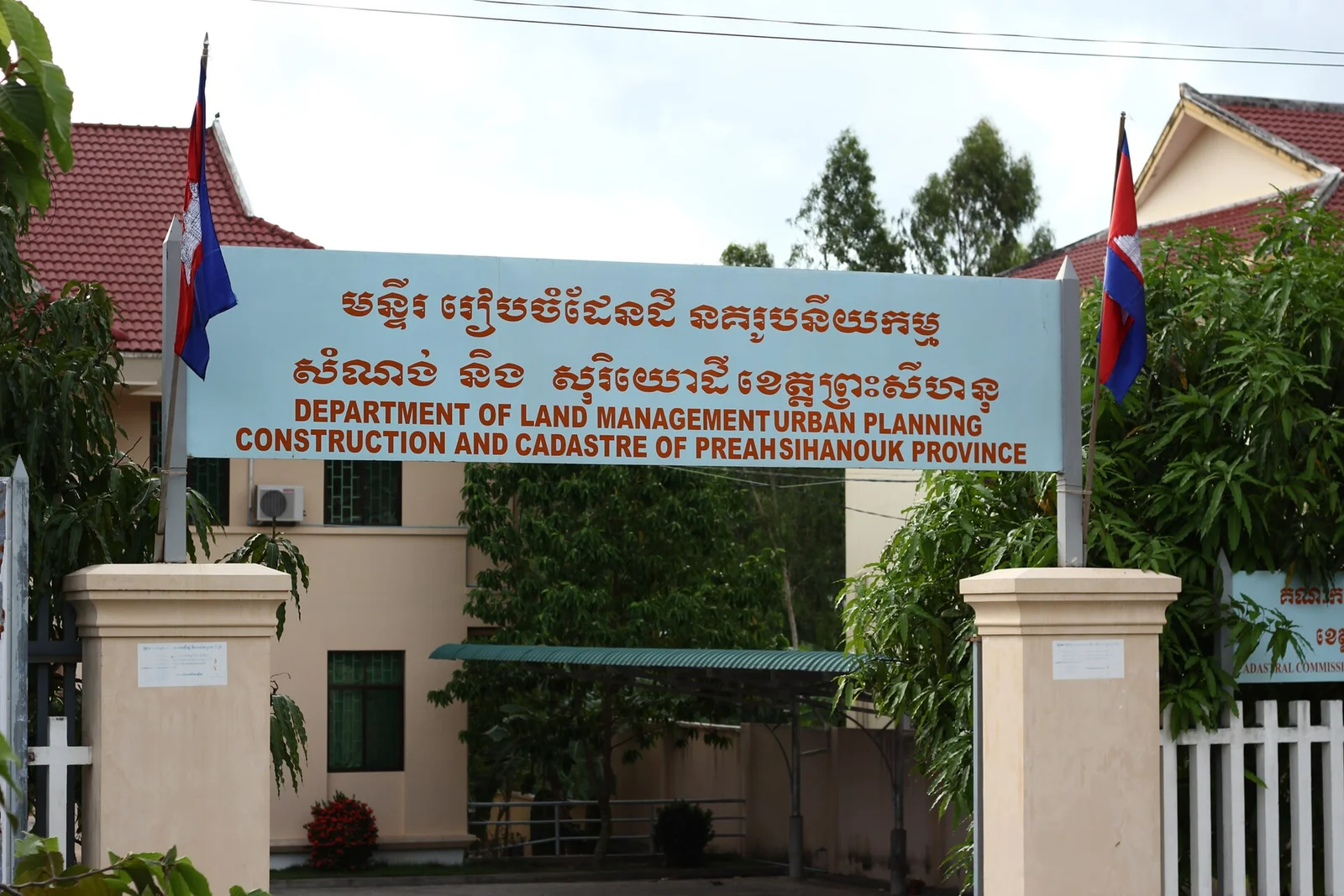

Quick answer: Buying a completed strata condo in Cambodia takes 4 to 8 weeks from accepted offer to registered title. Reservation and SPA drafting take 2 to 4 weeks, registration at the Ministry of Land Management takes 3 to 4 weeks, and the physical title follows 1 to 2 weeks later. Off-plan follows construction milestones instead and is measured in years.
Most guides to buying in Cambodia describe the steps. Very few tell you how long each one takes, which is the question that actually matters when you are booking flights, planning a transfer, or deciding whether you can complete before the stamp duty window closes on 31 December 2026.
This guide puts a duration on every stage.
How long does buying take in Cambodia?
A completed strata condo takes foreign buyers 4 to 8 weeks from accepted offer to registered title, and hard title landed property runs around 12 weeks through the cadastral office. The honest answer depends on what you are buying, and the spread is wide enough that assuming a single figure will misplan your trip.
| Purchase type | Offer to registered title |
|---|---|
| Completed strata condo, straightforward | 4 to 8 weeks |
| Completed strata condo, with complications | 4 to 12 weeks |
| Hard title landed property | Around 12 weeks |
| Off-plan condo | Construction period, then transfer |
A completed strata condo is the fastest path available to a foreign buyer, and 4 to 8 weeks compares well against most of Southeast Asia. The speed comes from the strata system: the unit is already registered as a separate legal entity, so the transfer is an administrative change rather than a subdivision.
Landed property under hard title moves through the cadastral office instead, and that route takes around 12 weeks. Buyers who assume a villa will complete on condo timelines routinely misplan by two months.
What does the week by week timeline look like?
The resale condo timeline is the one most foreign buyers follow, and it runs 8 to 10 weeks end to end when stages are handled sequentially. Due diligence occupies weeks 1 to 3, the sale agreement is signed around week 4 with a 10% deposit, and registration completes near week 9.
| Stage | Duration | Running total |
|---|---|---|
| Offer accepted, reservation agreed | Days 1 to 5 | Week 1 |
| Due diligence on title, quota, arrears | 1 to 2 weeks | Weeks 1 to 3 |
| SPA drafting and negotiation | 1 to 2 weeks | Weeks 2 to 4 |
| SPA signed, 10% deposit paid | 1 day | Week 4 |
| Balance transfer and bank compliance | 1 to 2 weeks | Weeks 4 to 6 |
| Registration at Ministry of Land Management | 3 to 4 weeks | Weeks 6 to 9 |
| Physical title issued | 1 to 2 weeks | Weeks 8 to 10 |
The stages overlap in practice. Due diligence and SPA drafting typically run in parallel, which is how a well-managed purchase lands at the 4 to 8 week end rather than the 12 week end.
Three things compress the schedule more than anything else, and all three are decided before week one. Commissioning due diligence at the point of the accepted offer rather than after the SPA draft arrives saves one to two weeks on its own. Having source-of-funds documentation already assembled removes the single most common cause of a payment-stage hold. And granting a power of attorney while you are still in the country removes any dependency on your physical presence for the registration stages, which is what turns a two-trip purchase into a one-trip purchase.
What does not compress the schedule is paying more. Registration is a queue, and the 3 to 4 week processing time applies regardless of the transaction value or how urgently you need it. Buyers arriving from markets where expedited processing can be purchased should plan around this rather than expecting to solve it later.
Two stages sit outside your control once started. Registration is a government process and cannot be accelerated by paying more. Bank compliance on the incoming transfer depends on how quickly you produce source-of-funds evidence, which is why assembling it early matters, as covered in proof of funds for Cambodia property.
Send the tower, whether it is resale or off-plan, and your target completion date. We return a stage-by-stage schedule.
Map the timeline for my dealHow long does the off-plan timeline take?
Off-plan is measured in years rather than weeks, because construction to topping out typically requires 12 to 30 months and fit-out adds a further 3 to 9 months. Foreign buyers are not scheduling a transfer here, they are scheduling a construction project, and title transfer follows handover by another 4 to 12 weeks.
| Stage | Typical duration |
|---|---|
| Reservation and SPA | 2 to 4 weeks |
| Deposit and first milestone payment | At signing |
| Construction to topping out | 12 to 30 months |
| Fit-out and completion | 3 to 9 months |
| Handover and snagging | 2 to 6 weeks |
| Strata registration and title transfer | 4 to 12 weeks after handover |
The critical point is that your title transfer clock does not start until the building is complete and its strata registration is finished. A developer can hand over keys long before the strata registration exists, and buyers who accept handover without a registration timeline written into the sale agreement have very little leverage afterwards. This is the structural difference between off-plan and resale that pricing discussions tend to obscure: a resale buyer knows the registration exists because the seller holds a title, while an off-plan buyer is relying on a future administrative act by a third party. Against a banking non-performing loan ratio near 8.9%, and with construction alone running 12 to 30 months, the honest planning assumption for an off-plan purchase is 2 to 4 years from deposit to title in your name.
Delivery risk is real here rather than theoretical. The banking sector’s non-performing loan ratio sits near 8.9%, and Cambodia has a visible inventory of stalled projects, documented in NPL and unfinished projects. Payment schedules tied to verified construction milestones rather than calendar dates are the main protection, as discussed in the off-plan property guide.
What delays a Cambodian property purchase?
Source-of-funds queries typically add 1 to 4 weeks, detail mismatches between the agreement and the title add 2 to 6 weeks, and seller title defects add 2 to 8 weeks. Delays cluster into a small number of causes for foreign buyers, and almost all of them are visible in advance if the right question is asked early.
| Cause | Typical delay added | Preventable |
|---|---|---|
| Strata registration incomplete | Weeks to indefinite | Yes, check before deposit |
| Source-of-funds queries on transfer | 1 to 4 weeks | Yes, prepare documents early |
| Foreign quota at the 70% cap | Deal fails entirely | Yes, confirm in writing |
| Detail mismatch between SPA and title | 2 to 6 weeks | Yes, proofread at signing |
| Seller title defects or encumbrances | 2 to 8 weeks | Yes, due diligence |
| Buyer absent for a required signature | 1 to 3 weeks | Yes, power of attorney |
The last one is easily solved and frequently overlooked. A properly scoped power of attorney lets a representative complete registration steps while you are abroad, which removes the need to time a second trip around a government process. The mechanics are in power of attorney for property buyers.
Pros and cons of the Cambodian timeline
| Advantages | Disadvantages |
|---|---|
| Fast for the region at 4 to 8 weeks | Registration pace is outside your control |
| Strata units transfer administratively | Hard title runs around 12 weeks |
| Remote completion possible by proxy | Off-plan title waits on strata registration |
| Parallel diligence compresses the schedule | Bank compliance can add 4 weeks |
How many trips to Cambodia does buying require?
One trip is usually enough for foreign buyers who plan properly, and occasionally none is required. The determining factor is whether a power of attorney is granted before you leave, because that removes any dependency on your presence for the 3 to 4 week registration stage and the title collection that follows it.
Insider tip: Grant the power of attorney during the same visit in which you sign the sale agreement, while you are already in front of a notary. Arranging one later from abroad means consular legalisation, which adds 2 to 3 weeks to a process you were trying to shorten.
Single visit, well planned. Arrive with due diligence already commissioned, view and decide within a few days, sign the SPA, then grant a power of attorney before leaving. Registration and title collection happen without you. This works for most resale purchases.
Two visits. First to view and reserve, second to sign and complete. Comfortable but requires timing the second trip around a registration process you cannot accelerate.
No visit. Possible with a trusted representative and full remote due diligence. We would only recommend it for buyers with prior Cambodian experience or an adviser they already trust.
Off-plan. Visit at reservation and again at handover for snagging. The gap between the two will be a year or more, so the snagging visit needs booking against a delivery date that may move.
For the sequence of steps behind these durations, see how to buy property in Cambodia. For the ownership rules underneath, see buying property in Cambodia, and for the diligence checklist, the due diligence process.
How does the Cambodian calendar affect timing?
Cambodian government processing does not run at a constant rate through the year, and a 3 to 4 week registration becomes 5 to 6 weeks if it straddles a major holiday. Foreign buyers scheduling from abroad routinely miss this, because the slowdown around Khmer New Year in mid-April extends well beyond the official dates.
Khmer New Year in mid-April is the largest interruption to the Cambodian property calendar. Government offices, banks and law firms operate at reduced capacity for roughly a week, and the slowdown extends several days beyond the official holiday in both directions as staff take leave around it. A registration lodged in the first week of April can sit untouched until the third week, turning a 3 to 4 week process into 6. Pchum Ben in late September or early October produces a similar though shorter effect, and the period around Water Festival in November adds a few days more. Our analysis plans registration lodgement to avoid the two weeks either side of Khmer New Year wherever a completion date allows the flexibility, because no amount of follow-up accelerates a queue that is not being processed.
The practical consequence is that a 3 to 4 week registration becomes 5 to 6 weeks if it straddles one of these periods. Build the buffer in rather than discovering it.
There is a second seasonal pattern on the transaction side. Activity thickens from November through February, when the weather is comfortable and buyers visit, and thins during the heat of March and April and the heaviest rain in August and September. This affects you in two directions. As a buyer you face more competition in the high season and more negotiating room in the low one. As a future seller, marketing a unit in April is materially harder than marketing the same unit in January.
If your purchase is tied to the 31 December 2026 stamp duty deadline, note that the final weeks of December carry their own congestion as other buyers race the same date. Starting a purchase in October gives the schedule room. Starting in late November does not.
How do the 2026 and 2027 deadlines affect timing?
Two dates make the timeline a financial variable rather than an administrative one for foreign buyers. The stamp duty exemption window closes on 31 December 2026, and capital gains tax on property begins on 1 January 2027 at 20% of the gain. A 4 to 8 week purchase started in November 2026 cuts the first deadline fine.
The stamp duty exemption window closes on 31 December 2026. Capital gains tax on property begins on 1 January 2027 at 20%. A buyer who starts a resale purchase in November 2026 is cutting the exemption window fine, because 4 to 8 weeks from a November offer lands close to the boundary and any delay pushes completion into 2027.
If either date matters to your arithmetic, work backwards from it and add a four week buffer for the stages you cannot control. The tax detail is in Cambodia property taxes and fees and the January 2027 CGT guide.
If your question is purely about duration rather than the stage-by-stage schedule, how long a property transfer takes in Cambodia reconciles the published ranges by scenario and lists the four causes of most delays.
Frequently Asked Questions
A completed strata condo takes 4 to 8 weeks from accepted offer to registered title. With complications the range widens to 4 to 12 weeks.
Registration at the Ministry of Land Management runs 3 to 4 weeks for a strata unit, and 3 to 6 weeks depending on location.
Usually 1 to 2 weeks after registration completes. Check that every detail matches your sale and purchase agreement.
Hard title transfers processed at the cadastral office typically take around 12 weeks, considerably longer than a strata unit.
Off-plan runs on construction milestones rather than registration, so it is measured in years. Title transfer happens only after handover.
Incomplete strata registration, source-of-funds checks on the incoming transfer, and errors between the SPA and the title details.
Send the tower, whether it is resale or off-plan, and your target completion date. We return a stage-by-stage schedule with the risk points.
Get a Cambodia property shortlist
Share your budget, target district (BKK1, Koh Pich, Koh Norea, Siem Reap), and goal. We reply within one business day with matched stock and next steps.