Cambodia Unfinished Condo Projects: NPL Risk Warning 2026
Cambodia unfinished condo projects and the 8.9% banking NPL ratio: spot stalled towers, screen developer financing, and protect deposits before you buy.
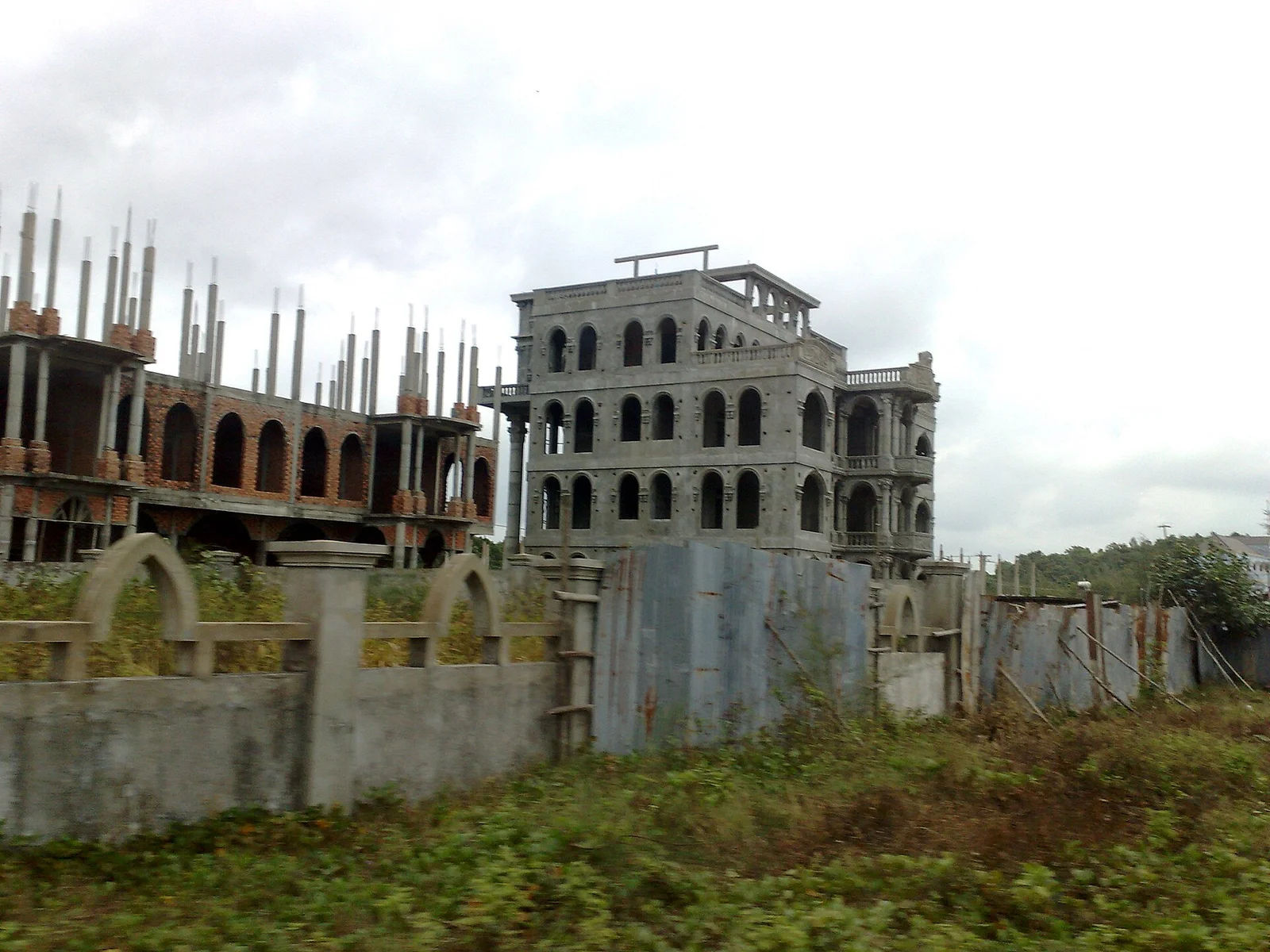

Quick answer: Cambodia’s 8.9% banking NPL ratio in 2026 signals tighter credit that pressures presale-reliant developers, which is the leading cause of stalled and unfinished condo towers in Phnom Penh. With 76,000 to 80,000 units and only 3% to 4% annual absorption, screen the developer’s funding model, demand milestone-linked payments and escrow, and verify completed buildings before you transfer any deposit.
Invest Cambodia Editorial helps foreign buyers avoid the single most damaging outcome in this market: capital trapped inside a tower that never finishes. This guide explains how the 8.9% banking NPL ratio connects to stalled construction, how to read a developer’s financial health, and the contract and escrow protections that keep your deposit safe in an oversupplied, credit-tight cycle.
For context read Cambodia Property Investment Guide 2026, Off Plan Property Cambodia Guide, Due Diligence Process Cambodia Step By Step, Phnom Penh Rental Yield Guide, and Buy New VS Resale Cambodia.
What does Cambodia’s 8.9% banking NPL ratio mean for property buyers?
A non-performing loan is one where the borrower has stopped paying on schedule. When the share of these loans rises toward 8.9% of total lending, banks lend more cautiously, raise their bar for new credit, and call in exposure to weaker borrowers. Property developers feel this first, because construction is capital-hungry and many Cambodian projects are funded round by round from buyer deposits. A developer that relied on cheap rolling credit to bridge between presale waves can suddenly find that bridge gone. The result is not always a dramatic collapse; more often it is a quiet slowdown, a missed handover, or a downgraded finish. The 8.9% figure should reframe how you read every off-plan pitch in 2026: the headline price matters less than whether the developer can actually fund the build to completion.
| 2026 metric | Indicative value | Buyer use |
|---|---|---|
| Phnom Penh avg price | $1,800 per sqm | Baseline vs district premium |
| Foreign quota cap | 70% per building | Above ground floor only |
| Banking NPL ratio | 8.9% | Developer completion risk |
| Stamp duty window | Through 31 December 2026 | Registration timing |
Why are there unfinished condo towers in Phnom Penh?
The arithmetic is unforgiving. If a city absorbs only 3% to 4% of standing inventory each year and developers keep launching new towers on the assumption that future buyers will fund current construction, a gap opens between cash needed and cash arriving. In a strong cycle, new presales close the gap. In a credit-tight cycle marked by the 8.9% banking NPL ratio, they do not. The developer then faces a choice: inject equity it may not have, secure bank financing that has become scarce, slow the build, or pause it. Each paused project adds another half-built tower to the skyline and another set of buyers whose deposits are locked into an asset they cannot occupy or resell. This oversupply backdrop is the structural reason developer screening matters more here than in deeper markets, a theme expanded in Developer Due Diligence Red Flags Cambodia.
How does presale-reliant financing turn into a stalled project?
| Funding model | How it behaves under stress | Buyer completion risk |
|---|---|---|
| Equity-funded build | Construction continues if sales slow | Lower |
| Secured bank facility | Build proceeds on drawn credit line | Lower to moderate |
| Mixed equity and presale | Partial buffer, some exposure | Moderate |
| Pure presale dependence | Stalls when new sales dry up | High |
| Presale plus rolling short credit | Breaks if NPL-driven credit tightens | Very high |
The table shows why the funding question is the most important one you can ask. A developer with equity or a secured facility can keep building through a soft patch; a developer paying for phase three out of phase four presales cannot. Ask directly how the project is funded, request evidence of financing or escrow, and treat reluctance to answer as a red flag in itself. The instalment mechanics that expose this risk are covered in Off Plan Property Cambodia Guide.
How do you spot a stalled or unfinished project before you buy?
Physical signals are the honest ones. If the crane has not moved in months, if there are no recent dated progress photos, or if the developer steers you only toward renders and a polished sales gallery, treat it as serious. Aggressive last-minute discounting often indicates a developer raising cash to survive rather than offering a genuine bargain. So does a sudden change in the promised finish or amenity set. Cross-check the developer’s previous phases: a project that handed over late, or delivered below the marketed standard, predicts how the current one will go. In a market where the 8.9% banking NPL ratio pressures financing, a presale-reliant developer with slowing sales is the classic profile of an impending stall. Use the checks in Due Diligence Process Cambodia Step By Step to convert these observations into documented evidence.
How do you screen a developer’s financial health and funding model?
| Screening question | Strong answer | Weak answer |
|---|---|---|
| How is construction funded | Equity or secured facility | Entirely future presales |
| Completed and occupied buildings | Several, addresses provided | Mostly renders |
| Past handover timeliness | On or near original dates | Repeated long delays |
| Escrow on buyer deposits | Yes, milestone-linked | None offered |
| Response to funding questions | Documents shared openly | Deflection or pressure |
The pattern to watch for is a developer whose answers are all about demand and none about funding. Demand can evaporate; secured funding cannot. Request the developer’s completed-project list and visit at least one finished building to judge maintenance and delivered quality. A developer confident in its balance sheet welcomes this scrutiny. The deeper screening framework, including licensing and land title verification, sits in Developer Due Diligence Red Flags Cambodia, and the high-scrutiny case study in Prince Group Cambodia Warning.
What contract and escrow terms protect you from a stalled handover?
-
Weigh a 20% calendar plan against a 30% milestone plan: the first is cheaper to enter and carries more delivery risk.
-
Request escrow or solicitor-account exhibits in writing.
-
Hold the next tranche until the site photograph matches the milestone description.
-
A lower deposit on a calendar plan is not a discount, it is delivery risk priced as convenience.
-
Withhold the following instalment whenever the construction record and the developer’s account diverge.
A well-drafted sale and purchase agreement is your main defence during the years before an off-plan unit physically exists. If your payments fall due on fixed dates regardless of whether the tower is rising, you are carrying the developer’s delivery risk. If they release against independently verified milestones, the risk is shared. Escrow is the clearest signal of good faith because it ties the developer’s access to your money to actual construction. The contract should also state exactly what happens if handover slips: a refund mechanism, penalty interest, or an exit right. A Cambodian property lawyer should review every clause, because in a market with real stall history, a weak contract leaves you absorbing delivery risk with almost no recourse. The transfer-day document checklist is in Due Diligence Process Cambodia Step By Step.
Insider tip: Ask whether your deposit sits in a developer-controlled account or a genuine third-party escrow. Many “escrow” claims in Cambodia are simply the developer’s own bank account. A real escrow names an independent agent and ties release to milestone certificates. If the developer cannot name the escrow agent, assume your money funds current construction directly and price that risk in.
Which Phnom Penh districts carry the most oversupply and stall risk?
| District profile | Demand depth | Relative stall risk |
|---|---|---|
| BKK1 central | Strong expat and office | Lower |
| BKK3 condo cluster | Moderate, supply-heavy | Moderate |
| Tonle Bassac riverfront | End-user and premium | Lower to moderate |
| Outer high-rise launches | Speculative, thin | Higher |
| Large masterplan build-out | Phased, long horizon | Higher early phases |
District shapes the base rate, although location alone does not make a project safe. A presale-reliant tower in a thin, speculative outer cluster faces both demand risk and financing risk at once, the combination most likely to stall. A central unit with real tenant demand can still stall if the developer is weak, but the surrounding demand at least supports resale and rental if the building completes. Pair location screening with the yield realism in Phnom Penh Rental Yield Guide, and weigh finished resale stock against off-plan using Buy New VS Resale Cambodia.
What should you do if your off-plan project has already stalled?
A stall is not automatically a total loss, but your position depends almost entirely on what you signed. The lawyer’s first job is to establish your contractual rights: whether missed milestones trigger penalties, whether you can demand a refund, and whether funds in escrow can be recovered. Document everything with dated photographs and written correspondence, because evidence of the stall strengthens any claim. Be cautious with developer-proposed extensions or “completion guarantees” offered in exchange for further payment, since these can waive rights you currently hold. Where the developer faces broader scrutiny or ownership questions, the risks extend beyond construction into banking and continuity, which is why the dedicated brief in Prince Group Cambodia Warning should be read alongside independent legal advice.
How does Cambodia’s NPL and stall risk compare with Thailand and the region?
The regional contrast is about exit options as much as headline risk. In a deep market, a buyer caught in a weak project can often sell the contract or the finished unit to another buyer. In Cambodia, with 76,000 to 80,000 units and 3% to 4% absorption, that escape route is narrow, so the cost of choosing a weak developer is higher. Thailand also has more established off-plan escrow and consumer-protection norms, whereas Cambodian protection depends heavily on the individual contract you negotiate. None of this makes Cambodia uninvestable; it means the developer and contract carry more of the weight. The full cross-market comparison sits in Cambodia VS Thailand Property Investment.
Worried about a specific scheme? We will screen the developer's funding model and check construction against the milestone schedule.
Screen this developerAdvantages and disadvantages of buying off-plan in a high-NPL market
Off-plan buying in a high-NPL market offers lower entry prices and payment plans, but it concentrates completion and liquidity risk in exactly the conditions where developers are most likely to stall. The trade-off only works for disciplined buyers who screen funding and secure milestone protections.
| Advantages | Disadvantages |
|---|---|
| Lower entry price than finished stock | 8.9% banking NPL ratio raises stall odds |
| Payment plans spread cash over the build | Deposits exposed if project pauses |
| Choice of unit, floor and view at launch | 76,000 to 80,000 units cap resale demand |
| Potential uplift if the tower completes well | 3% to 4% absorption thins the exit market |
| Time to arrange financing during the build | Weak contracts leave little recourse |
| Escrow available on stronger projects | Many “escrow” claims are not genuine |
The advantages are real, but each one assumes completion. If the build stalls, the lower entry price becomes trapped capital and the payment plan becomes a series of payments into an asset that does not exist. This is why the off-plan decision in 2026 is really a developer and contract decision, not a unit decision, and why the verification discipline in Developer Due Diligence Red Flags Cambodia matters more than the brochure.
Which buyer scenarios should avoid off-plan in this cycle?
Buyers who need a short hold, cannot absorb a multi-year delay, or are drawn to a presale-reliant developer in a thin district should avoid off-plan in this cycle and buy finished, titled resale stock instead. Off-plan suits only buyers who can verify funding, secure escrow, and accept completion risk.
| Profile | Off-plan fit | Better starting point |
|---|---|---|
| Short hold under 3 years | Poor, liquidity risk high | Buy New VS Resale Cambodia |
| Cannot tolerate delay | Avoid completion risk | Phnom Penh Rental Yield Guide |
| Yield-focused investor | Only with milestone escrow | Off Plan Property Cambodia Guide |
| High-scrutiny developer target | Very high risk | Prince Group Cambodia Warning |
| First-time foreign buyer | Verify everything first | Cambodia Property Investment Guide 2026 |
Scenario A: A buyer wanting a quick resale within 3 years avoids off-plan entirely, because the 76,000 to 80,000 unit supply and 3% to 4% absorption make a fast exit unreliable; finished resale stock with a clean title is the safer path.
Scenario B: A yield-focused investor proceeds with off-plan only after confirming the developer’s funding is not pure presale, securing genuine third-party escrow, and tying instalments to milestones, then underwrites net yield conservatively rather than on brochure figures.
Scenario C: A buyer attracted to a project linked to a high-scrutiny developer pauses, reads the dedicated warning, commissions independent legal advice on ownership and licensing, and walks away unless every check is clean.
What are the unfinished-project risks and red-flag checklist?
- Pure presale funding: A developer paying for the build only from future sales is fragile under the 8.9% banking NPL ratio.
- No genuine escrow: Deposits in a developer-controlled account fund current construction directly and are exposed if the build stalls.
- Calendar-date payments: Instalments due on fixed dates rather than verified milestones shift delivery risk onto you.
- Stalled earlier phases: Visible paused construction or missed past handovers predict the next stall.
- Thin-district speculation: A presale-reliant tower in an oversupplied outer cluster faces demand and financing risk at once.
Insider tip: Before you fall for a launch discount, ask the developer to show its oldest completed building and the date it actually handed over versus the date it originally promised. A developer’s track record of finishing on time is a more reliable predictor of your tower completing than any model unit or rendering.
What the current NPL number actually is
The ratio that matters to an off-plan buyer is the one on the day the developer draws its next tranche, and a figure printed in a guide written last year may already be stale. We keep the running figure and its source on a separate page, Cambodia banking NPL snapshot 2026, so that this guide can stay about what the number means while that page stays about what the number is. Check it before each instalment on a phased build, because a rising ratio tightens exactly the construction lending that finishes your tower.
Closing verification checklist
Before you transfer any funds, confirm how the project is funded and demand evidence beyond rolling presales, verify the construction licence and land title with a Cambodian lawyer, visit at least one completed building and the active construction site, secure milestone-linked payments and genuine third-party escrow, fix the unit specification and delay remedies in the contract, and stress-test your plan against the 8.9% banking NPL ratio and the 76,000 to 80,000 unit oversupply. For any high-scrutiny developer, read Prince Group Cambodia Warning and Developer Due Diligence Red Flags Cambodia in full, and use Due Diligence Process Cambodia Step By Step as your transfer-day workflow.
Frequently Asked Questions
The 8.9% banking non-performing loan ratio signals tighter credit across Cambodian lenders. That pressures developers who fund construction from continuous presales, which is the most common trigger for a stalled or unfinished condo tower.
Phnom Penh holds 76,000 to 80,000 units with only 3% to 4% annual absorption. When a presale-reliant developer cannot sell enough new units to fund the next construction phase, the build slows or pauses, leaving the tower unfinished.
Look for visibly paused construction, missed earlier handover dates, heavy last-minute discounting, downgraded finishes, and a developer that avoids dated progress evidence. Visit the active site, not just the showroom, before any deposit.
Tie instalments to verified construction milestones rather than calendar dates, use escrow where available, fix the unit specification in the contract, and require the developer's documented completed-project history before you transfer funds.
Cambodia carries thinner resale liquidity and higher completion risk than Bangkok, so a stalled project is harder to exit. The 8.9% banking NPL ratio adds financing stress that makes developer screening more important than in deeper regional markets.
Get a Cambodian property lawyer to review your sale and purchase agreement for delay and default remedies, document the construction status with dated photos, and pursue contractual or escrow recourse before signing any extension the developer proposes.
Get a Cambodia property shortlist
Share your budget, target district (BKK1, Koh Pich, Koh Norea, Siem Reap), and goal. We reply within one business day with matched stock and next steps.