Healthcare in Cambodia 2026: What Expat Owners Actually Pay
Cambodia has one JCI hospital and complex cases fly out. What cover costs by age, what a $22,000 evacuation looks like, and why skipping it costs more.
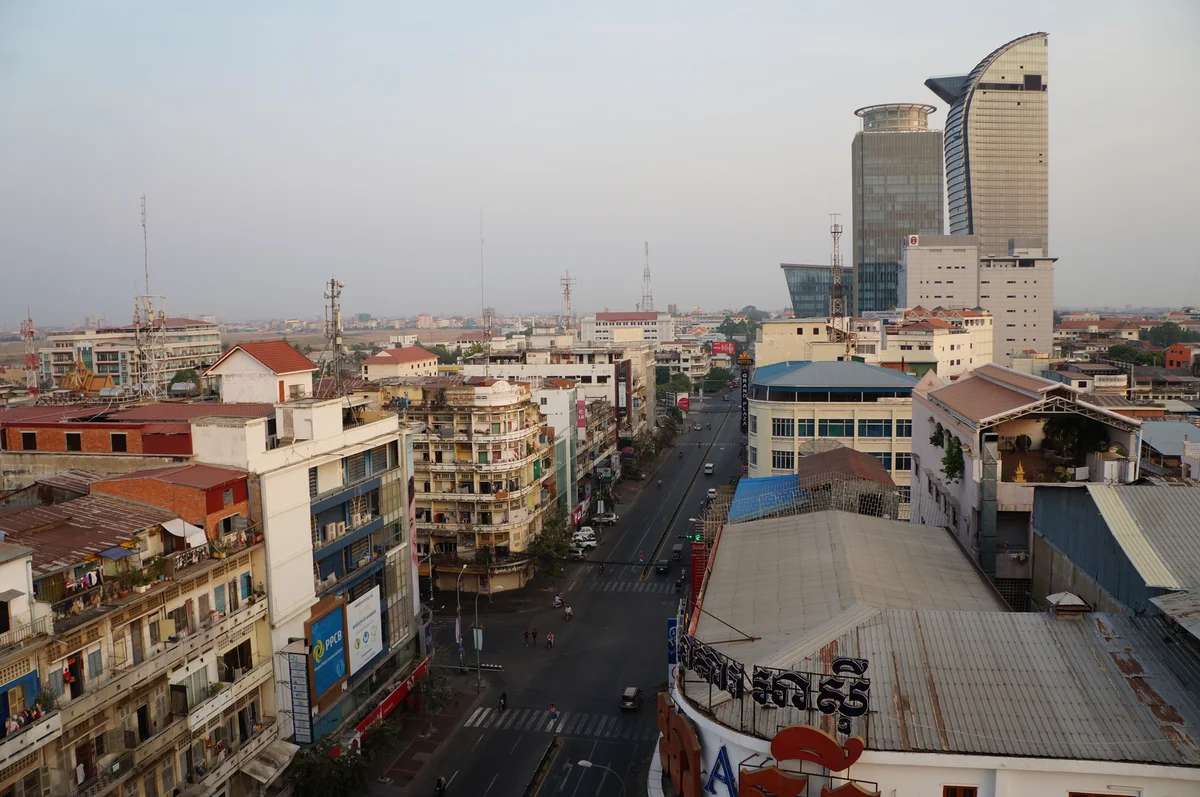
Search for expat healthcare in Cambodia and the first screen is brokers. Four insurers and comparison sites selling policies, a Reddit thread arguing you do not need one, and a Facebook post from someone putting money aside instead. The brokers price the premium and never price the thing the premium exists for.
This page prices both. Household budgets belong to the Phnom Penh cost of living guide, the country cost base to the Cambodia cost of living guide and the retirement case to retiring in Cambodia; no table is repeated. What follows is the medical ceiling, what it costs to clear it, and what happens to a budget that does not.
How good is healthcare in Cambodia for expats?
Adequate for routine care and limited for complex care. For foreign buyers planning a long stay the decisive fact is structural rather than anecdotal: the country has exactly one JCI-accredited hospital, and serious cases are moved to Bangkok or Singapore rather than treated locally, which changes what a policy is actually for.
| Care level | Where it happens | What it means for cover |
|---|---|---|
| Routine consultations, minor illness | Local clinics and hospitals | Outpatient cover, low value at risk |
| Maternity, planned surgery | Often local, sometimes regional | Check the policy’s local network |
| Complex or emergency care | Bangkok or Singapore | Evacuation is the operative clause |
| Long-term or specialist treatment | Outside Cambodia | Continuity of cover across borders matters |
Building cover is a separate product from personal cover and is set out in the property insurance guide; the day-to-day side of living here is in expat life in Cambodia.
The distribution of spending explains the risk. Routine consultations in Phnom Penh cost a fraction of a Western equivalent and a complex case costs $22,000 in transport alone before any treatment is billed, so almost all of the money at risk sits in the row that almost none of the research covers. Our analysis of retirement and relocation enquiries is that buyers consistently research the wrong half of this table, comparing outpatient limits across three quotes while leaving the evacuation clause unread. The cheaper policy usually wins that comparison and is usually the one that fails on the only occasion it is needed. Three questions settle it:
- Does the policy name an evacuation destination, or only promise evacuation?
- What is the cap, in dollars, and how does it compare to a real flight?
- Does cover continue once you are treated outside Cambodia, or stop at the border?
What does cover cost, by age and household?
Cover is priced by age far more than by claims history. International cover with evacuation runs $80 to $200 a month per person, or roughly $800 to $2,500 a year before age loading, and the same policy that costs a working-age single $80 to $120 a month costs a retired couple $300 to $400 and rises annually.
| Household | Monthly band | Note |
|---|---|---|
| Single, working age | $80 to $120 | Lower end of the range |
| Couple, working age | $160 to $260 | Two policies |
| Family of three | $240 to $420 | Child policies are cheaper |
| Retiree, single | $150 to $200 and rising | Escalates with age |
| Retired couple | $300 to $400 and rising | Fastest-growing line in a retirement budget |
Read across the retirement case and the escalation becomes the whole story. Cover costs $960 to $2,400 a year at 60 and considerably more at 75, on a pension that does not move with it, which means a couple who priced the line correctly at fifty-five have priced the wrong decade. Our analysis of enquiries is that this is the single most under-budgeted item in a Cambodian retirement plan, ahead of rent, ahead of tax and ahead of the property carrying costs that people spend far longer modelling. The reason is simple and slightly unfair: rent and service charges can be reduced by living differently, and cover cannot be reduced by anything except dropping it.
Insider tip: ask the insurer for the renewal premiums actually charged to policyholders in your age band over the last three years, not the quoted rate for a new applicant. New-business pricing is competitive and renewal pricing is where age loading lands. The difference between the two curves is the number that decides whether the plan survives to seventy-five.
What does a medical evacuation actually cost?
Evacuation is the line the whole policy exists for, and it is priced in five figures. A documented air ambulance from Phnom Penh to Bangkok cost $22,000, while full evacuation cover is commonly quoted at $50,000 or more, and the gap between those two numbers is the reason to read the cap rather than the premium.
| Item | Figure | What it tells you |
|---|---|---|
| JCI-accredited hospitals in Cambodia | 1 | Complex care is a flight, not a drive |
| Documented air ambulance, Phnom Penh to Bangkok | $22,000 | A single event, paid before departure |
| Full evacuation cover commonly quoted | $50,000 or more | The cap your policy should name |
| Annual cover with evacuation, per person | $800 to $2,500 | Rises with age, not claims |
Three figures decide the choice, and only one of them appears on a quotation:
- $22,000, the documented cost of one flight.
- $50,000 or more, the cap the policy should name.
- $960 to $2,400 a year, what cover costs at 60.
Set the two numbers against each other and the self-insurance argument resolves itself. One $22,000 flight is between nine and twenty-three years of premium at $80 to $200 a month, and unlike a premium it is payable in full, in advance, at the worst possible moment. We could not confirm any published Cambodian scheme that covers a foreign resident for this, which means the cost falls entirely on the individual or on a policy bought in advance. The Reddit position that most things do not need insurance in this part of the world is defensible for the first row of the care table and indefensible for the last, and the person arguing it is usually describing a decade in which nothing went wrong. Put in numbers, a 32-year-old skipping cover at $100 a month banks $1,200 a year and carries an uncapped $22,000 exposure from day one.
What should a foreign owner check before buying cover?
Our analysis of the policies sold into this market is that four clauses decide whether cover works in Cambodia, and premium is not one of them. Foreign buyers should read the evacuation destination, the cap in dollars, the continuation of cover after evacuation and the local network, because a policy that pays for the flight and stops at the Thai border solves half a problem.
- Evacuation destination named. Bangkok and Singapore are the realistic ones.
- Cap in dollars. Compare it to $22,000 for a documented flight, not to the premium.
- Cover continues abroad. Treatment in Bangkok is the expensive part, not the transport.
- Local network. Which Phnom Penh facilities the insurer actually settles with directly.
| Clause | Weak version | What to require |
|---|---|---|
| Evacuation | ”Emergency evacuation included” | Named destinations and a stated cap |
| Continuation | Silent on post-evacuation care | Cover follows the patient across the border |
| Age loading | Not disclosed at quotation | Renewal curve for your age band |
| Direct settlement | Reimbursement only | Named local facilities with direct billing |
Our analysis of the four clauses above is that only the second is ever compared across quotations. A buyer choosing between $95 and $130 a month is comparing 27% of premium while leaving a difference between a $25,000 cap and a $100,000 cap unexamined, and the second number is four times the documented cost of one flight while the first barely clears it. The clause that decides the outcome is therefore invisible in the comparison that most people actually run, which is why the cap belongs at the top of a shortlist rather than in the small print at the bottom of it.
What does a medical year actually look like for an owner?
Set against a property budget the medical line is small until it is not. A retired couple carrying $300 to $400 a month in cover spend $3,600 to $4,800 a year, which sits beside a service charge of $300 to $900 on a 50 sqm unit and a rental income tax of 14% of gross for a non-resident, and none of those three lines can be reduced by living carefully.
| Annual line, retired couple | Figure | Direction |
|---|---|---|
| Health cover with evacuation | $3,600 to $4,800 | Rises every year with age |
| Building service charge, 50 sqm | $300 to $900 | Payable in vacant months too |
| Immovable property tax | 0.1% of value above KHR 100,000,000 | Flat |
The full carrying-cost stack is in Cambodia property taxes and fees, and the service-charge mechanics in the sinking fund guide. | One evacuation, if it happens | $22,000 | Paid in advance, once |
Two arithmetic checks separate a plan that survives from one that does not:
- Total the fixed lines that cannot be reduced, then compare that number to the pension rather than to the rent.
- Add one $22,000 event at some point in a twenty-year retirement and see whether the plan still closes.
Run the second check honestly and most plans change shape. A couple retiring at sixty on $2,600 a month is carrying roughly $4,200 of cover a year at today’s pricing, against a documented evacuation cost of $22,000 that arrives without notice and is settled before departure. Our analysis of enquiries is that owners who model the recurring line and skip the one-off event are the ones who end up selling a property to fund a hospital, and Cambodian resale is not a fast instrument: a well-priced BKK3 unit still takes 60 to 120 days to move, and a building that filled its 70% foreign quota while they held it narrows the buyer pool further. The property and the policy are therefore the same decision viewed from two ends.
The third check is the one nobody runs. Cover bought at fifty-five is renewed at every age after it, and the renewal curve rather than the opening premium determines whether the household is still insured at seventy-five, which is exactly the decade in which the JCI-hospital constraint stops being theoretical. We could not confirm any published Cambodian scheme that steps in when a foreign resident lets private cover lapse, so the fallback is self-funding at $22,000 a flight. That is the whole argument for reading the renewal curve before the premium, and it takes one question to the insurer to obtain.
Advantages and disadvantages of the Cambodian medical position
Routine care is cheap and accessible, and the ceiling above it is low and expensive to clear. A consultation costs a fraction of a Western equivalent, and the same country asks $22,000 for the single flight that a complex case requires.
| Works in your favour | Works against you |
|---|---|
| Routine care is inexpensive and quickly accessible | One JCI-accredited hospital in the whole country |
| Cover at $80 to $120 a month for a working-age single | $300 to $400 and rising for a retired couple |
| Bangkok and Singapore are short flights away | The flight itself is $22,000 and paid in advance |
| Policies are widely available and competitively sold | New-business pricing hides the renewal curve |
Buyer scenarios and red flags
| Profile | What they assume | What the numbers say |
|---|---|---|
| Remote worker, 32 | Skip cover, save $100 a month | Works until one evacuation, which is 18 years of savings |
| Couple, 45, buying at $150,000 | Cover is a small line | $160 to $260 a month, and rising every year from here |
| Retired couple, 62 | Priced at $350 and done | Priced for today. Seventy-five is the number that matters |
| Family of three, 38 | Local care is sufficient | True for the first row of the care table only |
Three red flags recur in enquiries, and each one costs more than the premium it was meant to save. The first is a budget that prices rent, food and tuition and omits cover entirely, which understates a retired couple’s real base by $300 to $400 a month. The second is a policy chosen on premium with no named evacuation cap, which is the clause the entire product exists to deliver. The third is treating a Cambodian purchase and a Cambodian medical plan as separate decisions, when in practice the property is illiquid and the medical event is not, and an owner forced to sell in a hurry meets the 70% quota problem at exit rather than at entry, in a market where a well-priced BKK3 unit still takes 60 to 120 days to move, as set out in the resale valuation guide and resale liquidity. The two decisions are therefore one decision, and the cheapest moment to make it is before the purchase rather than during the emergency.
Frequently Asked Questions
Adequate for routine care and limited for complex care. The country has exactly one JCI-accredited hospital, and serious cases are moved to Bangkok or Singapore rather than treated locally. The practical consequence is that an expat health plan in Cambodia is really an evacuation plan with outpatient cover attached, which is the opposite of how these policies are usually sold.
International cover with evacuation runs $80 to $200 a month per person, or roughly $800 to $2,500 a year, and it rises steeply with age. A single working-age expat sits at $80 to $120 a month, a working-age couple at $160 to $260, a family of three at $240 to $420, and a retired couple at $300 to $400 and rising every year regardless of claims.
A documented air ambulance from Phnom Penh to Bangkok cost $22,000. Full evacuation cover is commonly quoted at $50,000 or more, which is the figure a policy should name rather than the flight itself. The gap between those two numbers is the reason to read the cap in the policy rather than the premium on the quote.
For routine care, yes, and many do. The arithmetic breaks on the single event that leaves the country: one $22,000 flight is between nine and twenty-three years of premium at $80 to $200 a month, and it is payable before departure rather than afterwards. Self-insuring works until the day it does not, and that day is the only one the policy exists for.
It is the fastest-escalating line in an expat budget. Cover runs $960 to $2,400 a year at 60 and considerably more at 75, and it rises with age rather than with claims history. A retired couple pricing $300 to $400 a month at fifty-five are pricing the wrong decade, which is why cover should be modelled at the age you will be rather than the age you are.
Get a Cambodia property shortlist
Share your budget, target district (BKK1, Koh Pich, Koh Norea, Siem Reap), and goal. We reply within one business day with matched stock and next steps.