Where to Buy Property in Phnom Penh: Prices by District
Phnom Penh district by district for foreign buyers: price bands, realistic yields, which area suits which strategy, and the local risks in each.
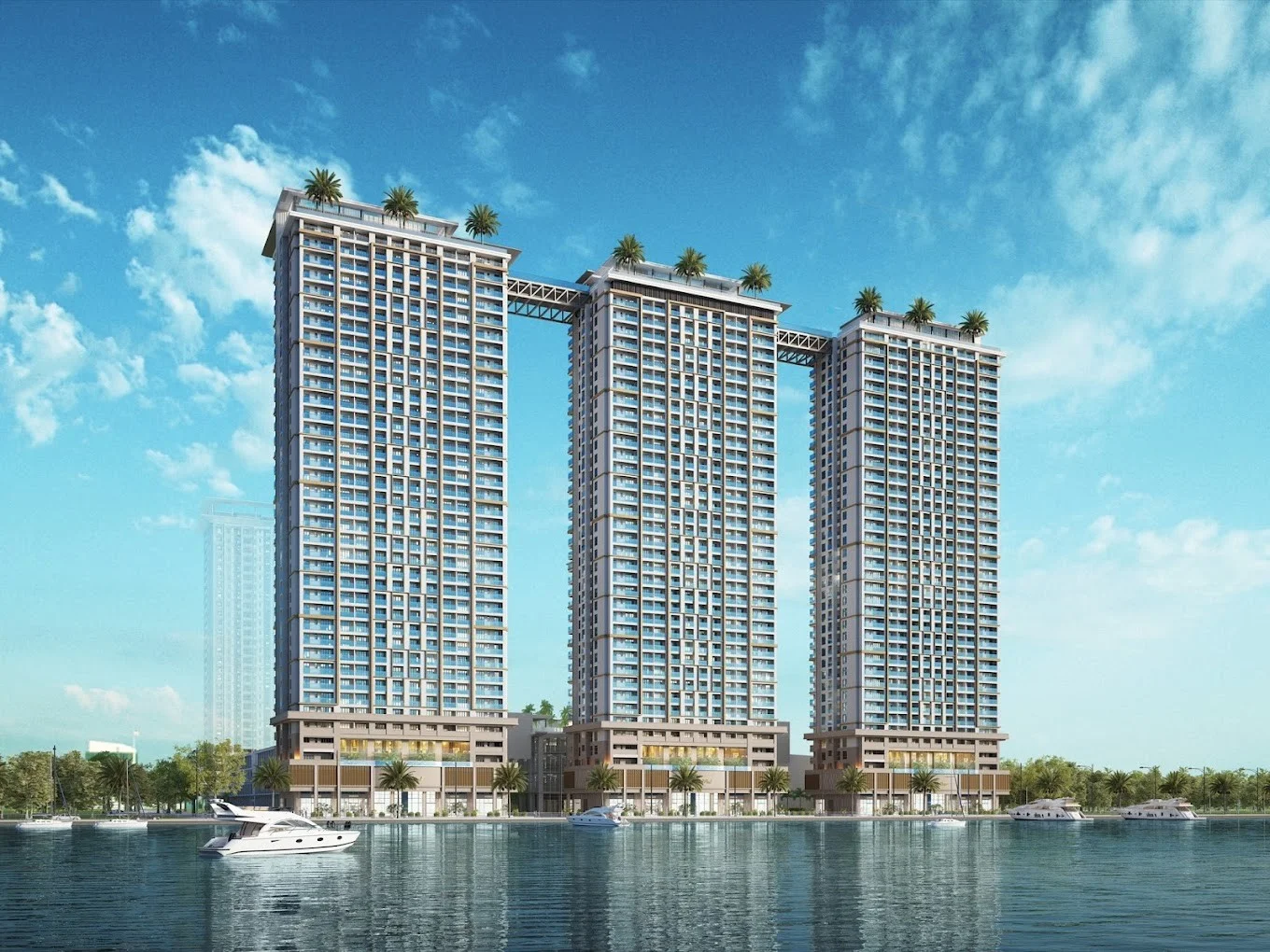
Quick answer: Foreign buyers in Phnom Penh can own strata-titled units above the ground floor in any district, capped at 70% per building. BKK1 carries the deepest tenant demand and the thickest resale market. BKK3, Toul Kork and Sen Sok deliver higher yields at lower entry. Koh Pich and the Techo corridor are longer-horizon positions.
Search for property in Phnom Penh and you get listings. Page after page of inventory, filtered by bedroom count, with no explanation of why one district behaves differently from another. That gap is the reason this guide exists.
Phnom Penh is not a single market. A unit in BKK1 and a unit in Sen Sok are different assets with different tenants, different yields, and different exit prospects, even at a similar price per square metre. Choosing the district is the decision that determines most of your return. The purchase steps do not change between districts, and they are set out in how to buy property in Cambodia.
Where can foreign buyers own in Phnom Penh?
Foreign buyers can own freehold strata title on private units above the ground floor in every Phnom Penh district, capped at 70% of the total area of all private units in any one co-owned building. The rule is city-wide and does not vary by area, which means district choice is a commercial decision rather than a legal one for anyone buying a condo.
| Rule | Applies |
|---|---|
| Strata title on units above ground floor | Every district |
| 70% foreign cap | Per building, not per district |
| Ground floor and below | Closed to foreign ownership |
| Landed property and boreys | Requires a lease, company, or trust |
Two consequences follow. First, district choice is a commercial decision rather than a legal one. Second, the building matters as much as the district, because the quota and the strata registration status are building-level facts. The mechanics are set out in foreign ownership and strata title.
How much does property cost by district?
Entry condo stock for foreign buyers starts near $50,000 in Sen Sok and around $80,000 in BKK1, while expat-grade units range from $75,000 in the outer districts to $250,000 on Koh Pich. The figures below are indicative ranges for foreign-accessible strata stock in 2026, not a valuation of any specific unit.
| District | Entry condo | Expat-grade unit | Character |
|---|---|---|---|
| BKK1 | From around $80,000 | $146,000 to $230,000 | Embassies, diplomats, premium tenants |
| BKK3 | From around $60,000 | $90,000 to $150,000 | Adjacent to BKK1, better value |
| Daun Penh | From around $75,000 | $120,000 to $200,000 | Riverside, historic core, tourism |
| Toul Kork | From around $65,000 | $100,000 to $170,000 | Leafy, families, international schools |
| Tonle Bassac | From around $80,000 | $130,000 to $220,000 | Central, high-rise, mixed use |
| Koh Pich | From around $90,000 | $140,000 to $250,000 | Planned island district, new stock |
| Sen Sok | From around $50,000 | $75,000 to $130,000 | Suburban, AEON Mall, local demand |
| Chroy Changvar | From around $60,000 | $90,000 to $160,000 | Peninsula, riverfront, developing |
BKK1 sets the benchmark. It holds the highest concentration of embassies, international organisations and senior expatriate tenants, which means the most reliable rent and the shortest void periods. It also means the lowest yield, because the price already reflects that reliability. The area profile is at BKK1 Phnom Penh.
BKK3 is the value trade against BKK1. Similar access, meaningfully lower entry, slightly less prestige. For yield-focused buyers it frequently produces a better net number, which is why we compare the two directly in BKK1 vs BKK3.
Sen Sok and Chroy Changvar serve a different tenant. Less expatriate, more local professional and family demand, anchored by retail such as AEON Mall. Entry is the lowest of the major districts and the yield is often the highest, with a thinner foreign resale pool as the trade-off.
Tell us your budget and whether you want income or somewhere to live. We shortlist two or three districts with current stock.
Get a district shortlist for your budgetWhich district gives the best rental yield?
Sen Sok and Toul Kork deliver the highest gross yields for foreign buyers at 6.2% to 7.4%, while BKK1 sits lowest at 5.2% to 6.0%. Phnom Penh averaged near 6.5% gross in Q1 2026 inside a 5.22% to 7.4% band, and that spread is largely a district effect rather than a building one.
| District | Indicative gross | Indicative net | Void risk |
|---|---|---|---|
| BKK1 | 5.2% to 6.0% | 3.6% to 4.4% | Lowest |
| BKK3 | 6.0% to 6.8% | 4.2% to 5.0% | Low |
| Toul Kork | 6.2% to 7.0% | 4.3% to 5.1% | Low to moderate |
| Tonle Bassac | 5.5% to 6.4% | 3.8% to 4.6% | Low |
| Koh Pich | 5.4% to 6.5% | 3.7% to 4.7% | Moderate, supply-driven |
| Sen Sok | 6.5% to 7.4% | 4.5% to 5.3% | Moderate |
The net column is the one to plan on. Service charges, one to two months of annual vacancy, and management fees remove roughly 1.5 to 2.5 points from gross. The full calculation sits in the Phnom Penh rental yield guide.
Notice the inversion. The districts with the highest yields carry the highest void risk and the thinnest foreign resale market. You are paid for accepting those, not for spotting something others missed.
Which district matches your strategy?
The right district depends on whether you want income, capital preservation, or somewhere to live, and a decision framework is more useful than a ranking. Phnom Penh districts are not competing for the same foreign buyers: BKK1 trades 1.0 to 1.4 points of yield for reliability, while Sen Sok does the reverse.
Reliable income, lowest hassle. BKK1 or Tonle Bassac. Accept 3.6% to 4.6% net in exchange for short voids, professional tenants, and the deepest resale pool. This suits buyers who will not be in Cambodia often.
Maximum net yield. Sen Sok, Toul Kork or BKK3. Add 0.5 to 1.0 points of net yield, accept a more local tenant base and a slower foreign exit. This suits buyers who are comfortable with active management.
Family tenant, longer tenancies. Toul Kork. Proximity to international schools produces multi-year leases and lower turnover costs, which often beats a higher headline yield.
Somewhere to live. Daun Penh for the riverside and the old city, BKK1 for convenience and services, Toul Kork for space. Yield becomes secondary and the commute and amenity map becomes primary.
Infrastructure horizon. Koh Pich or the Techo airport corridor. Both are positions on future demand rather than current income. New supply keeps arriving, so absorption is slower and the hold needs to be longer.
Our broader ranking of investment areas is at best areas to invest in Phnom Penh 2026.
Who actually rents property in Phnom Penh?
Phnom Penh tenants divide into expatriate professionals, who concentrate in BKK1 and Tonle Bassac on housing allowances, and Cambodian professional households, who are growing faster and favour Toul Kork and Sen Sok. District selection makes more sense once foreign buyers know which group they are targeting, because rent is set by a specific tenant with specific alternatives.
The expatriate professional market is the one most foreign landlords target, and it divides into three groups with quite different behaviour. Embassy and international organisation staff hold generous housing allowances, rotate on 2 to 4 year postings, and concentrate in BKK1 and Tonle Bassac where expat-grade units run $146,000 to $230,000. They pay reliably, they expect a managed building with a gym and a pool, and they leave when the posting ends. NGO and development sector staff sit a tier below on budget and spread wider across BKK3 and Toul Kork, where the same standard of unit costs $90,000 to $170,000. Private sector expatriates, particularly in manufacturing and logistics, increasingly live near their work rather than near the embassies, which is part of why Sen Sok and Chroy Changvar have held their rents at yields of 6.5% to 7.4%.
The second market is the Cambodian professional household, and it is growing faster than the expatriate one. These tenants are less interested in a building’s gym and more interested in parking, proximity to schools, and a reliable landlord. They also stay longer, which lowers turnover cost. Toul Kork and Sen Sok serve this group well.
Two practical implications follow. Furnishing standard should match the tenant, not your taste: expat-grade fit-out costing $8,000 to $25,000 pays for itself in BKK1 and is wasted in Sen Sok. And a longer local tenancy at a slightly lower rent frequently beats a shorter expatriate one at a higher rent, once you price in two months of annual void and repeated agency fees.
What are the district-level risks?
City-wide risks apply in every district: incomplete strata registration, developer completion risk against a banking non-performing loan ratio near 8.9%, and a resale pool thinner than the 76,000 to 80,000 unit stock implies. Beyond those, each Phnom Penh district carries its own pattern that foreign buyers should check before committing.
| District | Specific risk to check |
|---|---|
| BKK1 | Foreign quota frequently near or at the 70% cap |
| BKK3 | Older buildings with underfunded sinking funds |
| Koh Pich | Concentrated new supply pressuring rents |
| Sen Sok | Thin foreign resale demand at exit |
| Chroy Changvar | Infrastructure delivery timing |
| Techo corridor | Rental demand lags construction by years |
The BKK1 quota point deserves emphasis because it is the district-specific risk that most often surprises buyers. BKK1 is the area foreign purchasers want most, which means its buildings reach the 70% foreign ownership ceiling before buildings anywhere else in Phnom Penh do. A tower can be entirely suitable on price, yield, management and location, and entirely unavailable to you as a foreign buyer, and nothing in the listing will say so. Our underwriting treats a dated written confirmation of the remaining quota as a precondition rather than a formality, because the alternative is discovering the problem at registration, several weeks and one non-refundable deposit later. The check itself takes a single request to building management and costs nothing beyond the time to send it. Buyers working to the 31 December 2026 stamp duty deadline have a second reason to run it early, since a failed quota check in November leaves no room to find an alternative unit and still complete inside the window.
Insider tip: In BKK1 and Tonle Bassac, ask how many of the remaining foreign-eligible units are already under reservation, not just how many are unsold. Reserved units still count against the 70% cap once they complete.
Pros and cons of buying in Phnom Penh
| Advantages | Disadvantages |
|---|---|
| Freehold strata title in your own name | Ground floor and land remain closed |
| Gross yields near 6.5% city average | Net yield lands 1.5 to 2.5 points lower |
| Dollar economy, no currency risk on rent | Oversupply caps near-term appreciation |
| Entry stock from around $50,000 | Resale pool thin outside prime districts |
| Established expat tenant market | Quota limits in the most wanted buildings |
Buyer scenarios
Budget near $100,000, income focus. BKK3 or Toul Kork. Expect 6.0% to 7.0% gross and roughly 4.2% to 5.1% net. See the $100,000 budget condo guide.
Budget under $60,000. Sen Sok or older BKK3 stock. Yield can be strong, but check the sinking fund balance and be realistic about the exit. Start with condos under $50,000.
Budget above $200,000. BKK1, Tonle Bassac or Koh Pich. Lower yield, better tenant quality, deepest resale market. See the $200,000 budget guide.
Relocating rather than investing. Daun Penh, BKK1 or Toul Kork depending on whether you want the riverside, the services, or the space.
Whichever district you land on, the transaction mechanics are the same across the city. Read how to buy property in Cambodia for the sequence and can foreigners buy property in Cambodia for the ownership rules that sit underneath every district on this page.
Which district should you actually shortlist?
Start from the tenant rather than the postcode. Phnom Penh prices run roughly $1,067 to $2,774 per sqm by district against a city average near $1,800, and the spread reflects who rents there rather than build quality.
| If your buyer or tenant is | Look at |
|---|---|
| Embassy, NGO or corporate, 12-month lease | BKK1, Tonle Bassac |
| Regional professional, price sensitive | BKK3, Toul Kork |
| Entry ticket under $60,000 | Chbar Ampov, outer BKK3 stock |
| Family with school proximity | Toul Kork, Sen Sok |
| Premium and branded | Koh Pich, Daun Penh |
| Long hold on infrastructure | Chroy Changvar, Koh Norea |
Our analysis picks the district from the tenant group before it looks at price per sqm, because a well-priced unit in the wrong district for its layout lets slowly at any price. Citywide occupancy runs 75% to 80%, and most of the gap between the top and the bottom of that band is a matching problem rather than a market one.
- Choose the tenant group first; the district follows from it.
- Occupancy of 75% to 80% is largely a matching question.
- Yield by district sits in the district yield comparison.
- Area detail is in the best areas guide.
- Ticket sizes are in the condo price guide.
Frequently Asked Questions
BKK1 for tenant demand and resale depth, BKK3 for entry pricing, Toul Kork for family tenants. The right answer depends on your strategy.
Entry condo stock in and around BKK1 starts near $80,000. Expat-grade one and two bedroom units commonly run $146,000 to $230,000.
Yields are generally higher in BKK3, Toul Kork and Sen Sok than in BKK1, because entry prices are lower while rents stay competitive.
Foreigners can buy strata-titled units above the ground floor in any district, subject to the 70% foreign cap in each individual building.
Koh Pich offers new stock and planned infrastructure, with more supply arriving. Suits buyers comfortable with a longer absorption period.
It is an infrastructure play rather than an income play. Rental demand lags construction, so treat it as a longer-horizon position.
Send your budget and whether you want income or a place to live. We return two or three districts with current stock and realistic net yields.
Get a Cambodia property shortlist
Share your budget, target district (BKK1, Koh Pich, Koh Norea, Siem Reap), and goal. We reply within one business day with matched stock and next steps.