Retiring in Cambodia: Easy Visa, Expensive Health Cover
Cambodia asks a retiree for no deposit and about $300 a year. It also has one JCI hospital, and a serious case still flies to Bangkok at $22,000 or more.
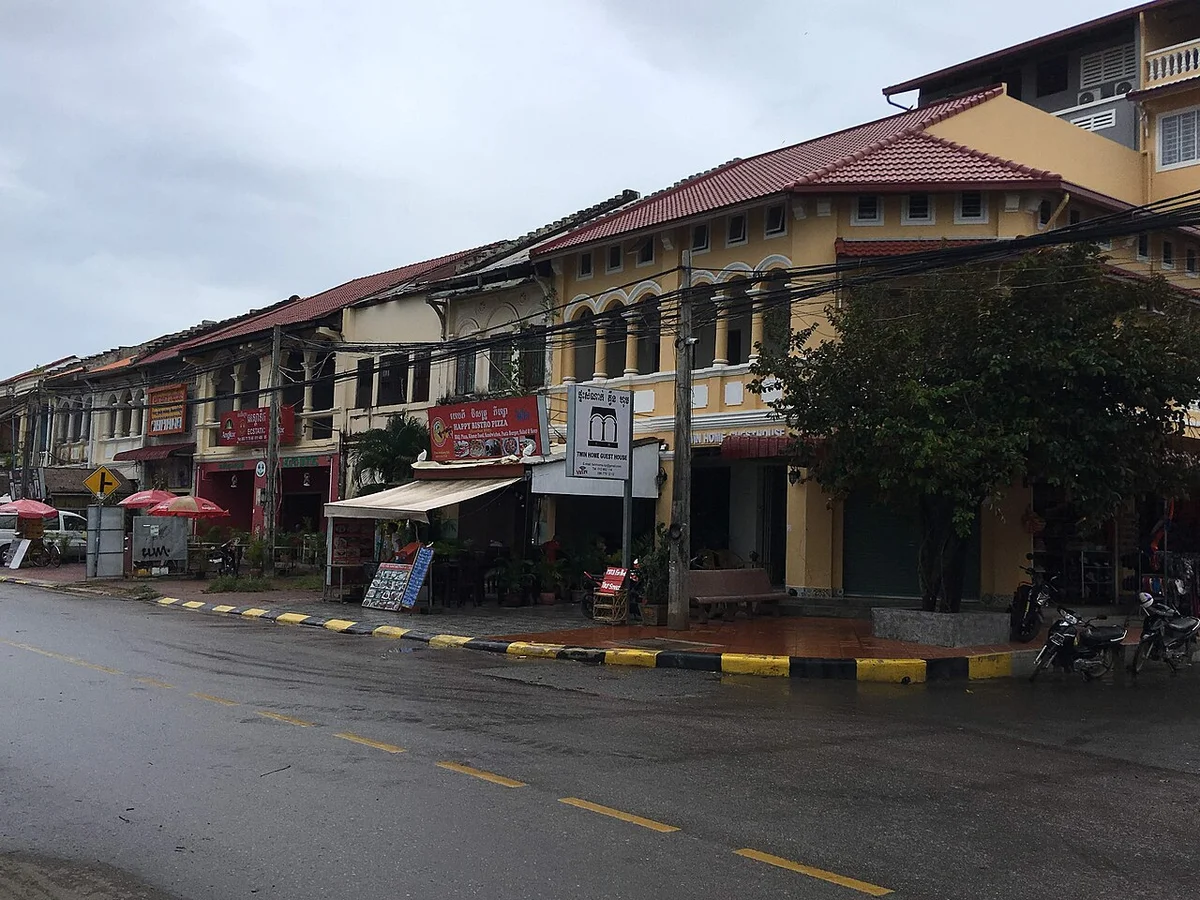
Quick answer: Cambodia’s retirement extension asks for age 55, no employment and no deposit at all, at roughly $290 to $300 a year. The country also has exactly one JCI-accredited hospital, and a serious case still flies to Bangkok at $22,000 or more. That second fact decides more retirements than the first.
Almost everything written about retiring in Cambodia leads with how cheap and easy the visa is, which is true and also the least important thing on the page.
The visa costs about $300 a year and asks for no deposit. The health cover costs $960 to $2,400 a year at 60 and considerably more at 75, and it is not optional in a country where the alternative to insurance is a flight to Bangkok. A retirement plan that budgets the first number and not the second is not a plan.
Three figures frame the decision. The ER extension costs about $290 to $300 for twelve months, with no fixed deposit and no statutory income floor, which makes it the least demanding retirement route in Southeast Asia. Cambodia has exactly one JCI-accredited hospital, Royal Phnom Penh Hospital, managed by Bangkok Dusit Medical Services. And a documented air ambulance from Phnom Penh to Bangkok cost $22,000, against full evacuation cover commonly quoted at $50,000 or more. Our analysis treats the gap between the first figure and the third as the entire subject of this guide, because the country makes it extraordinarily easy to arrive and does very little to help once you are here and unwell. The visa is a $300 decision. The health plan is a decision measured in tens of thousands over a retirement, and only one of the two is discussed at the point of arrival.
What does Cambodia actually ask of a retiree?
Cambodia asks remarkably little of foreign retirees. The ER extension of stay requires age 55 or above, no employment in the country, and evidence of sufficient means, with no fixed deposit at all and no statutory income floor. That combination is the loosest financial test among comparable regional programmes, where deposits of $15,000 upward are the norm.
| Requirement | Cambodia ER | Regional comparison |
|---|---|---|
| Minimum age | 55 | Philippines from 40, Thailand from 50 |
| Fixed deposit | None | Philippine SRRV $15,000 to $50,000 |
| Statutory income floor | None stated | Commonly imposed elsewhere |
| Employment permitted | No | Similar elsewhere |
| Extension lengths | 1, 3, 6 or 12 months | Usually annual |
| Renewals | No stated limit | Usually renewable |
The absence of a financial test is genuinely unusual and it should be read as an opportunity and a warning at the same time. It means a retiree on a modest pension can live lawfully in Cambodia without immobilising capital, which is a real advantage over a $30,000 Philippine deposit sitting idle for a decade. It also means the state has performed no check on whether the household can fund a medical event, and no other party will perform one either. Our underwriting applies the test the immigration process does not: can this household carry an insurance premium that grows every year on an income that does not? A $30,000 Philippine deposit is dead capital, but it is also a floor under the household, and Cambodia deliberately declines to require one. The checklist has to supply what the rulebook leaves out.
- Our methodology tests what immigration does not: the twenty-year premium.
- No deposit means no capital immobilised, which is a real advantage.
- No financial test also means nobody has checked you can fund a crisis.
- Other visa classes are set out in the visa options guide.
- Property-linked residency is covered in the residency guide.
- Retirees weighing Thailand’s age-50 route can set household budgets side by side in Cambodia vs Thailand cost of living, and the Philippine comparison sits in the Cambodia versus Philippines page.
What does the ER extension cost and how does it work?
The ER extension costs about $290 to $300 for twelve months, or $400 to $600 all in for the first year once an agent, photographs and a medical certificate are included. The process runs in two steps: enter on an ordinary visa, then convert to the ER category through immigration or an agent.
| Cost or step | Detail |
|---|---|
| Twelve-month extension fee | About $290 to $300 |
| First-year all-in cost | $400 to $600 with agent and documents |
| Entry route | Ordinary visa, converted after arrival |
| Processing time | Commonly 5 to 10 business days |
| Multiple entry | Choose the 6 or 12-month extension |
| Renewal frequency | Annually, with no stated cap |
Insider tip: take the twelve-month extension rather than the six, even when the shorter one looks like a sensible trial. The multiple-entry privilege attaches to the longer extensions, and a retiree who takes a 3 or 6-month extension and then leaves the country to visit family can find the extension has lapsed on re-entry. The saving is under $150 and the cost of getting it wrong is a fresh application from outside the country. Our methodology treats this as the single most common administrative error in a first year of Cambodian retirement, ahead of anything to do with the property purchase itself.
- Take the twelve-month extension for the multiple-entry privilege.
- A short extension can lapse when you leave to visit family.
- Banking setup is covered in the bank account guide.
- Proof of means questions sit in the proof of funds guide.
- Longer-term structures are compared in the visa options guide.
What does healthcare cost, and where does it stop?
Cambodia has one JCI-accredited hospital, Royal Phnom Penh Hospital, managed by Bangkok Dusit Medical Services. Routine care in the capital is adequate and inexpensive. Complex cases evacuate to Bangkok or Singapore, at $22,000 for a documented air ambulance and $50,000 or more for full evacuation cover.
| Health item | Cost or state |
|---|---|
| JCI-accredited hospitals in Cambodia | One |
| International cover with evacuation | $80 to $200 a month |
| Annual premium equivalent | About $800 to $2,500 |
| Documented air ambulance to Bangkok | $22,000 |
| Commonly quoted full evacuation cost | $50,000 or more |
| Care outside Phnom Penh and Siem Reap | Limited |
The evacuation number is the one that should govern the whole retirement decision, and it is almost never stated on the pages that sell Cambodia as a retirement destination. A household without cover is one cardiac event away from a $22,000 bill at the low end and a $50,000 bill at the plausible end, in a country where that same sum buys an entry-level condominium. Our analysis has consistently found this to be the buyer scenario that ends Cambodian retirements: not a visa problem and not a property problem, but an uninsured medical event that forces a sale into a thin market at whatever price is available that month. The cover that prevents it costs $960 to $2,400 a year at 60, which is roughly one month of a couple’s living costs.
- One uninsured medical event can cost the price of an entry condominium.
- Premiums rise steeply with age, on an income that usually does not.
- Provincial living is covered in the Kampot area guide.
- The coastal alternative sits in the Kep area guide.
- Monthly budgets are set out in the cost of living guide.
Should a retiree buy or rent?
Rent first for at least one full year, including the wet season. Buying commits a retiree to a 4% transfer tax on entry and a market where a 20% capital gains tax on the gain begins on 1 January 2027, before the household knows whether Cambodia suits them at 70 as well as at 58.
| Factor | Renting first | Buying immediately |
|---|---|---|
| Entry cost | A deposit and first month | 4% transfer tax plus legal fees |
| Exit cost | Notice period | Marketing period plus 20% CGT from 2027 |
| Flexibility on health grounds | High | Low |
| Exposure to a thin resale market | None | Full |
| Typical Phnom Penh outlay | $400 to $1,000 a month | Capital committed |
| Suitability test | A full year including wet season | Assumed in advance |
Renting first is unfashionable advice on a property site and it is the correct advice for this reader. A retiree’s circumstances change on a medical timetable rather than an investment one, and a Cambodian strata unit is not an asset that can be liquidated quickly when they do. Our underwriting treats the ability to leave within 90 days as a requirement rather than a preference for anyone over 70, and a lease satisfies that requirement while a freehold unit in a thin building generally does not. A buyer scenario that works is the retiree who has already spent two seasons in-country and knows which district they want.
- A retiree’s timetable is set by health.
- Test the ability to leave within 90 days before committing capital.
- Resale depth is covered in the resale liquidity guide.
- Exit mechanics sit in the exit strategy guide.
- Entry-level stock is listed in the sub-$50,000 guide.
What can a retiree legally own?
A retiree may own a freehold strata unit above the ground floor, capped at 70% of the total area of private units in the building, under the Law of 24 May 2010 and Sub-Decree No. 126. Land, houses on land and ground-floor units are all closed to foreign ownership.
| What retirees usually want | Available to a foreigner? |
|---|---|
| Ground-floor apartment, no lift dependence | No, ground floor is excluded |
| House with a garden | No, it stands on land |
| Borey villa in a gated community | No, land title |
| Strata unit above the ground floor | Yes, inside the 70% area cap |
| Long lease on a house, 15 to 50 years | Yes, as a leasehold interest |
| Provincial land plot for a small build | No freehold; structure required |
The mismatch between what a retiree wants and what a retiree may own is sharper than for any other buyer type on this site, and it deserves saying plainly. An investor wants a lettable unit on a mid floor, which is precisely what Cambodian law permits. A retiree wants a ground floor without stairs, outdoor space and a quiet street, which is precisely what Cambodian law closes. Our analysis therefore treats lift dependence as a genuine due-diligence item for this reader: a fourth-floor unit in a building with one lift and no backup generator is a different proposition at 78 than at 58, and it belongs on the checklist beside the title class.
- The product a retiree wants is largely the product the law closes.
- Lift reliability and backup power belong on a retiree’s checklist.
- Full eligibility detail is in the foreign ownership guide.
- Lease routes are compared in the lease, nominee and trust guide.
- Borey rules are covered in the Chip Mong borey guide.
What does the whole thing cost per month?
A single retiree in Phnom Penh spends roughly $780 to $1,250 a month before health cover, and a retired couple renting comfortably lands nearer $2,000 to $2,600 once insurance at $160 to $400 for two is added, with provincial towns running materially below both figures.
| Household | Monthly total | Notes |
|---|---|---|
| Single retiree, modest, Phnom Penh | $860 to $1,000 | Includes $80 to $200 cover |
| Single retiree, comfortable, Phnom Penh | $1,100 to $1,600 | Includes cover and travel |
| Retired couple, comfortable, Phnom Penh | $2,000 to $2,600 | Includes $160 to $400 cover |
| Retired couple, Kampot or Kep | Below the capital range | Thinner medical access |
| Visa line, per person per year | $290 to $300 | Excluded from monthly figures |
| Utilities on an 85 sqm apartment | About $110 | Electricity at $0.15 to $0.18 per kWh |
Health cover is the line that behaves differently from every other line in the table, and that is the point of presenting them together. Rent, food, transport and utilities are broadly stable and can be reduced by moving to Kampot or Kep. The insurance premium does the opposite: it rises with age, it rises fastest exactly when the household’s earning capacity has ended, and it cannot be reduced by moving to a cheaper town, because the risk being priced is the person rather than the postcode. Our underwriting models a retirement budget over twenty years rather than one, and that single change usually moves the required starting income upward by several hundred dollars a month.
- Every budget line except insurance falls if you move to a province.
- Model twenty years of premiums, not the first year’s quote.
- Full budget detail sits in the cost of living guide.
- Rental districts are covered in the BKK1 area guide.
- Quieter districts sit in the Toul Tom Poung area guide.
Advantages and disadvantages
Cambodia is the easiest country in the region to retire into and one of the least forgiving to be ill in.
| Advantage | Disadvantage |
|---|---|
| No deposit and no statutory income floor | No financial test means no safety check either |
| About $290 to $300 a year for the extension | Renewal is annual, with no permanent status |
| Dollar economy removes currency risk | Cambodia has one JCI-accredited hospital |
| Living costs from $780 to $1,250 for a single | Evacuation runs $22,000 to $50,000 or more |
| Strata freehold available in your own name | Ground floor, gardens and boreys are closed |
| Provincial towns cost materially less | Provincial medical access is thinner still |
Inheritance is the item most often left until it is too late, and it is worth raising here rather than leaving it to a separate page. A foreign-owned strata unit passes to heirs, but the process requires documentation prepared while the owner is alive and capable, and a retiree who has bought in Cambodia without a Cambodian-recognised will leaves their family a cross-border probate problem in a jurisdiction they have never visited. The detail sits in the inheritance guide, and the trigger to read it is the day the purchase completes rather than some later point.
Buyer scenarios and red flags
Three scenarios cover most retirement enquiries that reach us.
| Scenario | What they want | What we would recommend |
|---|---|---|
| Couple, 62, $2,400 a month pension | Buy immediately, live cheaply | Rent a year first; price cover to age 85 |
| Single, 57, uninsurable pre-existing condition | The cheapest possible route | Reconsider Cambodia; evacuation is the exposure |
| Couple, 68, capital from a UK sale | A garden and a quiet street | Long lease, not freehold; the product is closed |
The failure pattern is a budget built at 60 and never revisited. A couple models rent, food and utilities against a pension, finds a comfortable margin, and buys. Fifteen years later the premium has multiplied, the pension has not, and the only liquid asset is the apartment they live in, sitting in a building with few recorded resales. Our underwriting therefore runs the retirement model at the household’s expected age of 80 rather than at their age on arrival, and a red flag on any Cambodian retirement plan is a spreadsheet whose insurance line is flat.
- Model the insurance premium you will be paying at 80.
- Do not let the only liquid asset be the home you live in.
- Take the twelve-month extension for multiple entry.
- Confirm lift reliability and backup power before buying above the second floor.
- Prepare inheritance documentation on the day the purchase completes.
Tell us your age, your pension and whether you already hold international cover. We will model the twenty-year version rather than the first-year one, and say if the numbers do not work.
Talk to our Cambodia deskRetirees weighing the visa side alongside the purchase should read the CM2H guide: the 10-year program bundle is at its best for exactly this profile, and it is still a property purchase first, with the same diligence.
Frequently Asked Questions
Age 55, no employment, and evidence of sufficient means. There is no fixed deposit and no statutory income floor, which makes it the least demanding retirement route in the region.
About $290 to $300 for twelve months, or $400 to $600 all in for the first year. The Philippine SRRV by comparison needs a $15,000 to $50,000 deposit plus $1,500 once.
For routine care in Phnom Penh, yes. Cambodia has one JCI-accredited hospital, Royal Phnom Penh Hospital, and complex cases are commonly evacuated to Bangkok or Singapore.
A documented air ambulance to Bangkok cost $22,000, and full cover is commonly quoted at $50,000 or more. International cover with evacuation runs $80 to $200 a month.
Rent first for a full year including the wet season. Buying commits you to 4% transfer tax on entry and a 20% capital gains tax from 1 January 2027 on exit.
A freehold strata unit above the ground floor inside the 70% total-area cap. Ground-floor apartments, gardens and borey houses are all closed to foreign ownership.
A single retiree in Phnom Penh runs $780 to $1,250 before cover; a retired couple renting comfortably lands nearer $2,000 to $2,600 with insurance included.
Get a Cambodia property shortlist
Share your budget, target district (BKK1, Koh Pich, Koh Norea, Siem Reap), and goal. We reply within one business day with matched stock and next steps.