Chip Mong Borey Investment: What a Foreigner Can Hold
A foreigner cannot own a borey house. This guide prices the three lawful routes around that, on real Chip Mong numbers, and says when none of them works.
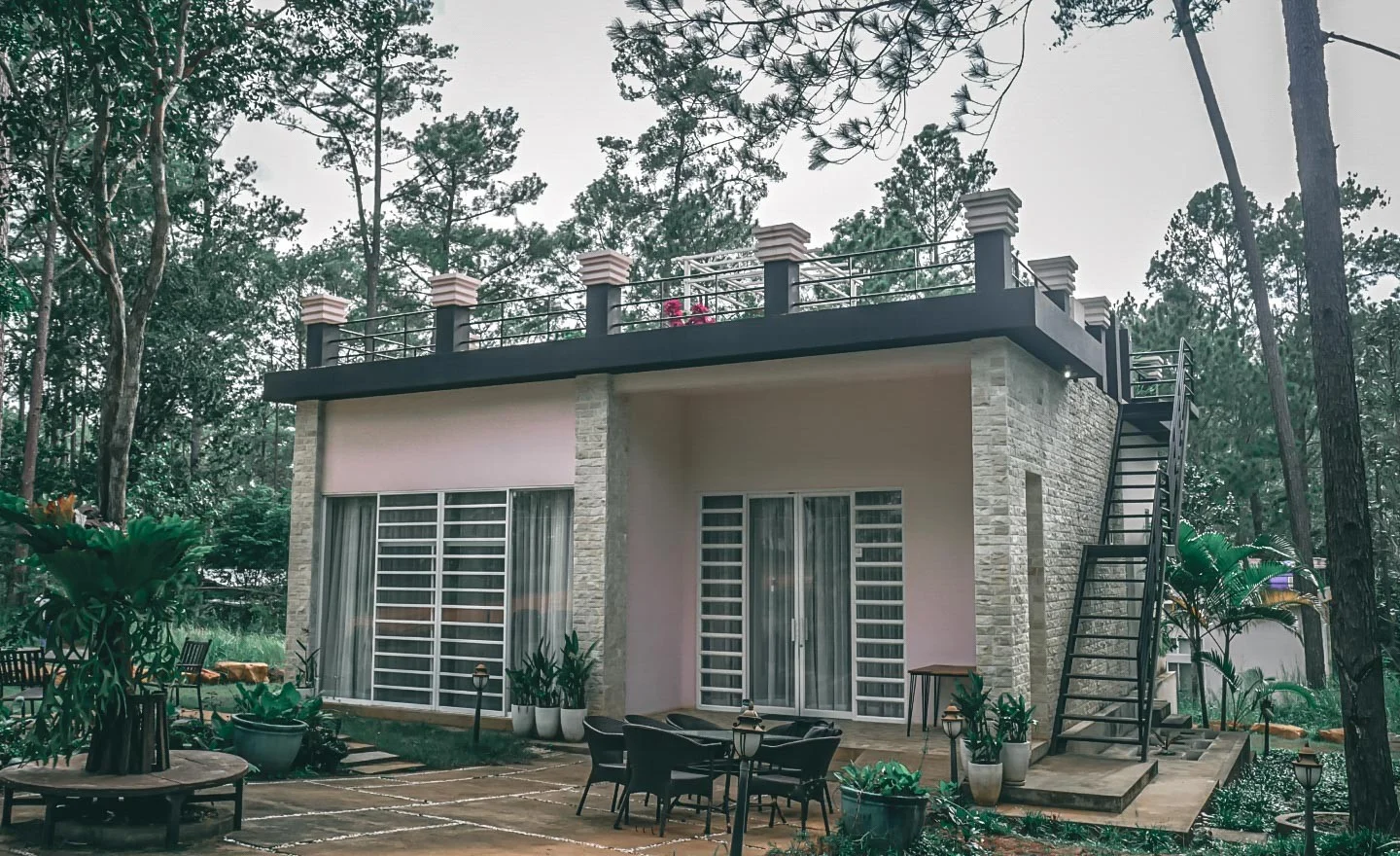
Quick answer: A foreigner cannot own a Chip Mong borey house, because the house stands on land and land is closed to foreign freehold. Three lawful routes exist around that, and on a $445,000 villa letting at $2,000 to $3,500 a month, the structure usually costs more than the yield gap justifies.
Search for a Chip Mong borey and the results are directories. Listings, floor plans, launch announcements, and a discount banner. Not one of the pages that rank answers the question a foreign searcher is actually asking, which is whether they are allowed to buy the thing at all.
The answer is no, and the useful version of this page starts after that sentence rather than ending with it.
Borey ownership is the largest closed door in Cambodian residential property, and the scale is worth stating precisely. Supply roughly doubled from about 60,000 units to about 120,000 units between 2019 and 2022, according to CBRE Cambodia data. Borey townhouses and villas make up roughly 45% of Phnom Penh residential listings against about 40% for condominiums. Around 170 borey developments have been recorded in the capital, with Sen Sok alone home to more than 40. Our analysis treats this as the defining structural fact of the market: the single largest residential segment in Cambodia is the one segment a foreign buyer cannot purchase in their own name, and every piece of advice about landed property has to be read against that. It also explains why the search results look the way they do. A directory has no reason to raise eligibility, because a directory sells to whoever clicks.
What is a borey and why does the ownership question keep coming up?
A borey is a gated development of landed housing, typically link houses, twin villas and single villas behind a shared perimeter with security and internal roads. The format dominates Cambodian residential supply, at roughly 45% of Phnom Penh listings, and it is marketed to foreign buyers constantly despite being closed to them.
| Borey characteristic | Detail |
|---|---|
| Typical product | Link house, twin villa, single villa, shophouse |
| Share of Phnom Penh residential listings | About 45% |
| Supply growth 2019 to 2022 | From about 60,000 to about 120,000 units |
| Recorded developments in Phnom Penh | About 170, with Sen Sok above 40 |
| Title class | Hard title over the land parcel |
| Foreign freehold available | No |
The reason the question recurs is that borey marketing does not distinguish its audience. A borey is sold in English, priced in US dollars, advertised on the same portals as strata condominiums and shown to foreign visitors, and none of those signals carries the information that the product cannot be bought by them. Our analysis has seen the same buyer scenario repeatedly: a foreign purchaser reaches reservation stage on a landed unit before anyone raises title class, and the correction arrives after money has moved. The checklist item that prevents it is a single question asked on the first visit, in writing: is this unit strata-titled, or is it registered on a hard title over land?
- Ask the title class before viewing.
- Dollar pricing and English marketing say nothing about eligibility.
- The condo and borey decision is compared in the condo versus borey guide.
- Title classes are explained in the soft versus hard title guide.
- Borey rules in detail sit in the borey ownership guide.
Can a foreigner own a Chip Mong borey?
The answer for foreign buyers is no, and the reason is the land rather than the house. A borey house is registered on a hard title over land, and land freehold is closed to foreign nationals. Foreign buyers may hold hard title over a strata unit above the ground floor, capped at 70% of total private-unit area.
| Asset | Sits on land? | Foreign freehold available? |
|---|---|---|
| Strata condominium above ground floor | No | Yes, inside the 70% area cap |
| Ground-floor unit in a co-owned building | Treated as land-attached | No |
| Borey link house | Yes | No |
| Borey twin or single villa | Yes | No |
| Borey shophouse | Yes | No |
| Bare land plot | Yes | No |
Insider tip: a large share of ranking pages state that “foreigners cannot hold hard title in Cambodia”, and that sentence is wrong in a way that costs buyers money. Hard title is simply the nationally registered, cadastrally recorded class of title, and a foreigner holding a strata unit above the ground floor holds exactly that. The correct statement is narrower and more useful: a foreigner cannot hold title over land, or over a building that stands on land they would need to own. Our underwriting flags any adviser who uses the broad formulation, because a buyer who believes hard title is closed to them will reject perfectly ownable strata stock and accept a nominee arrangement they should not touch.
- Foreigners can hold hard title over a strata unit above the ground floor.
- Title over land, or over a house on land, stays closed to them.
- The precise legal wording sits in the strata title FAQ.
- Land routes are set out in the land ownership guide.
- The eligibility pillar is the foreign ownership guide.
What do Chip Mong borey units cost and rent for?
Rents at the Chip Mong Grand Phnom Penh project are $700 to $1,200 a month for townhouses, $1,200 to $2,000 for twin villas and $2,000 to $3,500 and above for single villas. On the sale side, a five-bedroom Queen B II villa in the same development has listed at around $445,000.
| Chip Mong product | Monthly rent | Notes |
|---|---|---|
| Townhouse | $700 to $1,200 | Entry rental product in the scheme |
| Twin villa | $1,200 to $2,000 | Mid tier |
| Single villa | $2,000 to $3,500 and above | Top of the rental range |
| Five-bedroom Queen B II villa | Sale listing about $445,000 | Single observed data point |
| Grand Landmark 271 launch | Three villa designs, 8 May 2026 | Up to 9% discount, up to $30,000 off |
| Grand Star Platinum | Early access from March 2026 | Newest phase |
Running those figures gives a gross of roughly 5.4% to 9.4% on a $445,000 villa letting between $2,000 and $3,500 a month, which looks strong against Phnom Penh strata. The comparison is misleading in two directions. Upward, because the villa rent band is wide and the top of it belongs to the best-positioned units rather than the average one. Downward, because none of that gross is reachable by a foreign buyer without paying for a holding structure first. Our underwriting therefore treats the borey gross as a benchmark for what Cambodian landed housing earns, and not as a return any foreign buyer will actually receive. The launch terms make the same point from the other side: Chip Mong Land released three villa designs at Grand Landmark 271 on 8 May 2026 with a discount of up to 9% and a further reduction of up to $30,000, which is a soft-market incentive rather than a sign of pricing power.
- The 5.4% to 9.4% gross belongs to the asset, not to the foreign buyer.
- Treat any quoted landed yield as a red flag until the structure cost is named.
- Villa rent bands are wide and skew to the best-positioned units.
- Launch discounts of up to 9% signal a soft landed market.
- The developer’s wider record sits in the Chip Mong developer profile.
- One Chip Mong estate reviewed in full: Borey Premium Chip Mong, with the lease and company routes priced against a condo.
- The Chip Mong product a foreigner can title directly: Chip Mong Park Land TK, strata units in Tuol Kork.
- Sen Sok, where much of the stock sits, is covered in the Sen Sok area guide.
What do the three lawful routes actually cost?
Three lawful routes exist for foreign buyers: a long lease of 15 to 50 years, renewable; a landholding company capped at 49% foreign shareholding against 51% Cambodian; or a trust arrangement, with roughly $2.46 billion of assets now held in Cambodian trust structures. Each of the three carries a setup cost, an annual cost and a counterparty risk.
| Route | What you actually hold | Principal weakness |
|---|---|---|
| Long lease | A registered leasehold interest, 15 to 50 years | A wasting asset with a fixed end date |
| Landholding company | 49% of a company that owns the land | Control depends on the 51% shareholder |
| Trust | A beneficial interest under the Trust Law | Trustee dependence and ongoing fees |
| Direct ownership | Not available | Closed by statute |
| Nominee in a private name | Nothing enforceable | Avoid entirely |
| Strata unit instead | Freehold in your own name | Different product, not landed |
The structural cost is the part borey marketing never quantifies, and it is what turns an apparently superior yield into an inferior one. A landholding company carries incorporation, annual filings, audit, tax registration and the standing question of who genuinely controls the 51%. A trust carries trustee fees for the life of the holding. A lease avoids both but hands back a wasting asset, which matters a great deal on a property whose land component is most of its value. Our analysis has found that these costs typically consume the entire gap between a landed gross of 5.4% to 9.4% and a strata gross of 5.22% to 7.4%, which is why the recommendation so often lands on the product a foreigner can simply own rather than the one that has to be held at arm’s length.
- We price the structure before we price the property.
- Structure cost usually eats the entire landed yield advantage.
- A lease on land-heavy assets is a wasting asset by design.
- Route comparison sits in the lease, nominee and trust guide.
- Trust mechanics are covered in the trust structure guide.
- Company routes are discussed in the land banking guide.
How large is the market a foreigner is locked out of?
Borey is the largest residential segment in Cambodia and the market is substantial. Supply roughly doubled from about 60,000 units to about 120,000 units between 2019 and 2022, and borey townhouses and villas hold about 45% of Phnom Penh residential listings today against roughly 40% for condominiums.
| Market measure | Figure |
|---|---|
| Borey supply, 2019 | About 60,000 units |
| Borey supply, 2022 | About 120,000 units |
| Share of Phnom Penh residential listings | About 45% |
| Condominium share for comparison | About 40% |
| Recorded borey developments in Phnom Penh | About 170 |
| Appreciation to early 2026 | About 2% to 4% in well-connected districts |
Understanding the size of the closed segment changes how a foreign buyer should read Cambodian market commentary. When a report says the residential market is recovering, or that landed housing is the strongest performer at 3% to 6% projected appreciation for mid-tier suburban townhouses, it is usually describing borey. That growth is real and it is not accessible. Our analysis treats any national residential index as substantially a borey index, and applies it to strata pricing only with an explicit adjustment, because the two segments have different buyers, different financing and different demand drivers. The red flag is a sales deck applying a landed growth figure to a condominium unit.
- National residential commentary largely describes the borey segment.
- Landed growth figures should never be applied to strata pricing.
- Landed districts are covered in the Dangkao area guide.
- The market backdrop sits in the 2026 outlook.
- District pricing is in the Phnom Penh price guide.
When does a borey still make sense?
A borey makes sense for a foreign buyer in a narrow set of cases: a long residence with family, a business needing physical premises, or a buyer whose Cambodian spouse or partner can hold in their own name. Pure investment cases almost never survive the structure cost against a 5.22% to 7.4% strata alternative.
| Buyer situation | Borey viable? | Reason |
|---|---|---|
| Long-term resident family, ten years plus | Often yes | Use value outweighs structure cost |
| Cambodian spouse holding in own name | Yes | Direct hard title, no structure needed |
| Business needing premises | Sometimes | Lease can be written to the business need |
| Pure yield investor | Rarely | Structure cost consumes the yield gap |
| Buyer needing a two-year exit | No | Structured landed exits are slow |
| First Cambodian asset under $100,000 | No | Strata is cheaper and directly ownable |
The honest recommendation on this page is a narrow one, and it is worth stating without hedging. If you will live in the house for a decade, a landholding structure on a Chip Mong villa can be a reasonable way to buy a family home in a market where the alternative is renting at $2,000 to $3,500 a month indefinitely. If you are buying for return, the borey is the wrong instrument, and the right one is a strata unit you can register in your own name for a fraction of the friction. Our underwriting runs that test first and reaches the second answer far more often than the first.
- The buyer scenario that works is residence.
- Use value, not yield, is what justifies a structured borey.
- Renting a villa at $2,000 to $3,500 a month is the real alternative.
- Strata options at lower tickets sit in the sub-$50,000 guide.
- Exit constraints are covered in the exit strategy guide.
- Inheritance treatment is in the inheritance guide.
Advantages and disadvantages
A borey buys space and a gated community. It does not buy title, and the structure that substitutes for title carries a running cost and a counterparty.
| Advantage | Disadvantage |
|---|---|
| Gross of roughly 5.4% to 9.4% on villa stock | Not reachable without a holding structure |
| Landed housing appreciated 2% to 4% to early 2026 | Foreign buyers capture that only indirectly |
| Largest segment, about 45% of listings | Largest closed segment for foreigners |
| Space, garden, parking, gated security | No registered title in your own name |
| Chip Mong is an established developer | Launch discounts up to 9% signal a soft market |
| Rents of $2,000 to $3,500 on single villas | The alternative to owning is paying that rent |
Development licensing is the one place where the borey segment is better regulated than most buyers assume. Under Prakas No. 047 of 26 September 2023, a land development lodges 5% of land investment cost with the regulator, against 2% of construction cost for a residential or co-owned building development. That is a higher proportional guarantee than condominium developments carry, and it is a fair point in the borey segment’s favour. The guarantee protects the project and leaves your own position in it uncovered, but it is still worth knowing before assuming that landed development is the looser end of the market.
Buyer scenarios and red flags
Three scenarios cover most borey enquiries that reach our desk, and the red flags repeat.
| Scenario | What they want | What we would recommend |
|---|---|---|
| Family relocating for a decade | A house with a garden | Structured lease or company; price the running cost |
| Investor comparing 8% landed with 6% strata | The higher number | Strata; the gap is structure cost, not return |
| Buyer told a nominee can hold it | A simple solution | Refuse; a private nominee holds nothing enforceable |
The failure pattern is a private nominee arrangement dressed as ownership. A buyer is told that a Cambodian friend, an employee or an agent’s relative will hold the hard title on their behalf, with a side letter for comfort. That arrangement is not a route at all. The title sits in someone else’s name, the side letter is difficult to enforce, and the buyer has neither ownership nor a lease. Our underwriting rejects it in every case without exception, and this is one of the few points where there is no proportionate version of the risk. A landholding company with a genuine 51% and 49% split, a registered lease, or a trust under the Trust Law are the three arrangements that produce something a court can look at.
- Refuse any private nominee arrangement, whatever the side letter says.
- Register a lease properly rather than relying on a private agreement.
- Ask who genuinely controls the 51% in a landholding company.
- Confirm the title class in writing before a reservation fee moves.
- Price the annual structure cost before comparing landed and strata yields.
Send us the borey, the unit type and the asking price. We will tell you which of the three routes fits and what it costs to run each year, before you commit to anything.
Talk to our Cambodia deskFor the comparison at the top of the market, Borey Peng Huoth is Cambodia’s largest residential developer with over 10,000 homes delivered since 2005, and the same landed-versus-strata question decides what a foreign buyer can hold there.
Frequently Asked Questions
Not in their own name. The house stands on land, land is closed to foreign freehold, and the three lawful alternatives are a long lease, a landholding company at 49%, or a trust.
Yes, over a strata unit above the ground floor inside the 70% total-area cap. What a foreigner cannot hold is title over land, or over a house standing on land.
A gated development of landed housing: link houses, twin villas and single villas behind a shared perimeter. Supply roughly doubled from about 60,000 to about 120,000 units between 2019 and 2022.
A five-bedroom Queen B II villa at Grand Phnom Penh has listed around $445,000. Rents run $700 to $1,200 for townhouses and $2,000 to $3,500 and above for single villas.
Roughly 5.4% to 9.4% gross on a $445,000 villa letting at $2,000 to $3,500 a month, before the cost of the structure a foreigner needs to hold it at all.
For most, no. The condo can be owned outright and the borey cannot. Structure cost typically consumes the whole yield gap between landed and strata.
Large. Borey is about 45% of Phnom Penh residential listings against roughly 40% for condominiums, across about 170 recorded developments in the capital.
Get a Cambodia property shortlist
Share your budget, target district (BKK1, Koh Pich, Koh Norea, Siem Reap), and goal. We reply within one business day with matched stock and next steps.