Cambodia Real Estate Market 2026: What the Numbers Show
Cambodia property market outlook 2026: Phnom Penh oversupply, 8.9% bank NPLs, BKK1 vs BKK3 prices, foreign buyer trends, and bull, base, and bear scenarios.
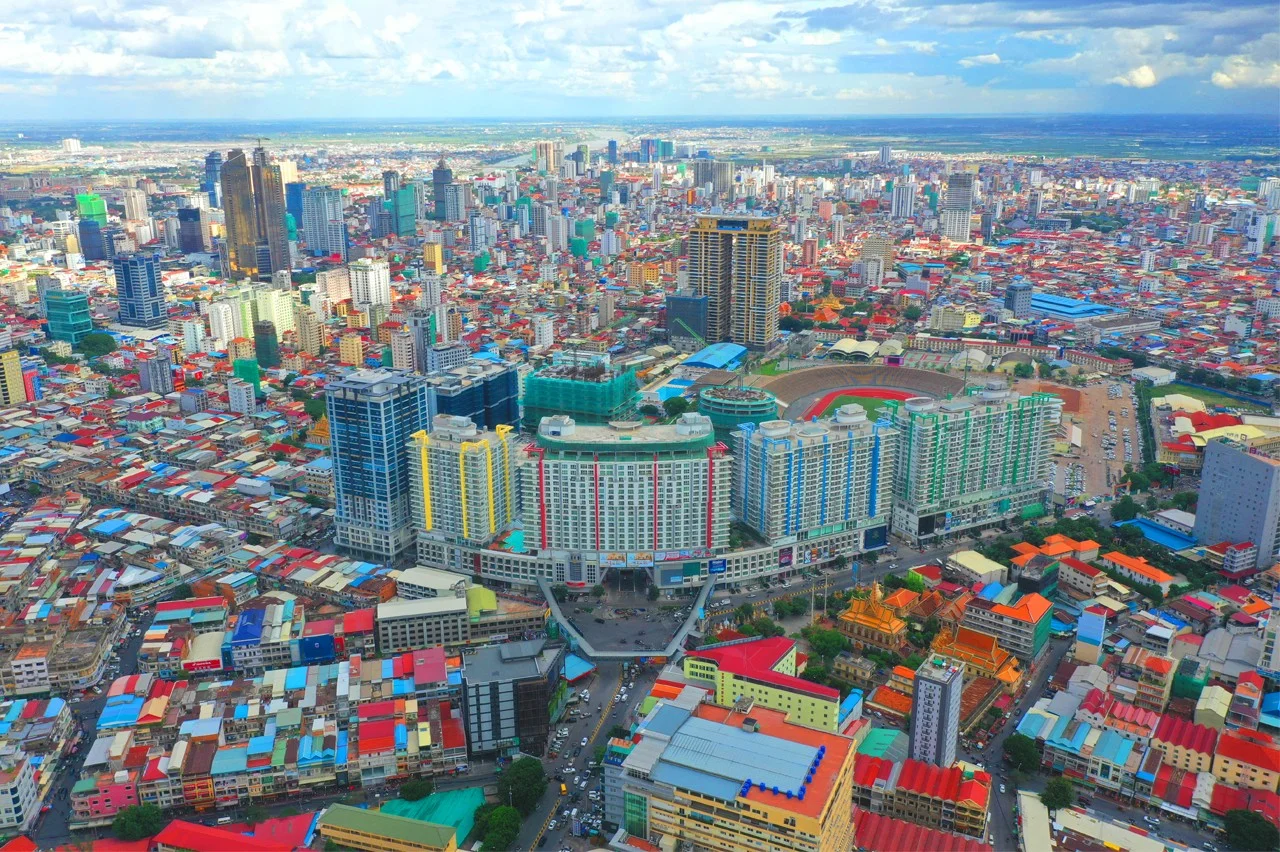
Quick answer: Cambodia in 2026 is a buyer’s market. Phnom Penh holds about 76,000 to 80,000 condo units against roughly 3% to 4% annual absorption, the average condo sits near $1,800 per square metre, and bank NPLs near 8.9% are squeezing developers. Entry prices stay low from about $40,000 to $50,000, but there is no guaranteed yield. Patient cash buyers picking quality developers have leverage. Speculators do not. All figures are indicative.
Cambodia’s property story in 2026 is a study in contrasts. On one side sit the structural attractions that pulled foreign capital in for a decade: some of the lowest condo entry prices in Southeast Asia, full strata ownership for foreigners above the ground floor, a US dollar economy that removes currency risk for many buyers, and a young population in a fast-urbanising capital. On the other side sits the reality of the current cycle: a wave of completed supply that outran demand, a banking system carrying more bad debt than it has in years, and developers competing hard on price. This outlook walks through the numbers that matter, separates the prime market from the fringe, and lays out bull, base, and bear scenarios so you can decide whether to buy now or wait.
Every figure below is indicative and the market moves quickly, so treat this as a planning framework rather than a forecast to bank on. For the full mechanics of buying, see Cambodia Property Investment Guide 2026, and for yield specifics, read Phnom Penh Rental Yield Guide.
Is Cambodia property a good investment in 2026?
The case rests on fundamentals that have not changed: foreigners can own condos outright on hard title within the 70% foreign quota per building, the economy runs on US dollars, and Phnom Penh keeps urbanising. The caution rests on the cycle. With average condo prices near $1,800 per square metre, absorption running at only 3% to 4% of standing stock, and bank non-performing loans near 8.9%, the market is digesting an oversupply rather than expanding into shortage. That combination rewards selectivity and punishes haste. The investor who treats Cambodia as a long-term rental and value play, backed by genuine due diligence, is positioned very differently from the one who expects the next two years to deliver double-digit appreciation.
| 2026 metric | Indicative value | Buyer use |
|---|---|---|
| Phnom Penh avg price | $1,800 per sqm | Baseline vs district premium |
| Foreign quota cap | 70% per building | Above ground floor only |
| Banking NPL ratio | 8.9% | Developer completion risk |
| Stamp duty window | Through 31 December 2026 | Registration timing |
| Capital gains tax | 20% of the gain from 1 January 2027 | Changes exit maths |
Every figure above is the reference value for 2026 across this site, and other pages link to this table rather than restate it. Our read is that the five lines carry different half-lives: the $1,800 average and the 8.9% NPL ratio move with the cycle and should be re-checked each quarter, while the 70% cap is statutory and moves only if the law does. The two dated lines are the ones that decide money. A transfer registered on 30 December 2026 pays stamp duty under the incentive; the same transfer registered three days later does not. A sale completing in December 2026 falls outside the capital gains regime; the same sale in January 2027 is taxed at 20% of the gain. Signature dates do not govern either one, and registration dates do.
How serious is the Phnom Penh oversupply problem?
The oversupply is not evenly spread, which is the most important nuance for a buyer. It concentrates in the mid-tier and upper-tier condo segments aimed at investors rather than the affordable borey and entry-level condo segment aimed at local owner-occupiers. Prime central locations with genuine tenant demand clear faster than speculative towers on the urban fringe. This is why a single market average can mislead. The right question is not whether Phnom Penh is oversupplied, because it plainly is, but whether the specific building you are considering sits in a pocket of real demand or in a glut of identical units competing for the same handful of tenants.
| Supply indicator | Indicative 2026 figure | What it means for buyers |
|---|---|---|
| Completed condo units, Phnom Penh | 76,000 to 80,000 | Large standing inventory, buyer leverage |
| Annual absorption rate | 3% to 4% of stock | Slow clearance, time to negotiate |
| Average condo price | About $1,800 per square metre | Soft pricing, room to bargain |
| Segment most exposed | Mid and upper-tier condos | Pick location and developer carefully |
| Segment most resilient | Affordable and prime central | Owner-occupier demand supports value |
For how absorption feeds into achievable rents, see Phnom Penh Rental Yield Guide, and for the central districts that hold up best, compare BKK1 Phnom Penh and BKK3 Phnom Penh.
How do banking NPLs affect developers and buyers?
Non-performing loans in Cambodia’s banking sector are reported near 8.9%, against roughly 2% before 2023, and construction and real estate are among the most exposed sectors. For developers, tighter credit raises the risk that a project stalls mid-build or never completes, because many rely on bank facilities and pre-sales to fund construction. For buyers, especially off-plan buyers, this elevates completion risk: the danger that you pay deposits and instalments for a unit that is delayed for years or never delivered. The defence is concrete. Favour developers with strong balance sheets, a record of completed and handed-over projects, and payment structures that protect you, such as escrow arrangements or milestone-linked instalments rather than large upfront sums. The banking backdrop is the single strongest argument in 2026 for buying completed stock over off-plan, or for restricting off-plan purchases to the most established names. Run every shortlisted developer through the checks in Due Diligence Process Cambodia Step By Step and weigh the trade-offs in Off Plan Property Cambodia Guide.
Price forecast: bkk1 versus bkk3
The base expectation for 2026 is broadly flat pricing in prime BKK1, with selective resilience in the best buildings, and modest softening in BKK3 and the urban fringe where oversupply bites hardest. A meaningful price rise across the board would need stronger absorption and easier credit, neither of which is visible yet. A sharper fall would likely come from further developer distress feeding discounted inventory into the resale market. The table below frames indicative ranges and direction, not precise predictions.
| District | Indicative price per square metre | 2026 price direction | Why |
|---|---|---|---|
| BKK1 (prime central) | About $2,500 to $3,500 | Flat to slightly firm | Deep tenant demand, scarce prime land |
| BKK3 (mid-tier central) | About $1,800 to $2,500 | Flat to soft | More new supply, price competition |
| Urban fringe and outer | About $1,200 to $1,800 | Soft | Highest oversupply, thin tenant demand |
| Affordable and borey | Below $1,200 | Stable | Local owner-occupier demand |
These ranges are indicative and vary by building, view, and finish quality. Explore the prime market in BKK1 Phnom Penh and the value-versus-risk trade-off in BKK3 Phnom Penh.
Who is actually buying? Foreign buyer trends
This diversification has two practical implications. First, it spreads risk, because demand from one region cooling is partly offset by interest from another, which supports liquidity in prime stock. Second, it shapes which units sell, since European buyers often prioritise build quality, legal security, and central locations over the speculative towers that drew earlier waves of capital. For an investor, the takeaway is that quality, well-located, properly titled units in districts like BKK1 are aligned with where the broadening demand is heading, while generic investor-grade towers on the fringe are exposed to the segments where demand is thinnest.
| Foreign buyer origin | Indicative share of foreign buyers | Typical priority |
|---|---|---|
| Russia | About 9.6% | Value, central units, hold |
| Poland | About 9.1% | Legal security, quality build |
| France | About 7.4% | Central location, lifestyle and yield |
| Regional Asia and others | Remaining majority | Mixed, investor and owner-occupier |
For a side-by-side read on how Cambodia stacks up against its larger neighbour, see Cambodia VS Thailand Property Investment.
Techo airport and the infrastructure bet
Techo International Airport opened in 2025 roughly 20 kilometres south of central Phnom Penh, with a first-phase design capacity of about 13 million passengers a year against the 7 million or so the old airport handled at its peak. Land south of the city has been priced against that number since the groundbreaking rather than against anything currently built there. Our read of the corridor is that the airport changes where Phnom Penh’s growth goes over fifteen years and changes almost nothing about what a unit there earns in 2027. Rental demand follows employers, schools and hospitals, and those arrive years after the runway. A buyer underwriting the corridor on today’s rents will find very few of them; a buyer underwriting it on land appreciation is making a decade-long bet with no income to fund the wait.
The opportunity is real but the timeline is long and the risk is concentration. Infrastructure-led appreciation typically plays out over a decade, not a single cycle, and the corridor is precisely the kind of area where speculative supply can run ahead of actual demand, the same dynamic driving the current oversupply elsewhere. A buyer betting on the airport corridor should treat it as a patient, higher-risk allocation rather than a near-term income play, accept that rental demand may lag construction, and size the position so that a slow build-out does not strain the rest of the portfolio. The infrastructure story strengthens the long-term case for Cambodia overall, but it does not rescue a poorly chosen unit. Read the detail in Techo Airport Corridor before committing capital to the south of the city.
Bull, base, and bear scenarios for 2026 to 2028
| Factor | Bull case | Base case | Bear case |
|---|---|---|---|
| Absorption rate | Rises above 5%, inventory clears | Stays near 3% to 4%, slow clearance | Falls below 3%, inventory builds |
| Bank NPLs | Ease back toward 6% | Hold near 8.9% | Climb above 10%, credit freezes |
| Prime prices (BKK1) | Rise 5% to 10% | Flat to slightly firm | Fall 5% to 10% |
| Fringe prices | Stabilise | Soften modestly | Fall sharply on distress |
| Developer health | Strong names expand | Weak names stall, strong hold | Multiple failures, stalled towers |
| Best buyer action | Buy quality early | Negotiate hard, pick winners | Wait, buy distress later |
In the bull case, stronger absorption and easing credit let the market clear its overhang, prime stock firms, and early buyers of quality units in central districts benefit most. In the base case, the most likely path, the market grinds sideways: oversupply keeps a lid on prices, patient cash buyers extract discounts, and the gap between prime and fringe widens. In the bear case, rising NPLs and falling absorption trigger further developer distress, stalled projects multiply, and fringe prices fall hard, which paradoxically creates opportunity for cash buyers able to acquire genuine distress later in the window. Across all three paths, the constant is that quality, central, well-titled units from strong developers hold up best, which is why unit selection beats market timing.
Should you buy now or wait in 2026?
Wait if you depend on financing that tighter credit makes expensive or uncertain, if your only options are off-plan units from untested developers, or if your return assumptions rely on quick capital gains the current cycle cannot deliver. The oversupply means inventory is not going anywhere fast, so patience costs little and due diligence pays. The decision is less about timing the market, which is nearly impossible, and more about timing the developer and the unit. The pros and cons below frame the trade-off.
| Buy now if | Wait if |
|---|---|
| You pay cash and found a quality completed unit | You rely on bank financing |
| You hold five to seven years for rental income | You expect quick capital gains |
| The developer has a strong delivery record | Your options are untested off-plan |
| You negotiated a real discount | The price is not genuinely below market |
| You want the stamp duty saving before 2027 | You have not completed due diligence |
The advantages of buying in 2026 are negotiating power, low entry prices, the stamp duty window, and a broadening buyer base that supports prime liquidity. The disadvantages are completion risk on off-plan, soft prices that can drift lower before they recover, and the patience the hold demands. Weigh both honestly against your own cash position and timeline.
Want this read applied to a specific district and building rather than the city as a whole?
Get a district readRisks and red flags to check before you commit
Six failures account for most of the money lost by foreign buyers in this market, and none of them are exotic. Each one is visible before signature to anyone who asks for the right document, which is why the checks below are phrased as documents rather than as judgements. The banking backdrop sharpens all six: with non-performing loans near 8.9% and absorption running at 3% to 4% of standing stock a year, a developer who was merely slow in 2022 can be insolvent in 2026, and a fringe unit that was merely cheap can be unlettable.
Insider tip: ask the building manager, not the sales agent, how many units in the building are currently occupied. Sales staff quote sold units, which include investor stock sitting empty; the manager quotes the service-charge and utility connections that actually run. In a glutted district those two numbers can differ by half, and the second one is the one your rent depends on.
- Weak or unproven developer. With NPLs near 8.9% and credit tight, developer financial strength is the top risk. Verify completed projects, balance sheet health, and payment protections before any off-plan deposit.
- Fringe oversupply traps. A cheap unit in a glutted outer district can be near impossible to rent or resell. Confirm genuine tenant demand for the specific building, not the city average.
- Title and quota gaps. Confirm the unit is hard-titled, sits above the ground floor, and fits inside the 70% foreign quota for the building before you sign anything.
- Guaranteed yield promises. There is no guaranteed yield in Cambodia. Treat any developer rental guarantee as a marketing inducement priced into the unit, not a contractual certainty.
- Off-plan completion risk. In the current banking climate, off-plan carries elevated risk of delay or non-delivery. Prefer completed stock, escrow, or only the strongest developers.
- Buying on hope of an extension. The stamp duty incentive is scheduled to end in December 2026. Plan for your transfer to register before the deadline rather than assume an extension.
For the full structured walkthrough that catches these before money moves, use Due Diligence Process Cambodia Step By Step.
Closing verification checklist
Before you commit to a Cambodia purchase in 2026, confirm the developer’s financial strength and delivery record, verify genuine tenant demand for the exact building rather than the citywide average, check the unit is hard-titled and within the 70% foreign quota, model returns with no guaranteed yield and a five to seven year hold, decide your buy-or-wait position against your cash and financing reality, and time the deed transfer to capture the stamp duty incentive before it ends in December 2026. Keep your capital gains tax assumptions separate and revisit them as the January 2027 start date approaches. Get every figure in this outlook confirmed in writing by a licensed Cambodia lawyer, because all numbers here are indicative and the market is moving.
Frequently Asked Questions
Cambodia offers low entry prices from about $40,000 to $50,000, full strata ownership for foreigners, and a US dollar economy, but 2026 is a buyer's market shaped by oversupply and a banking sector under stress. The average Phnom Penh condo sits near $1,800 per square metre with absorption around 3% to 4% and bank NPLs near 8.9%. It can suit patient cash buyers who pick quality developers, and it is risky for anyone chasing quick gains or guaranteed yield. Figures are indicative.
Phnom Penh is widely reported to hold roughly 76,000 to 80,000 completed condo units, with new supply still arriving while annual absorption runs near 3% to 4% of stock. That gap means buyers have leverage, completed inventory takes time to clear, and developers compete on price and incentives. Oversupply is concentrated in mid and upper segments, so unit selection and location matter more than the headline market. These figures are indicative and should be verified against current reports.
Non-performing loans in Cambodia's banking sector are reported near 8.9%, well above pre-2023 levels. Higher NPLs make banks cautious, tighten construction and mortgage lending, and raise the risk that weaker developers stall or fail to finish projects. For buyers this elevates completion risk on off-plan units. The practical defence is to favour developers with strong balance sheets, completed track records, and escrow or milestone protections. Verify a developer's financial standing before paying deposits.
Most indicators point to flat or softening prices across much of Phnom Penh in 2026 rather than broad gains. Prime BKK1 stock has held value better than mid-tier BKK3 and fringe areas, where discounts are common. A base case sees prices roughly flat with selective pockets of strength, a bull case needs stronger absorption and credit easing, and a bear case involves further developer distress. Treat any single forecast as a planning scenario, not a promise.
Buy now if you are a cash buyer who has found a quality completed unit from a proven developer at a negotiated price and you plan to hold for at least five to seven years for rental income. Wait if you are relying on financing, want off-plan from an untested developer, or expect quick capital gains. The oversupply means there is little penalty for patience and real value in due diligence, so timing the developer matters more than timing the market.
BKK1 is the prime central district with the deepest tenant demand, the strongest resale liquidity, and the most resilient prices, which makes it the lower-risk choice despite higher entry costs. BKK3 offers lower prices and decent yields but sits more exposed to oversupply and price softness. For capital preservation favour BKK1, and for yield-focused buyers willing to accept more risk, BKK3 can work if the developer and building quality are strong. Verify rental demand per building.
Get a Cambodia property shortlist
Share your budget, target district (BKK1, Koh Pich, Koh Norea, Siem Reap), and goal. We reply within one business day with matched stock and next steps.