BKK1 Phnom Penh Guide: Where the Premium Actually Stops
BKK1 trades at $2,800-3,500 per sqm against a $1,800 city average. The premium is real, measurable, and it ends at identifiable streets.
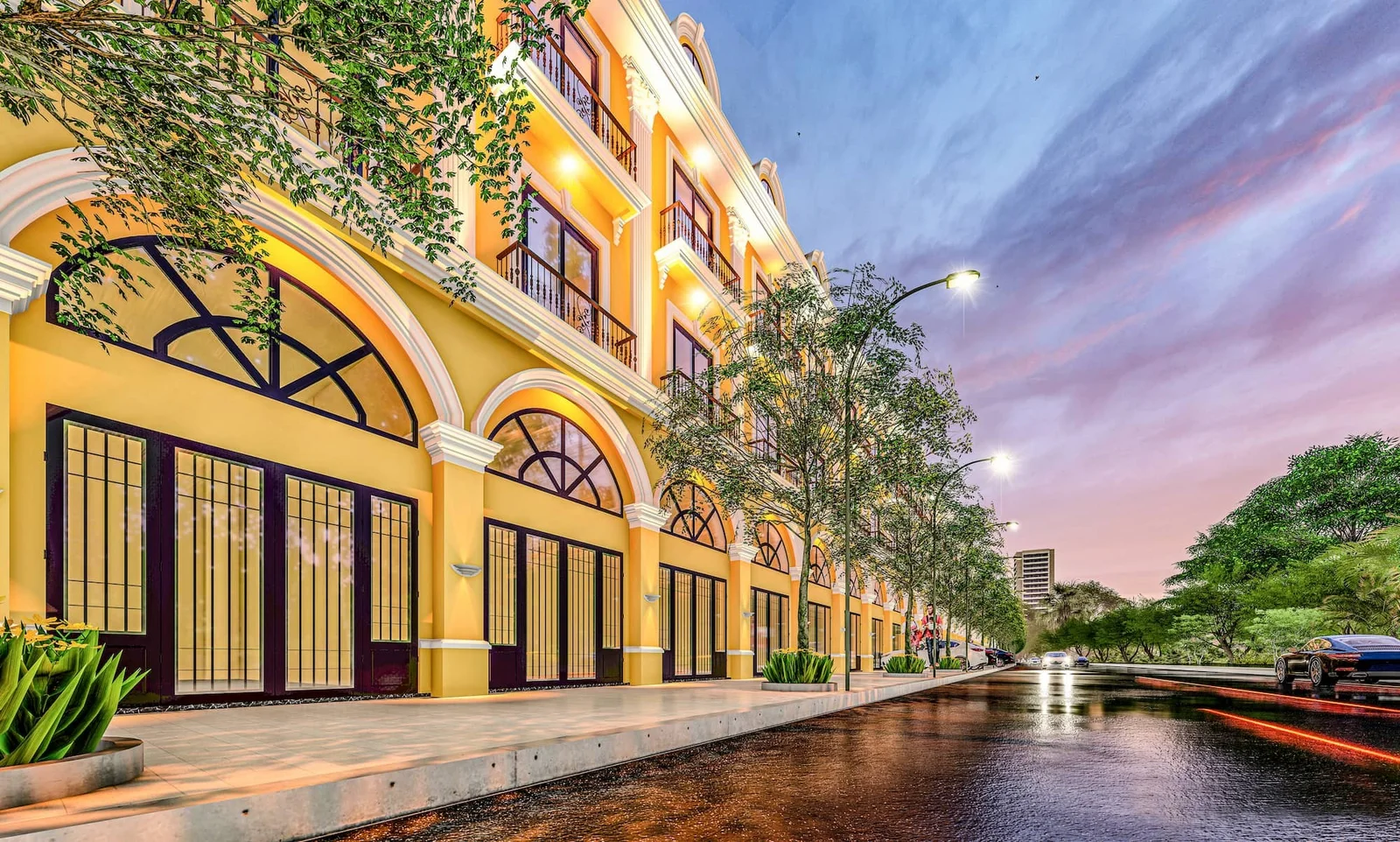
Quick answer: BKK1 is Cambodia’s most expensive residential district, trading at roughly $2,800 to $3,500 per sqm against a citywide average near $1,800. The premium is genuine and it is measurable, and it does not extend evenly across the sangkat. Knowing where it thins out is worth more to a buyer than knowing the district average.
Every guide to BKK1 says it is the premium district. That is true and not useful. The question a buyer actually needs answered is what the premium buys, what it costs in yield, and at which streets it stops being real, because the sangkat boundary and the price boundary are not in the same place.
What the premium buys, in numbers
The gap between BKK1 and the rest of the city is the largest in Cambodian residential property, and it is stable enough to work from.
| Measure | BKK1 | Phnom Penh average |
|---|---|---|
| Price per sqm | $2,800-$3,500 | ~$1,800 |
| Premium over city | Roughly 55%-95% | n/a |
| One-bedroom rent | $650-$1,350 per month | $400-$1,000 central |
| Tenant pool | Deepest expatriate market in the country | Mixed |
| Reletting speed | Fastest in Phnom Penh | Slower |
| Gross yield | Below the districts one step out | Higher further out |
The premium is best understood as paying for liquidity rather than for income. In a market carrying roughly 15% vacancy citywide, the ability to relet quickly is worth real money that never appears in a yield table, and BKK1 is where an empty unit gets viewings soonest. The same logic applies at exit: the resale pool here includes both foreign investors and occupiers, and it is the only Phnom Penh district where a well-chosen unit can be sold without discounting to the most motivated seller in the building. That is what $3,000 per sqm is actually buying. It is not buying a better return on rent, and a buyer told otherwise should ask to see the arithmetic.
The yield model behind those figures is set out in the Phnom Penh rental yield guide, with the gross-versus-net distinction in net vs gross yield. The value district immediately west is profiled in BKK3.
Where the premium actually stops
BKK1 is a sangkat with an administrative boundary, but the market does not respect it evenly. Pricing concentrates around the embassy and restaurant core and thins toward the edges, which is why so many listings use the word “fringe”.
| Position | What it means for price |
|---|---|
| Embassy and restaurant core | Full premium; the number people quote |
| Two or three streets out | Softer, still clearly BKK1 |
| Western and southern fringe | Approaching BKK3 and Tonle Bassac pricing |
| Advertised as “BKK1 fringe” | A pricing claim, not an address |
| Adjacent sangkat, sold as BKK1 | Happens; check the sangkat on the title |
| The tell | Walking time to the core, not the postcode |
Measure the distance to the core on foot rather than trusting the listing’s district label, a unit ten minutes’ walk from the restaurants and embassies rents and resells like a fringe unit no matter what the brochure calls it, and the price should reflect that. The same arbitrage keeps running in the seller’s favour: buyers pay a core price for a fringe location because “BKK1” appeared in the heading, and only discover the difference when the unit takes four months to relet instead of four weeks. The counter-move is trivial and almost nobody does it. Open a map, mark the embassy cluster and the restaurant strip, and price the unit by how far it sits from that cluster rather than by the sangkat it is registered in.
The neighbouring markets that fringe pricing converges toward are documented in BKK3 and Tonle Bassac; the method for pricing a specific unit is in the resale valuation guide.
Who actually rents here, and what they pay for
The BKK1 tenant is the reason the district exists as a premium market, and the profile is narrower than the rent range suggests.
| Tenant | Typical budget | What they are buying |
|---|---|---|
| Diplomatic and NGO staff | Upper half of the range | Proximity to missions, security, walkability |
| Corporate expatriates | $800-$1,350 | Address, building standard, short commute |
| Regional professionals | $650-$900 | Convenience over prestige |
| Affluent local households | Varies widely | Amenity and neighbourhood |
| Short-stay and serviced | Higher, less durable | Flexibility; competes with hotels |
| Who is absent | Below ~$600 | That budget rents BKK3 or Toul Tom Poung |
The methodology this site applies is to underwrite the tenant before the building, and BKK1’s tenant is unusually legible: people who need to be within walking distance of a specific cluster of embassies, offices and restaurants, and who are usually spending an employer’s housing allowance rather than their own money. That produces durable demand at the top of the range and near-zero demand below it: the district does not have a cheap tenant, it simply has fewer tenants once you leave the band. For a landlord the practical consequence is that a BKK1 unit priced slightly above its true quality sits empty rather than letting at a discount, because the tenant who would take a discount is not shopping in this district at all.
Rent bands across the city are compared in the Phnom Penh rental yield guide; the completed stock competing for these tenants includes Le Condo BKK1, Embassy Central and the 30-storey Picasso City Garden, completed in 2022. The next wave at the top end is off-plan, led by J Tower 3 on the southern edge toward Tonle Bassac, a three-bedroom-only tower targeted for the fourth quarter of 2028.
Looking at a BKK1 unit? We will tell you how far it really is from the core, pull closed transfers from the same building, and check the quota ledger in square metres before you make an offer.
Price the actual locationThe quota question is sharper here than elsewhere
Foreign buyers hold strata title above the ground floor inside the cap of 70% of a building’s total private-unit area. That rule is national, but its practical bite varies by district, and BKK1 is where it bites hardest.
| Factor | Effect on quota headroom |
|---|---|
| Decade of foreign sales | Foreign share often high in older BKK1 stock |
| Cap measured in area | Large units consume headroom faster than small ones |
| Marketing quotes units | The law counts square metres |
| Foreign-to-foreign resale | Rides existing allocation |
| Local-to-foreign resale | Needs genuine headroom |
| What to request | Dated extract, in square metres, for that building |
Quota headroom is a documented number in any completed building, and it is quoted loosely far more often than it is quoted accurately. In a district that has sold to foreign buyers since the first towers went up, a building can be much closer to the cap than a seller assumes, and the distinction between a foreign-to-foreign transfer and a local-to-foreign one becomes the difference between a transaction that completes and one that stalls at registration. Ask which kind of transfer yours is, then ask for the ledger in square metres. Both questions take a sentence and neither is routinely volunteered.
The ownership framework is explained in foreign ownership and strata title and can foreigners buy property in Cambodia; the registration mechanics are in strata co-ownership registration.
What a BKK1 purchase actually returns
Running the district’s own numbers honestly produces a figure that disappoints anyone who arrived expecting both prestige and yield.
| Input | Figure |
|---|---|
| Purchase, 70 sqm at $3,000 per sqm | $210,000 |
| Achievable rent, mid-band | ~$1,000 per month |
| Gross yield | ~5.7% |
| Vacancy allowance | ~15% citywide backdrop |
| Service charge | ~$1.50 per sqm per month, ~$1,260 a year |
| Management | 8%-10% of rent |
| Modelled net | Roughly 3%-4% before tax |
The arithmetic forces one conclusion: BKK1 is a capital-quality district rather than a cash-flow district. The same $210,000 deployed in BKK3 or Sen Sok buys more square metres, rents to a shallower but adequate tenant pool, and produces a higher gross and usually a higher net. What it does not produce is the reletting speed, the resale depth or the tenant durability that BKK1 offers, and those are worth paying for if the holding period is long and the exit matters. A buyer optimising the annual number should look one district out and accept the trade. A buyer optimising for a liquid, defensible asset in the country’s best-known address is paying the premium for exactly the right reason.
Alternatives at the same money are compared in BKK3 and Sen Sok; the shortlist of buildings across the city is in best condos to buy in Phnom Penh.
Buyer scenarios
An occupier who will walk to work in the embassy quarter gets the district’s full value daily and should simply buy the best-located unit they can afford. A long-hold investor who prizes liquidity over yield is the other natural buyer, and should treat the reletting speed as the return rather than the rent. A yield-first investor is in the wrong district and will do better one step west. And any buyer offered a “BKK1 fringe” unit at a core price should open a map before opening a negotiation, because in this district the walk is the price.
Before you commit
Establish the sangkat on the title rather than in the listing, and measure walking time to the embassy and restaurant core. Obtain the building’s quota extract in square metres, dated, and establish whether your purchase is foreign-to-foreign or local-to-foreign. Get closed transfers from the same building rather than district asking prices. Model the return at 5% to 7% gross and 3% to 5% net rather than at the 6% to 8% district claim. Read the sinking-fund position for any building over five years old. The national tax and timing calendar sits in Cambodia property taxes and fees; in BKK1 the item that changes a decision is the closed-transfer evidence above.
Frequently Asked Questions
Completed premium stock trades at roughly $2,800 to $3,500 per sqm against a Phnom Penh average near $1,800, a premium of roughly 55% to 95%, and the largest district premium in the country.
It depends what you want. BKK1 buys the deepest expatriate tenant pool, the fastest reletting and the most liquid resale. It does not buy the highest yield: the entry price rises faster than the rent, so gross yields sit below the districts one step out.
The market premium fades before the administrative boundary does. Prices soften away from the embassy and restaurant core toward the western and southern fringes, which is why listings say 'BKK1 fringe', a pricing claim worth interrogating.
One-bedroom listings run about $650 to $1,350 a month, a range wide enough that the midpoint means little. Spec, floor, building age and true distance from the core move a specific unit within it.
Yes, on national terms: strata title above the ground floor, inside the cap of 70% of a building's total private-unit area. Because BKK1 has sold to foreign buyers for a decade, quota headroom deserves closer checking here than in locally-owned districts.
Treat 6% to 8% district claims as the optimistic edge. Model 5% to 7% gross and 3% to 5% net after voids, management and a service charge near $1.50 per sqm per month. BKK1 is bought for tenant quality and liquidity, and paid for in yield.
Get a Cambodia property shortlist
Share your budget, target district (BKK1, Koh Pich, Koh Norea, Siem Reap), and goal. We reply within one business day with matched stock and next steps.