Cambodia SEZ and Industrial Property Investment Guide
39 zones, $63 per sqm industrial land, $3 per sqm factory rent and a 3 to 9 year tax holiday. What a foreign property investor can actually own.
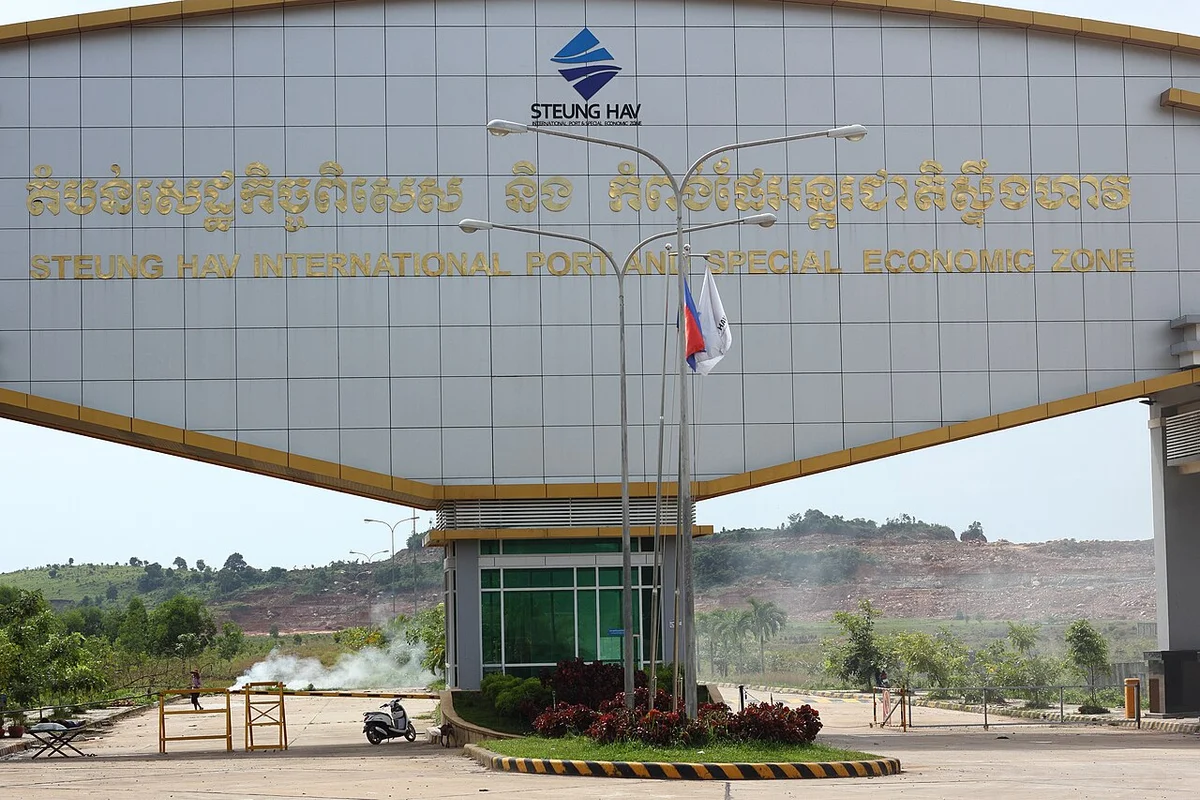
Quick answer: Cambodia’s special economic zones are an operator’s market, not a landlord’s. A foreign investor can lease land at roughly $63 per sqm or rent a ready-built factory at about $3 per sqm per month, and can claim a corporate income tax holiday of three to nine years, but cannot own the land beneath any of it.
Cambodian special economic zones are usually written about as a tax subject. The incentives are real, the paperwork is well documented, and every corporate services firm in Phnom Penh has a page explaining Qualified Investment Project status. What almost nobody writes is the property page: what the real estate inside a zone costs, what an investor actually holds, and whether a foreign investor without a manufacturing business has any role here at all.
That last question has a short answer, and this page gives it early. SEZ property is accessible to operators and largely closed to passive landlords. The rest of the page explains the numbers behind that, and where the industrial theme can be accessed by an investor who is not going to run a factory.
Cambodia’s industrial numbers sit oddly against the rest of its property market, and the contrast is the reason this asset class is worth understanding even for a buyer who will never lease a factory or register a Qualified Investment Project. While Phnom Penh office occupancy fell to roughly 64% after stock doubled, and retail occupancy sat at 57% in the first half of 2026, ready-built factory rents held steady near $3 per sqm per month across 39 zones housing more than 560 factories. No distress pricing appeared in the industrial segment during a cycle that repriced every other commercial format in the country. Our analysis reads that stability as evidence that the industrial base is driven by export manufacturing rather than by the domestic credit cycle that shaped the condo and office markets, and the first quarter of 2026 supports it: investment capital and exports through the zones exceeded $13.5 billion.
What is a Cambodian special economic zone and who can invest in one?
A Cambodian special economic zone is a designated industrial area with its own customs, utilities and one-stop administration, and Cambodia has 39 of them in operation. Together they host more than 560 factories and over 250,000 employees, with investment capital and exports above $13.5 billion recorded in the first quarter of 2026 alone.
| Zone characteristic | What it means for an investor |
|---|---|
| 39 operational zones nationwide | Real choice on location, labour pool and port access |
| More than 560 factories | An established occupier base, not a speculative concept |
| Over 250,000 employees | Labour supply is a zone-level question, not a national one |
| Dedicated customs procedures | Import and export handled inside the zone perimeter |
| One-stop administration | Licensing consolidated rather than agency by agency |
| Land held by the zone developer | Occupation is by lease, never by foreign freehold |
The last row is the one that decides who this asset class is for. A zone developer holds the land and grants long leases to occupiers, which means a foreign investor entering a zone acquires an operating position rather than a property asset. Our underwriting classifies SEZ exposure as a business investment with a real estate component, and prices it on that basis rather than on a yield.
- Sihanoukville zones suit import and export heavy manufacturing near the deep-sea port.
- Phnom Penh zones suit labour access and proximity to the international airport.
- The Council for the Development of Cambodia decides projects between $2 million and $50 million.
- Zone selection is a logistics decision before it is a property decision.
- Land near a zone, rather than in it, is covered in the land banking guide.
How much does SEZ land and factory space cost?
Industrial land inside a Cambodian SEZ leases for about $63 per sqm on average, and a ready-built factory rents for roughly $3 per sqm per month, with the wider Cambodian factory and warehouse market spanning $2.50 to $4.00. Land transactions around National Road 4 near the Phnom Penh zone run $200 to $250 per sqm.
| Cost item | 2026 figure | Basis |
|---|---|---|
| SEZ industrial land lease | About $63 per sqm | Zone average, indicative |
| Ready-built factory rent | About $3 per sqm per month | Zone average, indicative |
| Wider factory and warehouse rent | $2.50 to $4.00 per sqm per month | National market band |
| Land near the Phnom Penh SEZ, National Road 4 | $200 to $250 per sqm | Agency listings, indicative |
| Annual cost, 3,000 sqm ready-built unit | About $108,000 | Derived from $3 per sqm |
| Annual cost, 10,000 sqm ready-built unit | About $360,000 | Derived from $3 per sqm |
Every figure above should be read as an indicative zone average rather than a transacted series, because Cambodia publishes no industrial property index and each zone negotiates individually. Our analysis re-derives occupancy cost per zone from actual lease quotes before modelling, and the spread we see between the cheapest and the most expensive zone on comparable specification has run to roughly 40%.
- Occupancy cost per sqm of production floor is the number that matters, not the rent.
- Utilities inside a zone are often billed at zone rates rather than national tariffs.
- Land leases are long, commonly matching the maximum commercial term.
- Fit-out for a specific process sits entirely with the occupier.
- Build-to-suit shifts cost from capital expenditure to a higher rent.
What does QIP status actually give an investor?
Qualified Investment Project status, granted by the Council for the Development of Cambodia, gives a corporate income tax exemption lasting three to nine years. The period is built from a trigger period of up to three years, a fixed exemption period of three years and a priority period of nought to three years, with the clock starting at the first year of revenue and profit.
| Phase | Duration | Tax position |
|---|---|---|
| Trigger period | Up to 3 years | Exempt, clock has not started |
| Exemption period | Fixed 3 years | Exempt |
| Priority period | 0 to 3 years by activity | Exempt |
| Phase-in, years 1 and 2 | 2 years | 25% of tax due |
| Phase-in, years 3 and 4 | 2 years | 50% of tax due |
| Phase-in, years 5 and 6 | 2 years | 75% of tax due |
| Thereafter | Ongoing | Full corporate income tax |
The structure rewards patience and punishes optimism, which is the opposite of how it is usually sold. A project that reaches profitability quickly burns its trigger period early and reaches the full rate sooner; a project that takes three years to turn a profit gets the maximum benefit. Our analysis treats the headline nine years as an outer bound rather than a plan, and models the phase-in explicitly because six further years at 25%, 50% and 75% are a material part of the value.
- Import duty exemptions on construction materials and equipment accompany the holiday.
- Enhanced deductions for training and capital investment are available to QIPs.
- QIPs inside a zone also access dedicated customs, utilities and logistics support.
- Registration with the CDC is the gate; there is no informal route to the incentives.
- Cambodian property tax obligations are set out in the taxes and fees guide.
Insider tip: ask the zone for the actual electricity tariff in cents per kilowatt hour and the number of unplanned outages last year, in writing. Occupancy cost comparisons between Cambodian zones are usually won or lost on power, not on rent, and a zone that will not put its outage record on paper has told you the answer.
Send the zone name, the plot or building size and the intended use. We return the lease structure, the realistic occupancy cost and whether the QIP route applies.
Assess an industrial siteCan a foreign property investor own SEZ real estate?
A foreign investor cannot own land inside a Cambodian SEZ and in practice cannot own the buildings on it either, because zone developers lease rather than sell and occupiers build for their own processes. What a foreigner can hold is a long lease, a share in a zone-operating company, or land outside the zone perimeter through a structure.
| Position | Available to a foreigner | What it actually is |
|---|---|---|
| Freehold zone land | No | Closed under the land ownership rules |
| Long lease on zone land | Yes | An operating position, commonly to 50 years |
| Ready-built factory tenancy | Yes | A rental, not a property interest |
| Build-to-suit on leased land | Yes | Capital sunk into someone else’s land |
| Shares in a zone developer | Rarely available | A private equity position |
| Land outside the zone perimeter | Through a structure | Covered by the land banking guide |
Build-to-suit is the arrangement that most often catches foreign investors, and it belongs on any industrial red flag checklist. Money spent constructing a facility on leased land improves an asset somebody else owns, recoverable only through the lease term and whatever reversion clause was negotiated at the start. A 5,000 sqm build at $250 per sqm is $1.25 million of capital sitting on land held on a 50-year lease. Our underwriting reads the reversion and compensation clauses before it reads the rent, because across a 20-year term those clauses are worth more than a $0.50 per sqm rent differential, which on that same facility is only $30,000 a year.
- Read the reversion clause before agreeing to fund any construction.
- Confirm whether improvements transfer to the landlord at lease end.
- Check assignment rights; an unassignable lease has no exit value.
- Establish who holds the utility connections and on what terms.
- Structure options for land held outside a zone sit in the lease, nominee and trust guide.
What does the industrial demand picture look like?
Cambodian industrial demand rests on manufacturing foreign direct investment, and the zone data is the clearest available proxy: more than 560 factories, over 250,000 employees and investment plus exports above $13.5 billion in the first quarter of 2026. That is a functioning industrial base rather than a policy aspiration.
| Demand indicator | Reading | What it tells an investor |
|---|---|---|
| Operational zones | 39 | Capacity is distributed, not concentrated |
| Factories in zones | More than 560 | Occupier depth exists |
| Zone employment | Over 250,000 | Labour absorption is real and measurable |
| Q1 2026 investment and exports | Above $13.5 billion | Throughput, not just registrations |
| Ready-built factory rent | Stable near $3 per sqm | No distress pricing in the zone segment |
| Wider warehouse rent | $2.50 to $4.00 per sqm | Non-zone stock competes on price |
The contrast with Phnom Penh’s office and retail markets is instructive and it is the reason this asset class belongs on an investment site at all. Office occupancy fell to roughly 64% after a supply doubling and retail sat at 57% in the first half of 2026, while industrial rents held near $3 per sqm with no equivalent oversupply signal. Our analysis reads that divergence as the strongest argument for industrial exposure in the current Cambodian cycle, and the difficulty of accessing it as the strongest argument against.
- Industrial demand is driven by export manufacturing, not domestic consumption.
- Zone occupancy is not published the way office and retail occupancy is.
- Rents holding steady in a soft property cycle is itself a signal.
- Tariff and trade policy is the dominant risk factor for this asset class.
- The wider cycle is covered in the 2026 market outlook.
Which investor does SEZ property suit?
SEZ property suits a manufacturer, an operator or a strategic investor with a business to place inside the zone, and suits a passive property investor poorly. Our analysis puts the practical minimum at a business capable of committing to a 3,000 sqm facility, which costs roughly $108,000 a year in rent alone before fit-out and utilities.
| Investor profile | Fit | Reasoning |
|---|---|---|
| Manufacturer relocating production | Excellent | Rent, labour and QIP incentives all align |
| Logistics or distribution operator | Good | Zone customs handling is a genuine advantage |
| Regional group needing an Asean base | Good | Cost per sqm well below regional comparables |
| Passive property investor | Poor | Nothing to own, no yield to collect |
| Investor wanting industrial theme exposure | Redirect | Land near a zone through a reviewed structure |
| Investor under $250,000 total commitment | Poor | Below the practical scale for a facility |
The redirect row is the useful one for most readers of this site. An investor who believes in Cambodian manufacturing but has no business to place can express that view through land on an infrastructure corridor rather than through a zone tenancy, accepting the carrying cost and the structure requirement that come with it. That is a different investment with a different risk profile, and it is set out in full in the land banking guide.
Advantages and disadvantages of SEZ industrial exposure
Cambodian industrial property offers the cleanest demand picture of any asset class in this market and the least ownable asset. The trade is unusually stark: strong fundamentals, a genuine tax advantage, and almost no way for a passive foreign investor to hold a piece of it.
| Advantage | Disadvantage |
|---|---|
| Rents stable near $3 per sqm in a soft property cycle | No freehold position available to a foreigner |
| QIP tax holiday of three to nine years plus phase-in | Incentives require an operating business, not capital |
| 39 zones give genuine location choice | Zone-level data is thin and rarely published |
| Occupancy cost well below regional comparables | Power reliability varies materially between zones |
| Dedicated customs and one-stop administration | Build-to-suit capital sits on someone else’s land |
| Real occupier depth at 560 factories | Tariff and trade policy risk is concentrated here |
Occupancy cost is where the Cambodian industrial case is genuinely strong, and the arithmetic is worth setting out. A 5,000 sqm ready-built facility at $3 per sqm per month costs $180,000 a year in rent. The same specification in most of the region’s established manufacturing bases costs materially more per square metre, and Cambodia adds a corporate income tax exemption of up to nine years on top of the rent differential. For a manufacturer running the numbers, the combination of low occupancy cost, a young labour pool and duty exemptions on imported equipment is the whole investment case, and it does not depend on anyone’s view of Phnom Penh property prices. That independence from the residential cycle is precisely what makes the sector interesting and precisely what makes it hard for a property investor to access.
Buyer scenarios and red flags
Three scenarios cover most industrial enquiries, and the red flags are consistent: a QIP presented as automatic, a lease with no assignment right, and a zone that will not disclose its power record.
| Scenario | What they want | What we would recommend |
|---|---|---|
| Manufacturer, 5,000 sqm requirement | Lowest rent per sqm | Compare total occupancy cost including power |
| Investor, $400,000, wants industrial yield | To buy a factory unit | Land near a corridor, or a strata office instead |
| Group establishing an Asean base | Zone with the best incentives | Zone with the best logistics; incentives are similar |
The failure pattern in Cambodian industrial property is a lease signed for the incentive rather than for the operation. An investor selects a zone because the QIP marketing was strongest, commits to a twenty-year land lease, funds a purpose-built facility on that land, and discovers in year three that the zone’s power supply cannot support a second production line and that the lease contains no assignment right. The tax holiday saved perhaps $200,000 across its exempt years. The immobility cost considerably more, because a facility that cannot be expanded, sublet or assigned is a sunk cost with a rent bill attached. Our underwriting reads assignment, expansion and utility clauses before it reads the incentive schedule, in that order, every time, because a 20-year lease at $3 per sqm on 5,000 sqm commits $3.6 million of rent against a tax saving of perhaps $200,000.
- A QIP is granted by the CDC, never promised by a zone’s sales team.
- No assignment right means no exit; treat it as a deal term, not boilerplate.
- Get the power tariff and the outage record in writing before committing.
- Confirm what happens to buildings you fund when the lease ends.
- The full commercial asset map sits in the commercial property pillar.
- Title verification on any land outside a zone follows the due diligence guide.
- Soft title on an industrial plot is a stop, per the title comparison.
- Visa routes for investors placing a business are covered in the investor visa guide.
Sihanoukville and the airport corridor are the two geographies most affected by industrial demand, and both have area pages: Sihanoukville property and the Techo airport corridor.
Tell us whether you are placing a business or seeking exposure. We name the zone shortlist for the first and the structured alternative for the second.
Talk to our Cambodia deskFrequently Asked Questions
Yes, as an operator or tenant. Cambodia has 39 operational zones with more than 560 factories and over 250,000 employees. Land is leased, never sold to a foreigner.
About $63 per sqm on average for a long zone lease. Land near the Phnom Penh SEZ on National Road 4 runs $200 to $250 per sqm. Both figures are indicative.
About $3 per sqm per month in a zone, $2.50 to $4.00 in the wider market. A 3,000 sqm unit therefore costs roughly $108,000 a year.
A corporate income tax exemption of three to nine years: a trigger period up to three years, a fixed three-year exemption and a priority period of nought to three years.
A phase-in. The QIP pays 25% of tax due in years one and two, 50% in years three and four, 75% in years five and six, then the full rate.
Rarely. Zone land is leased and buildings are usually developed by the occupier. Land near a zone through a structure is the practical alternative.
Send the zone name, plot or building size and intended use. We return the lease structure, realistic occupancy cost and whether the QIP route applies.
Get a Cambodia property shortlist
Share your budget, target district (BKK1, Koh Pich, Koh Norea, Siem Reap), and goal. We reply within one business day with matched stock and next steps.