Developer Due Diligence Red Flags in Cambodia Property
Cambodia developer red flags 2026: licence gaps, stalled handovers, presale financing risk, quota marketing, Prince Group caution and verifying track record.

Quick answer: The biggest Cambodia developer red flags in 2026 are unverifiable licensing, a history of stalled handovers, presale-reliant financing exposed by the 8.9% banking NPL ratio, quota and 12% to 15% gross yield marketing that cannot be evidenced, and deposit pressure before independent checks. Verify the developer’s completed buildings, licence, land title and contract before you transfer, and apply heightened scrutiny to high-profile cases such as Prince Group.
Invest Cambodia Editorial helps foreign buyers separate credible developers from risky ones before any money moves. This guide is a screening framework: the red flags that should slow you down, the checks that confirm a track record, and the contract and escrow protections that reduce exposure in a market where some projects have stalled.
For context read Cambodia Property Investment Guide 2026, Due Diligence Process Cambodia Step By Step, Off Plan Property Cambodia Guide, Phnom Penh Rental Yield Guide, and Buy New VS Resale Cambodia. Quota marketing is a frequent red flag: a brochure unit is not title-ready until you confirm remaining foreign share, then read can foreigners buy property in Cambodia before you treat the stack as eligible.
What are the biggest developer red flags in Cambodia property in 2026?
These flags matter because the cost of a bad developer choice in Cambodia is not a smaller return, it is a stalled or never-completed asset with capital trapped inside it. The market carries real examples of projects that paused or downgraded finishes when financing tightened. A disciplined buyer treats the developer as the primary risk in any off-plan purchase and the building’s delivery record as more important than the brochure. The rest of this guide turns each red flag into a concrete check you can run before you transfer funds.
| 2026 metric | Indicative value | Buyer use |
|---|---|---|
| Phnom Penh avg price | $1,800 per sqm | Baseline vs district premium |
| Foreign quota cap | 70% per building | Above ground floor only |
| Banking NPL ratio | 8.9% | Developer completion risk |
| Stamp duty window | Through 31 December 2026 | Registration timing |
Why does developer due diligence matter more in Cambodia?
The structural backdrop amplifies developer risk. Phnom Penh holds 76,000 to 80,000 condo units with only 3% to 4% annual absorption, so demand does not always arrive fast enough to fund the next phase of a presale-dependent build. When a developer cannot sell enough new units to pay for construction, timelines slip, finishes get downgraded, or the project pauses. Because the resale market is thin, a buyer caught in a stalled project cannot easily sell their contract to escape. This is why the developer’s financing model and delivery record deserve more scrutiny here than the unit itself, and why the off-plan playbook in Off Plan Property Cambodia Guide leans so heavily on verification.
How do you verify a Cambodian developer’s track record?
| Verification step | What to check | Evidence to demand |
|---|---|---|
| Completed buildings | Real delivery, not renders | Addresses of finished projects |
| Finish quality | Delivered vs launch promise | Photos and site visit |
| Timeline record | Handover vs original date | Documented completion dates |
| Licensing | Valid construction licence | Lawyer-verified documents |
| Land title | Clean, owned or leased | Title search by lawyer |
| Financials | Funding not purely presale | Escrow or financing proof |
The second test reveals the most, since it asks whether the developer has finished what it sold before, on time and to spec. A developer with several delivered, well-maintained buildings has demonstrated the capability that a glossy launch cannot. The full transfer-stage workflow is in Due Diligence Process Cambodia Step By Step.
What licensing and approvals must a Cambodian developer hold?
Licensing is where many problems surface first. A developer who cannot produce a current construction permit, or whose land title is unclear, contested or merely a soft title rather than a registered hard title, exposes buyers to risk that no payment plan can offset. Foreign buyers should have a Cambodian property lawyer verify the construction licence, the land title status and the strata co-ownership approval before any deposit, because these documents underpin your ability to take legal ownership at handover. The distinction between title types and the strata path is explained in the wider ownership guides, and a lawyer should confirm the development is legally entitled to sell the unit you intend to buy.
What are the warning signs of a stalled or unfinished project?
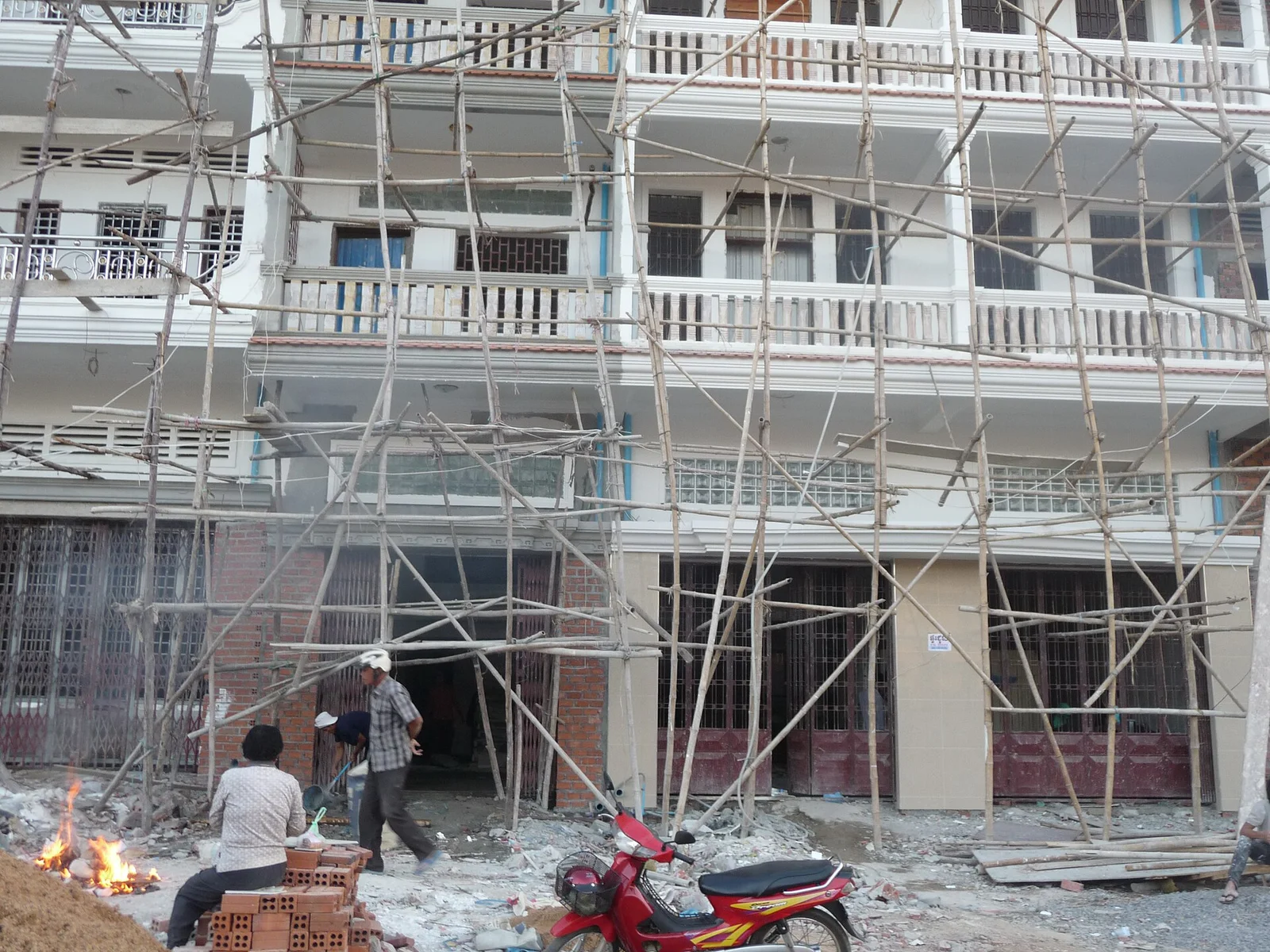
A site visit tells you more than a brochure. If construction has visibly slowed, if the crane has not moved in months, or if the developer cannot show recent dated progress photos, treat it as a serious signal. Aggressive last-minute discounting can indicate a cash squeeze rather than a bargain. So can a sudden change in the promised finish or amenity set. Cross-check the developer’s earlier phases: a project that handed over late, or that delivered below the marketed standard, predicts how the current one will go. In a market where the 8.9% banking NPL ratio pressures financing, a presale-reliant developer with slowing sales is the classic profile of a stall. The new versus resale trade-off that this risk drives is covered in Buy New VS Resale Cambodia.
How does the 8.9% banking NPL ratio signal developer financing risk?
Understanding a developer’s funding model is central to screening risk. A developer with secured construction financing or strong equity can keep building even if sales slow. A developer that pays for each construction phase out of the next round of presales is exposed: if demand softens or credit tightens, the build can pause. The 8.9% banking NPL ratio is a market-level warning that this pressure is present in 2026. Ask the developer directly how the project is funded, request evidence of financing or escrow, and treat reluctance to answer as a flag. The financing context for buyers, including instalment plans, is set out in Phnom Penh Rental Yield Guide.
What payment-plan and presale red flags should you watch?
The structure of a payment plan reveals how risk is shared. If your instalments are due on calendar dates regardless of whether construction has progressed, you carry the developer’s delivery risk. If payments release against independently verified milestones, risk is better balanced. Pressure tactics, a deposit demanded today to hold a price, a quota slot that will vanish by tomorrow, exist to stop you verifying. A credible developer expects you to take time and consult a lawyer. Escrow, where available, holds your funds against progress and is one of the strongest protections an off-plan buyer can secure. The instalment mechanics by project differ, and the entry-price comparison sits in Megakim VS OCIC Entry Price.
How should you treat the Prince Group and high-scrutiny developers?
Where a developer or its affiliates have been the subject of sanctions reporting, regulatory attention or ownership questions, the practical risks for a buyer extend beyond construction. They can include uncertainty over a project’s continuity, complications with banking and fund transfers, and reputational exposure. A foreign buyer should not rely on marketing in these cases; instead, commission independent legal advice, verify the corporate ownership and licensing chain, confirm the land title, and assess whether the project can realistically be completed and transferred. Invest Cambodia Editorial publishes a dedicated brief on this specific case in Prince Group Cambodia Warning, which should be read in full before engaging with any associated project.
How do you assess established developers like OCIC, Megakim and Chip Mong?
| Developer signal | Strong indicator | Weak indicator |
|---|---|---|
| Delivery record | Multiple finished buildings | Mostly renders, few handovers |
| Maintenance | Well-kept completed towers | Neglected common areas |
| Timeline history | Handed over on or near time | Repeated delays |
| Financing depth | Equity or secured funding | Pure presale dependence |
| Spec consistency | Delivered matches promise | Downgraded finishes |
Established names such as OCIC, Megakim and Chip Mong generally score better on delivery and financing depth, which is why their projects carry lower completion risk than unproven launches. Even so, verify each project individually: brand reputation reduces but does not remove risk. Project-level detail sits in OCIC Koh Norea and Chip Mong Park Land Tk Condo, and the developer profile in Megakim World Corp.
What contract and escrow protections reduce developer risk?
-
The choice between a calendar schedule and a milestone schedule matters more than the deposit percentage.
-
Request escrow or solicitor-account exhibits in writing.
-
If the photographs lag the claimed stage, that is the moment to stop paying.
-
Weigh a 20% calendar plan against a 30% milestone plan: the first is cheaper to enter and carries more delivery risk.
-
Hold the next tranche until the site photograph matches the milestone description.
A well-drafted sale and purchase agreement is your main defence during the years before an off-plan unit exists. It should specify exactly what you are buying, when payments are due and against what evidence, what happens if the developer misses handover, and how your foreign ownership slot is secured. Escrow, where a developer offers it, is one of the clearest signals of good faith because it ties the developer’s access to your money to actual construction progress. A Cambodian property lawyer should review every clause, since a weak contract leaves the buyer absorbing delivery risk with little recourse. The transfer-day steps and document checklist are in Due Diligence Process Cambodia Step By Step.
Want a developer checked properly? We will pull the licence class, the registration and the construction permit and match them to the sale agreement.
Have the developer checkedWhat are the advantages and disadvantages of large vs small developers?
Large established developers offer stronger delivery records, deeper financing and better-maintained buildings, while smaller developers may offer lower prices and distinctive projects but carry higher completion and financing risk. Size reduces risk on average, yet every project still needs individual verification.
| Developer size | Advantages | Disadvantages |
|---|---|---|
| Large established | Proven delivery, financing depth | Premium pricing, less flexibility |
| Large established | Better building maintenance | Brand can mask weak projects |
| Small or new | Lower entry price, unique stock | Higher completion risk |
| Small or new | More negotiation room | Presale-reliant financing risk |
The pros and cons are real on both sides, which is why the rule is to verify the actual project rather than rely on the brand. A weak project from a big name can still disappoint, while a strong project from a smaller developer can deliver. The base rate of completion risk, however, is higher for unproven developers in a market under financing pressure, so unproven developers earn the deepest scrutiny.
What are the developer red flags checklist and risks?
- Licensing gap: No verifiable construction permit or unclear land title is a stop signal.
- Stalled delivery: Visibly paused construction or missed earlier handovers predicts the next stall.
- Presale dependence: Funding built entirely on continuous sales is fragile under the 8.9% banking NPL ratio.
- Unevidenced marketing: Treat any 12% to 15% gross yield claim or quota-scarcity push without documents as marketing only with no guarantees.
- Deposit pressure: Demands to pay before independent checks exist to stop verification; refuse them.
Insider tip: Ask to see the developer’s oldest completed building, not its newest, and judge how it has aged and how the common areas are maintained today. A developer’s worst-kept finished building is a more honest preview of your future than its glossiest showroom.
Which buyer scenarios need the most developer scrutiny?
Off-plan buyers, buyers using long instalment plans and buyers committing to high-scrutiny developers need the most diligence, while resale buyers of finished, titled units need the least because the building already exists. Match the depth of your verification to the completion risk you are taking.
| Profile | Scrutiny level | Why | Starting point |
|---|---|---|---|
| Off-plan instalment buyer | High | Full completion risk | Off Plan Property Cambodia Guide |
| High-scrutiny developer buyer | Very high | Ownership and continuity risk | Prince Group Cambodia Warning |
| Resale buyer | Lower | Asset already built | Buy New VS Resale Cambodia |
| Yield-focused buyer | Moderate | Verify income claims | Phnom Penh Rental Yield Guide |
Scenario A: An off-plan buyer on a 20% down, 40-month plan demands the developer’s completed-project list, ties payments to milestones, secures escrow and has a lawyer review the contract before depositing.
Scenario B: A buyer drawn to a project linked to a high-scrutiny developer pauses, reads the dedicated warning brief, commissions independent legal advice on ownership and licensing, and only proceeds if every check is clean.
Scenario C: A risk-averse buyer avoids completion risk entirely, purchases only finished, titled resale stock from a developer with a strong maintenance record, and verifies quota and title before transfer.
How do you check a developer’s land title and ownership chain?
Title problems are among the most damaging because they can undermine your ability to take legal ownership at handover. A soft title carries weaker protection than a registered hard title, and a contested or mortgaged site can complicate or block transfer. The ownership chain matters too: the company marketing the project should be the entity that controls the land and holds the development approvals, and any gap between marketing brand, landowner and licence holder needs explaining. For projects linked to complex corporate structures or high-scrutiny owners, the title and ownership verification should be more thorough still, with independent legal advice rather than reliance on the developer’s own assurances. This is the layer most buyers skip and most regret skipping.
What does a credible developer site visit look like?
When you visit, ask to see the live construction as well as the model unit, and note whether work is genuinely progressing. Photograph the site with the date visible and compare it on a later visit to confirm momentum. Then visit a building the same developer has already finished and occupied, because that is the honest preview of your unit’s future quality and maintenance. Talk to existing residents or the building manager if you can, and ask about handover timeliness and any post-completion issues. A developer confident in its delivery welcomes this scrutiny; one that resists site access or steers you only to renders is signalling something. Pair the visit with the document checks in Due Diligence Process Cambodia Step By Step.
How do you compare two developers head to head?
| Criterion | Weight | Developer A | Developer B |
|---|---|---|---|
| Delivery record | High | Score and notes | Score and notes |
| Financing model | High | Secured vs presale | Secured vs presale |
| Maintenance | Medium | Building condition | Building condition |
| Timeline history | Medium | On time vs delayed | On time vs delayed |
| Contract and escrow | Medium | Buyer protection | Buyer protection |
| Licensing clarity | High | Verified vs unclear | Verified vs unclear |
The scorecard prevents brand bias from overriding evidence. A developer that markets aggressively but scores poorly on delivery and financing is riskier than a quieter developer with a clean completion record. Use the same criteria for every shortlist, document your findings, and let the weighted result, rather than the sales pitch, guide the deposit. The entry-price angle between two major developers is in Megakim VS OCIC Entry Price, and the developer profile detail in Megakim World Corp.
What independent sources verify a Cambodian developer?
A lawyer is your primary independent source, because they can run the title search, confirm the construction licence and review the contract. Physical evidence from completed buildings is the second source, because it cannot be edited like a brochure. Third, credible news and regulatory reporting matters for any developer or affiliate facing scrutiny, sanctions attention or ownership questions, which is exactly why the dedicated brief in Prince Group Cambodia Warning exists. Triangulating these sources, legal, physical and reputational, gives you a picture the developer cannot stage. The broader investment framework that sits above this verification work is in Cambodia Property Investment Guide 2026.
How long does proper developer due diligence take?
The pressure to deposit quickly exists precisely because verification protects the buyer, not the seller. A genuine quota slot or launch price that vanishes the moment you ask for documents was never a real opportunity. Build the two-to-four-week window into your plan, run the legal, physical and reputational checks in parallel rather than in sequence to save time, and treat the deposit as the final step, taken only after the checks clear. A developer with a clean record and secured financing has no reason to rush you, and the act of resisting your due diligence is itself one of the most reliable signals you will get. Patience here is cheaper than a stalled asset, and it pairs with the disciplined buyer mindset set out in Cambodia Property Investment Guide 2026.
Closing verification checklist
Before you transfer funds, verify the construction licence and land title with a Cambodia lawyer, visit at least one of the developer’s completed buildings, compare delivered finishes to past promises, confirm the financing model is not purely presale-dependent, secure milestone-linked payments and escrow where available, and request the remaining foreign quota ledger in writing. For any high-scrutiny developer, read Prince Group Cambodia Warning and take independent legal advice, and use Due Diligence Process Cambodia Step By Step as your transfer-day checklist.
Frequently Asked Questions
The biggest red flags are a missing or unverifiable construction licence, a history of stalled or delayed handovers, presale-reliant financing, quota and yield marketing that cannot be evidenced, and pressure to deposit before any independent verification.
Visit the developer's previously completed buildings, not just the showroom, compare delivered finishes to past launch promises, check handover dates against original timelines, and confirm the construction licence and land title with a Cambodian lawyer before any deposit.
Prince Group has faced significant international scrutiny and sanctions-related reporting, so any associated project warrants heightened due diligence and independent legal advice. Treat it as a caution flag, verify ownership and licensing carefully, and read our dedicated warning before committing.
Cambodia's 8.9% banking non-performing loan ratio signals tighter credit, which pressures presale-reliant developers. A developer who depends on continuous new sales to fund construction can stall if financing or demand slows, so verify funding and progress.
Tie instalments to verified construction milestones, use escrow where available, fix the unit specification in the contract, confirm your slot in the 70% foreign quota, and require the developer's documented completed-project history before you transfer funds.
Large established developers such as OCIC, Megakim and Chip Mong generally offer stronger delivery records and financing depth, but size is not a guarantee. Verify each project individually rather than relying on brand reputation alone.
Get a Cambodia property shortlist
Share your budget, target district (BKK1, Koh Pich, Koh Norea, Siem Reap), and goal. We reply within one business day with matched stock and next steps.