Russian Market Phnom Penh: The Asset Is At Street Level
Toul Tom Poung's value is the street a foreigner cannot own. Here is what that means for the unit above it, and why short-letting loses to a long lease.
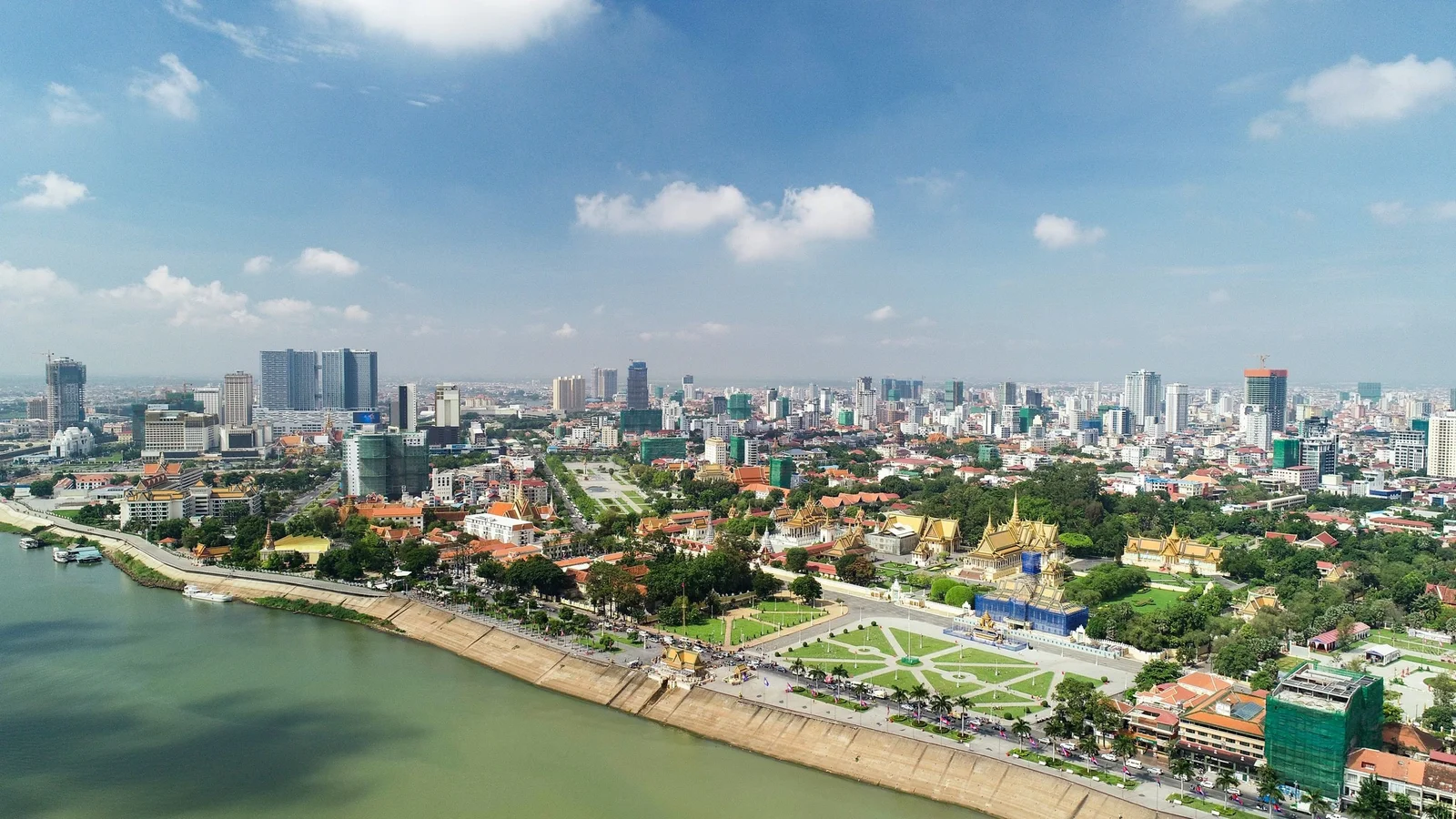
Quick answer: Toul Tom Poung’s value is generated on the pavement (markets, workshops, cafes, food stalls) and a foreign buyer cannot own any of it. What you can own is the apartment above, at roughly $1,400 to $1,900 per square metre, and what you are really buying is a tenant’s willingness to pay to live over that street.
The Russian Market sits between Monivong and Mao Tse Tung boulevards, and it has done the unusual thing of becoming a lifestyle district without losing the trade that made it one. That combination is the whole investment case, and it has a legal catch at the centre of it.
Where the district’s value actually sits
Walk the blocks around the market and the economy is entirely visible: fabric stalls, silversmiths, motorbike workshops, tailors, coffee roasters, restaurants that open at seven and close at eleven. This is a district whose productive surface is the ground floor.
Cambodian law places foreign strata ownership above that surface. A foreigner may own private units from the first floor upward, inside the cap of 70% of a building’s total private-unit area, and may not hold the ground floor. In most districts that restriction is close to academic, because the ground floor is a lobby and a car park. Here it excludes the part of the building that generates income independently.
| Level | What it is in this district | Foreign ownership |
|---|---|---|
| Ground floor | Shopfront, workshop, cafe, market frontage | Not available |
| Floors above | Residential apartments | Available, inside the 70% cap |
| What produces the district’s character | Ground floor | Not available |
| What a foreign buyer can hold | The residential floors | Available |
The rule and its boundaries are set out in foreign ownership and strata title and the strata title FAQ.
What that means for the unit above it
The practical translation is that your income is a derivative of the street rather than a claim on it. A tenant pays a premium to live here because the district is walkable, well fed and interesting, and that premium is the only mechanism by which the ground floor’s value reaches you.
It follows that the things which would damage the street damage you disproportionately: a market redevelopment, a boulevard widening that removes frontage, a shift of the food and cafe trade two districts over. It also follows that improvements to your unit have a lower ceiling than usual, because the tenant is buying the neighbourhood first and the apartment second. Specifying a Toul Tom Poung one-bedroom to prime-district standard rarely returns the money.
A district where the same logic runs the other way, where the building sells the address and the street is incidental, is described in BKK1.
Does short-letting beat a long lease here?
This is the question the district gets sold on, and it is answerable with the market’s own published numbers rather than with a brochure.
| Line | Short-stay | Long lease |
|---|---|---|
| Rate | About $42 to $45 a night | $400 to $600 a month |
| Occupancy | About 29% to 35% citywide | Continuous, less void |
| Gross per month at the midpoint | Roughly $410 to $430 | $400 to $600 |
| Seasonality | August strongest, May softest | Flat |
| Costs that come out | Cleaning and linen per stay, consumables, listing fees, utilities, heavier management | One management line |
| Work involved | Continuous | Annual |
Take the midpoint honestly. A thirty-day month at roughly a third occupancy is nine to ten let nights; at about $43 a night that is around $410 to $430 of gross revenue. A long lease in the same unit produces $400 to $600 with none of the per-stay costs, and the citywide average for an unserviced one-bedroom is $375 a month before you allow for this district’s lifestyle premium.
The short-let number is a gross figure with a long list of deductions still to come, and the long-lease number is close to net. On these inputs the nightly model does not win in the mid-market, and the annual average also conceals a wide spread: an August that carries the year and a May that does not pay the service charge.
Where short-letting does work is at the top of the market, where the nightly rate is high enough to survive the deductions, or in a unit whose owner is doing the work themselves and pricing their own labour at zero. Both are legitimate. Neither is what a passive investor is being sold.
The full comparison is worked through in Airbnb versus long-term rental and the operating detail in the short-term rental guide.
Buying near the Russian Market? We will read the building's co-owner rules for a short-stay prohibition before you commit, benchmark the achievable long lease, and put the two models side by side on the same unit.
Check the numbers firstWhich rules decide whether short lets are even possible
Cambodia has no dedicated national licence for hosting short stays, and that fact is quoted far more often than the rules that actually bind.
The binding constraints are private. Many condominium buildings prohibit short-stay letting in their co-owner regulations, and a prohibition in the building rules ends the discussion regardless of national law. Where an owner is letting to a tenant who then sublets, standard Cambodian leases commonly forbid it outright. Reception and access arrangements in a residential building are frequently incompatible with nightly turnover even where nothing forbids it on paper.
Tax applies either way. A resident owner pays 10% on gross rent with no deduction for expenses; a non-resident owner faces 14% withholding on Cambodian-source income, including gross rent. Neither rate distinguishes between a nightly booking and an annual lease, so a model that ignores tax is wrong by the same margin in both directions.
Ask for the co-owner regulations before the deposit, not after. Tax treatment for foreign owners is set out in rental income tax.
How much does a Toul Tom Poung condo cost?
| Line | Toul Tom Poung | Note |
|---|---|---|
| Price per sqm | $1,400 to $1,900 | Below the prime districts |
| Studio | $45,000 to $70,000 | Floor and finish dependent |
| One-bedroom | $70,000 to $120,000 | The strongest letting segment |
| Realistic net yield | 5% to 7% | After voids and management |
| Service charge | About $1.50 per sqm per month | The main recurring drag |
| Transfer tax | 4% of the assessed value | Assessed by the tax administration |
| Furnishing | $4,000 to $10,000 | Lighter specification than prime |
The one-bedroom is the segment to concentrate on. It matches the district’s tenant, a single professional or a couple who chose this neighbourhood deliberately, and it is the size that lets fastest when it comes empty. Studios are cheaper to enter and compete with a large stock of older serviced rooms nearby.
Entry-level pricing across the city is compared in under $50,000 condos.
Advantages and disadvantages of the Russian Market position
The advantages are unusual for a mid-priced district. Tenant demand here is pulled by something real and hard to replicate: an intact commercial street life that people actively choose to live in. That produces loyal tenants, quick reletting and a rent floor supported by lifestyle rather than by commuting convenience. Entry from about $45,000 is well below the prime districts, and ownership is entirely ordinary above the ground floor.
The disadvantages follow from the same facts. The rent ceiling is moderate, because the district attracts people who deliberately chose not to pay prime rents. Older shophouse and serviced-room stock competes directly on price and is not going away. The income-producing ground floor is closed to you. And the short-let premium that many buyers are counting on is, on the city’s published rates and occupancy, mostly absent in this segment.
Who this district suits
It suits a buyer who wants a central, mid-priced unit with a dependable long-lease tenant and no interest in running a hospitality business. It suits an owner-occupier extremely well, because the amenity that makes the district hard to underwrite as a yield play is exactly what makes it pleasant to live in.
It does not suit a buyer whose model needs nightly rates to work, unless they have read the building’s rules and accepted the arithmetic above. It also does not suit a buyer looking for capital growth driven by new supply, because the district’s appeal depends on the low-rise commercial fabric that heavy development would remove.
What to check before you sign
Read the co-owner regulations for any restriction on short stays and on subletting, and get the relevant clause in writing. Ask what proportion of the 70% ceiling is still open, measured by floor area. Check the co-owners association accounts and the sinking fund balance, since older mid-market buildings in this district are where under-funding shows up first.
Then walk the block at three times: mid-morning when the market is busiest, early evening when the food trade starts, and late at night. The district’s noise profile is part of the asset and part of the risk, and it is the single thing a viewing at eleven in the morning will not tell you. For registration and duty timing, which owes nothing to this district, read Cambodia property taxes and fees.
Everything that happens between an offer and a registered title is mapped in due diligence.
Frequently Asked Questions
The market that gives it its English name and the dense commercial street life around it, between Monivong and Mao Tse Tung boulevards. The district's economic value is generated at ground level, in shops, workshops, cafes and food stalls.
No. Foreign strata ownership begins above the ground floor, so the shopfronts and street-level units that produce the district's character and much of its income are outside reach. You buy the apartment above and capture the street indirectly, through what a tenant will pay to live over it.
Rarely, on the market's own numbers. Phnom Penh short-stay listings run an average daily rate around $42 to $45 at occupancy of roughly 29% to 35%, which produces something near $410 to $430 a month gross before short-stay costs. A long lease at $400 to $600 usually nets more with far less work.
Around $1,400 to $1,900 per square metre. Studios run roughly $45,000 to $70,000 and one-bedrooms $70,000 to $120,000, with the one-bedroom the strongest letting segment.
There is no dedicated national short-let licence, but that is not the operative constraint. Building rules and co-owner regulations frequently prohibit short stays, and leases commonly bar subletting. Tax applies regardless: 10% on gross rent for a resident owner, 14% withholding for a non-resident.
A buyer who wants a mid-priced central unit with a genuine lifestyle tenant pool and is content with a long lease. A buyer whose model depends on nightly rates should read the building's rules and the occupancy arithmetic first.
Get a Cambodia property shortlist
Share your budget, target district (BKK1, Koh Pich, Koh Norea, Siem Reap), and goal. We reply within one business day with matched stock and next steps.