Tonle Bassac Phnom Penh: A Corridor Built in One Decade
Almost every tower in Tonle Bassac went up in the same build cycle. That shared vintage decides its absorption, its resale competition and its next ten years.
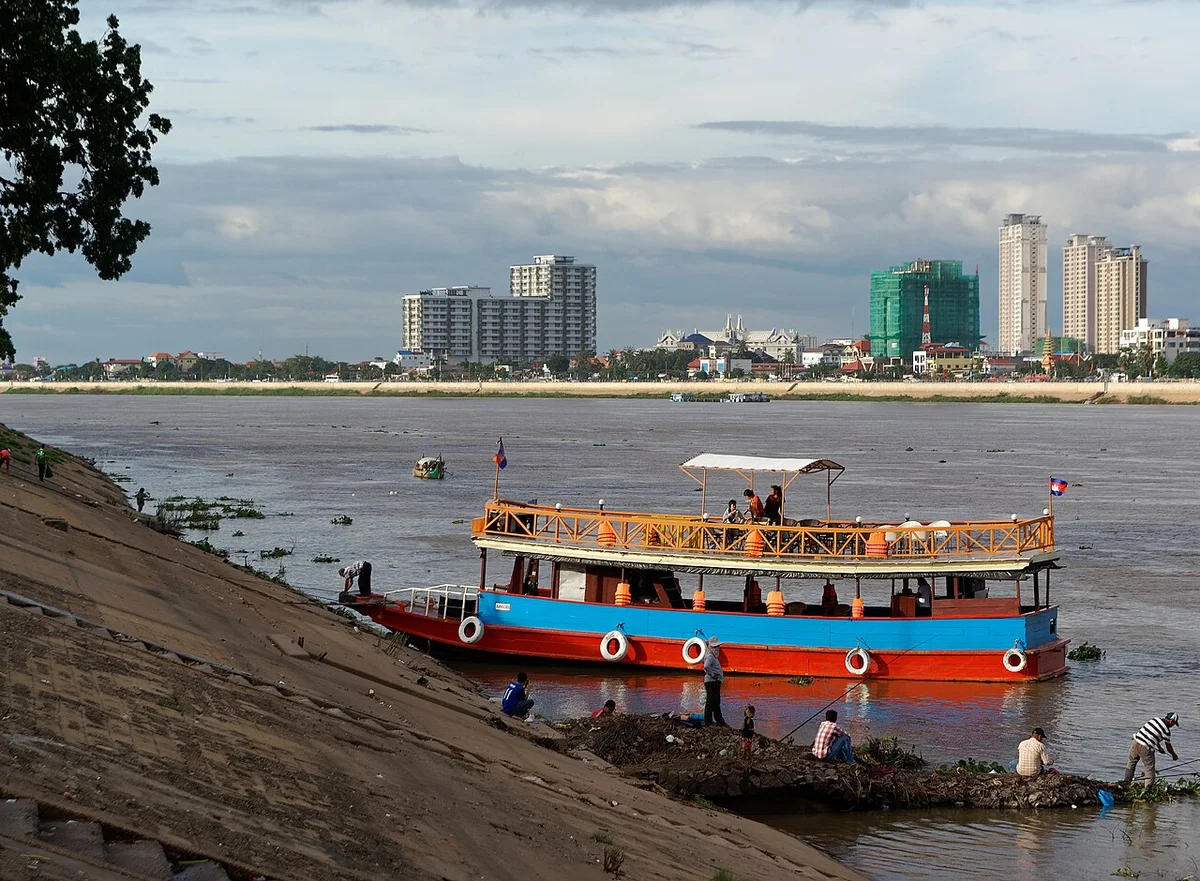
Quick answer: Tonle Bassac is the corridor immediately south of BKK1, trading at roughly $2,200 to $3,200 per sqm. Its defining feature is not location but vintage: most of its towers went up in one concentrated cycle, so the district’s apartments compete with each other, age with each other and will need work at the same time.
Most district guides describe location. Tonle Bassac’s location is easy: it is the strip between BKK1 and the river, with Koh Pich across the water. The thing worth writing about is when it was built, because in a district assembled in a single decade that fact governs the next one.
What a shared vintage does to a market
When a district’s stock is spread across forty years, buildings age out one at a time and the market absorbs each in turn. When it arrives in a decade, everything happens together.
| Effect | Consequence for an owner |
|---|---|
| Resale competition | Many near-identical units listed at once |
| Specification | Similar finishes and layouts across buildings |
| Maintenance cycles | Lifts, facades and plant due at similar times |
| Service charges | Move as a group rather than building by building |
| Differentiation | Comes from management, not from design |
| Advantage | Comparables are plentiful and genuinely comparable |
That cuts both ways more evenly than buyers expect. The disadvantage is obvious: a seller here is rarely offering something scarce, and the buyer can walk to three alternatives. The advantage is quieter and real: pricing in Tonle Bassac is unusually transparent, because there are enough similar units trading that a genuine comparable exists for almost any apartment. In a market where valuation elsewhere often rests on asking prices and optimism, that is worth something to a careful buyer, and it is the reason this district rewards diligence more reliably than districts with thinner, more idiosyncratic stock.
The premium district immediately north is profiled in BKK1, and the island across the water in Koh Pich. The method for using comparables properly is set out in the resale valuation guide.
Where the district sits on price
Tonle Bassac occupies the gap between the premium core and the general market, and the gap is wide enough to be the whole investment case.
| Market | Price per sqm |
|---|---|
| BKK1 | $2,800-$3,500 |
| Tonle Bassac | $2,200-$3,200 |
| Phnom Penh average | ~$1,800 |
| BKK3 | $1,400-$1,900 |
| Central rent band, 1-2BR | $400-$1,000 per month |
| Service charge | ~$1.50 per sqm per month |
The overlap between the top of Tonle Bassac’s range and the bottom of BKK1’s is where the interesting purchases sit, at around $2,900 per sqm you can buy the best building in this district or an ordinary one in BKK1, and the first is usually the better asset while the second has the better address. That choice keeps resolving in favour of building quality over district label for owners who intend to let: a well-managed riverside tower with a funded reserve outperforms a tired BKK1 block on both rent achieved and cost incurred, and the address premium mostly shows up at resale rather than monthly. Buyers whose priority is the eventual exit should reverse that conclusion, which is a legitimate difference in objective rather than a disagreement about facts.
The comparison district is documented in BKK1; the buildings this site reviews in the corridor include The Peak, The Bridge and Rose Condominium, a completed 28-floor, 360-unit tower on Norodom Boulevard whose frontage-versus-rear split shows the district’s noise trade in a single building.
The sinking fund is the whole diligence here
In a district where towers share an age, the variable that separates them is not design or location but whether the money collected for maintenance has been spent on maintenance.
| What to request | What it reveals |
|---|---|
| Sinking fund balance | The headline number, least informative alone |
| Spending history, three years | Whether wear is funded or deferred |
| Maintenance log | Lifts, pumps, generators, facade access |
| Arrears position | Collection discipline across the owners |
| Planned works | Whether a levy is already visible |
| Service charge trend | Rising steadily, or flat then suddenly not |
A reserve fund’s balance on its own tells a buyer very little; its spending record tells them almost everything. A building at $1.50 per sqm per month collects a substantial sum over a decade; a tower that has collected that and spent visibly is in a different financial position from one that has collected it and spent nothing, even though the second may show the larger balance. The second building is carrying deferred work that will arrive as a special levy, and in a district where several towers hit the same milestones together, those levies tend to arrive in clusters. Ask for the log alongside the statement, and walk the common areas afterwards to see whether the two agree.
The recurring-cost framework is in the sinking fund and fees guide; management from abroad is covered in property management for foreign owners.
Buying in Tonle Bassac? We will pull the sinking fund's spending record beside its balance, get closed transfers from the same building, and tell you whether a levy is already on the horizon.
Check the fund, not the balanceWho rents in the corridor
The tenant here is a step to the side of BKK1’s rather than a step down, and the distinction matters when setting a rent.
| Tenant | Typical position |
|---|---|
| Corporate professionals | The district’s core demand |
| Regional expatriates | Price-aware, quality-conscious |
| Local affluent households | Buying and renting both |
| Diplomatic staff | Fewer than BKK1; proximity matters to them |
| Short-stay | Present, competing with serviced stock |
| Absent | The bottom of the market; that is BKK3 |
The methodology this corpus applies is to underwrite the tenant rather than the district, and Tonle Bassac’s tenant is characteristically someone who compared BKK1, found the premium hard to justify, and moved one step south for more space or a better building at the same rent. That is a durable and rational segment, and it means the district’s rents track BKK1’s with a lag rather than moving independently. For a landlord the practical implication is that a Tonle Bassac unit is priced against a BKK1 alternative in the tenant’s mind whether or not the landlord thinks of it that way, so knowing what the equivalent BKK1 unit rents for is part of setting your own price, not a separate exercise.
Rent bands across the city are modelled in the Phnom Penh rental yield guide, and the honest net calculation in net vs gross yield.
Buyer scenarios
An investor who wants near-premium quality at a discount and will hold long enough for the exit to matter less is this district’s natural buyer. An owner-occupier gets more building for the money than BKK1 offers, with a shorter walk to the river and a longer one to the restaurants. A yield-first buyer should keep going west to BKK3, where the entry price does the work. And any buyer choosing between a strong Tonle Bassac tower and a weak BKK1 one should decide first whether they are buying income or an address, because that single question resolves the comparison cleanly.
Before you commit
Get the sinking fund’s spending record, not just its balance, and read it beside the maintenance log. Establish the building’s construction year and what maintenance milestone it is approaching. Obtain closed transfers from the same building, in this district they exist. Compare the unit against an equivalent BKK1 apartment at the same rent, since that is what your tenant will do. Request the quota extract in square metres. The duty and tax calendar applies everywhere and is covered in Cambodia property taxes and fees; what is specific to this corridor is the maintenance record.
The river, and what frontage is actually worth
Tonle Bassac’s eastern edge is the reason the district exists in its current form, and river views are priced here with more confidence than the evidence supports.
A genuine, protected river aspect is scarce and worth a premium. The difficulty is that most units sold as riverside are not on the water: they look toward it across intervening plots that are themselves developable, and nothing about today’s view guarantees tomorrow’s. The corridor’s own history makes the point, since much of the current tower stock was itself built on land that previously gave somebody else an outlook. A buyer paying for a view should therefore ask what stands between the unit and the water, who owns it, and what could be built there: a question a selling agent can rarely answer and a municipality can sometimes indicate.
The practical rule this corpus applies is to pay for aspect only where it is structurally protected: a building on the front rank, above the height of anything that could replace its neighbours, or facing across a road or public space that will not be built on. Everywhere else, treat the view as a pleasant feature of the current year rather than as a permanent attribute of the asset, and price the apartment on its floor, layout and building quality instead.
Frequently Asked Questions
Its vintage. Most of the district's towers were built in one concentrated cycle, so the apartments share age, specification and maintenance timing. That shared clock shapes resale competition, service charges and levies.
Roughly $2,200 to $3,200 per sqm, between BKK1 at $2,800 to $3,500 and the city average near $1,800. It is a real step down in price and a smaller step down in quality, which is the district's argument.
Your resale competes with many near-identical units that became available together and will need the same work at the same time. When several towers hit a lift or facade cycle at once, service charges and levies move as a group.
On price per square metre, clearly. On liquidity, no: BKK1's resale pool is deeper and reletting faster. Tonle Bassac suits a buyer who wants near-BKK1 quality at a discount and can accept a slower exit.
It draws on the central band of $400 to $1,000 a month for modern one and two-bedroom stock, with riverside and high floors at the upper end. It does not command BKK1's diplomatic premium.
The sinking fund against the building's age. Where towers share a vintage, the difference between two similar buildings is whether the fund was spent or deferred, and that gap shows up as a levy rather than a warning.
Get a Cambodia property shortlist
Share your budget, target district (BKK1, Koh Pich, Koh Norea, Siem Reap), and goal. We reply within one business day with matched stock and next steps.