Cambodia vs Thailand Property: 2026 Investor Compare
Cambodia vs Thailand property in 2026: foreign ownership rules, price per sqm, rental yields, resale liquidity, taxes, and a clear buyer decision matrix.
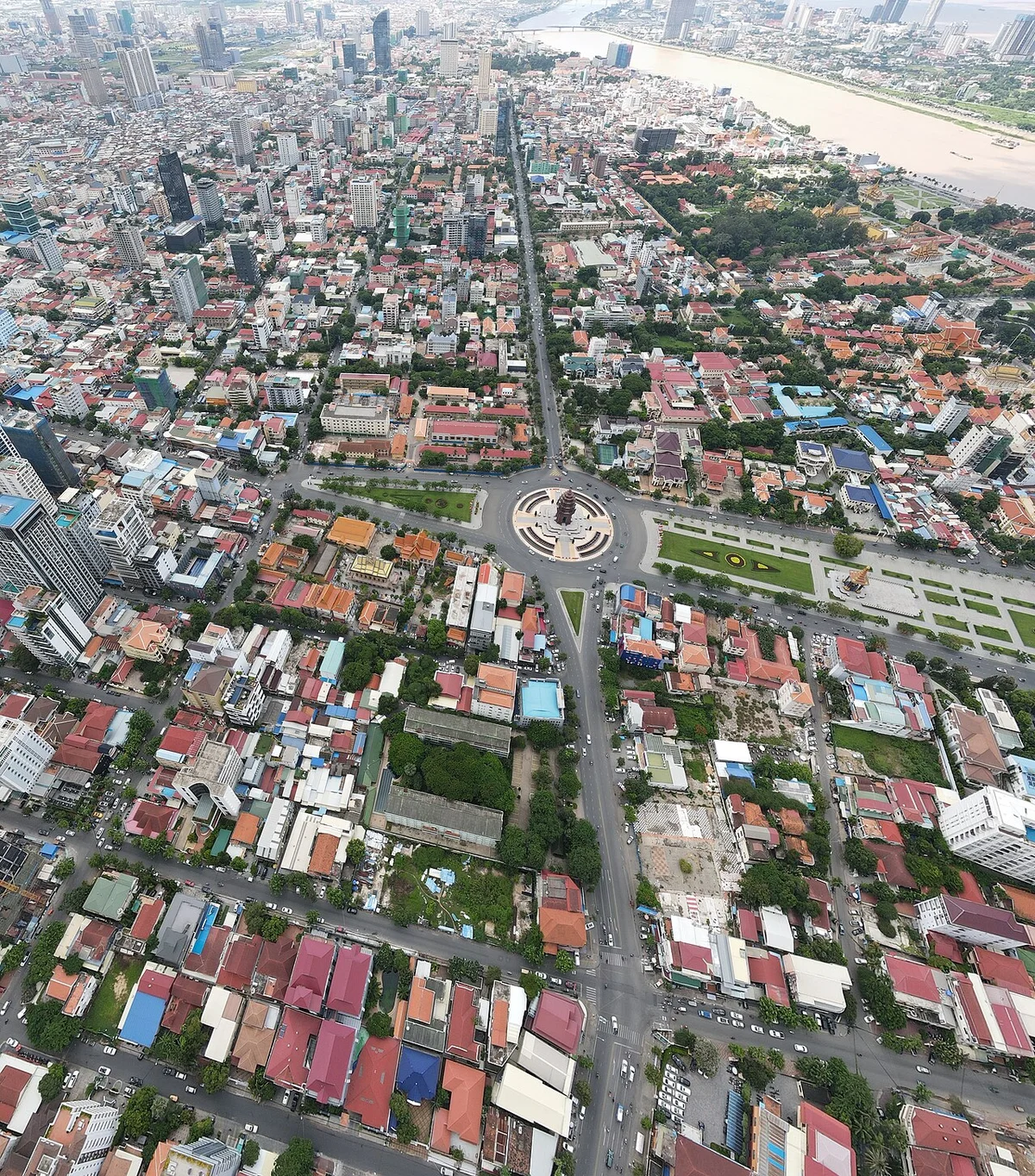
Quick answer: Cambodia suits lower-ticket USD investors who accept thinner liquidity and longer holds, while Thailand suits investors who want deeper resale markets, stronger tenant demand and more mature infrastructure at higher prices. Cambodia entry starts near $40,000 with strata co-ownership within a 70% per building quota; Thailand offers condo freehold within a 49% quota in baht. Net yields converge near 4% to 6% in both once costs are deducted.
Invest Cambodia Editorial compares the two most common Southeast Asian markets for foreign property buyers, with a focus on the practical differences that change your return: entry price, ownership path, yield, liquidity, currency and tax. This guide is written for the investor deciding where the next ticket goes.
For Cambodia-side context read Cambodia Property Investment Guide 2026, Can Foreigners Buy Property Cambodia, Phnom Penh Rental Yield Guide, Cambodia Property Taxes Fees 2026, and Off Plan Property Cambodia Guide.
Cambodia or Thailand: which suits foreign property investors in 2026?
The decision turns on four levers: how much capital you commit, whether you need to sell quickly, whether you want dollar or baht exposure, and how much you value mature infrastructure. Cambodia, anchored by Phnom Penh, offers a $40,000 to $150,000 sweet spot in dollars with high gross headlines that need careful netting. Thailand, anchored by Bangkok and the resort markets, offers a deeper and more liquid market at higher entry prices and in baht. Read the rest of this guide as a set of trade-offs, then match them to your own plan.
How do entry prices compare between Cambodia and Thailand?
| Metric | Cambodia (Phnom Penh) | Thailand (Bangkok) |
|---|---|---|
| Average condo price | About $1,800 per sqm | Higher per sqm |
| Entry-level ticket | From about $40,000 | Higher entry ticket |
| Pricing currency | US dollars | Thai baht |
| Payment plans | 20% down, 40-month plans | Varies by developer |
| Condo supply | 76,000 to 80,000 units | Larger, deeper market |
A lower entry ticket lets a Cambodia buyer diversify across two units where a Bangkok buyer might afford one, but the lower ticket also pairs with thinner resale and oversupply risk. Megakim entry projects such as Time Square Ocean View from about $40,000 and Square Castle from about $50,000 anchor the affordable tier; the project detail sits in Time Square 306 and Diamond Bay Garden.
How does foreign ownership differ between Cambodia and Thailand?
| Ownership feature | Cambodia | Thailand |
|---|---|---|
| Land freehold for foreigners | Not permitted | Not permitted |
| Condo ownership | Strata co-ownership | Condominium freehold |
| Foreign quota per building | 70% | 49% |
| Ground floor units | Restricted for foreigners | Within condo rules |
| Title to verify | Strata co-ownership cert | Chanote-linked condo title |
Cambodia’s higher 70% quota means a single building can be majority foreign-owned, which can help a foreign reseller but concentrates demand among foreigners. Always confirm remaining quota in writing before deposit. The Cambodian ownership path is explained in Can Foreigners Buy Property Cambodia and Foreign Ownership Strata Title Cambodia.
Which market offers better rental yield, Cambodia or Thailand?
The yield story is really a story about vacancy and re-let speed. Thailand’s larger and more mature tenant market re-lets faster, so a Bangkok landlord defends rent more easily. Cambodia’s 76,000 to 80,000 unit supply and 3% to 4% annual absorption mean landlords compete on price and carry one to two months of vacancy, which collapses the headline. A disciplined investor underwrites both markets on net and treats any Cambodia gross figure above 8% as a number requiring rent comps, a fee schedule and vacancy history. The full Cambodia netting method is set out in Phnom Penh Rental Yield Guide.
How do liquidity and resale compare?
If your strategy depends on selling within two to three years, Thailand is the safer liquidity bet. Cambodia rewards patience: a five-year-plus hold lets rental income accumulate and gives the building time to mature, but a forced early sale can mean a meaningful discount. The thin resale pool is also why the foreign quota matters so much in Cambodia. If a building is near its 70% ceiling, your future buyers are mostly Cambodian, who price the unit differently. Build a realistic exit assumption into your model before you commit.
How do currency and capital controls compare?
For a US dollar investor, Cambodia’s dollarisation is a genuine and under-appreciated edge. Rent is collected in dollars, the purchase is in dollars, and the exit is in dollars, so the return you model is the return you earn in your home currency. A baht-denominated Thai investment adds a layer: a strong baht boosts your dollar return, a weak baht erodes it, regardless of how the property performs. Thailand also operates Foreign Exchange Transaction documentation for inbound funds used to buy condos, which is part of the title process. Factor the currency layer into your Thai underwriting and give Cambodia’s dollar pricing its full weight as a risk reducer.
How do taxes and transaction costs compare?
| Cost or tax | Cambodia | Thailand |
|---|---|---|
| Transfer or stamp duty | Incentive to 31 Dec 2026 | Transfer fee on registration |
| Capital gains tax | Deferred to 1 Jan 2027 | Withholding on sale |
| Annual property tax | Small immovable property tax | Land and building tax |
| Rental income tax | Per Cambodian rules | Per Thai rules |
| Legal review | $800 to $2,500 | Comparable range |
Tax planning differs by exit timing, so model the after-tax exit alongside the gross sale price. The Cambodia detail and current rates are maintained in Cambodia Property Taxes Fees 2026. Confirm the live stamp duty and capital gains position with a Cambodian lawyer before relying on the 2026 incentive window.
How do financing options compare for foreigners?
In Cambodia, the practical financing tool is the developer instalment plan, such as a 20% down payment with a 40-month plan, which spreads the ticket but is effectively interest-bearing through the price. In Thailand, some developers and lenders offer foreign-buyer finance, though terms are tighter than in Western markets. In both countries, treat any financing cost as a deduction from net yield, because leverage that costs more than your net return reduces, rather than amplifies, your performance. Compare the cash price against the instalment price before assuming a plan is free money.
How do Phnom Penh and Bangkok compare as capital markets?
| Factor | Phnom Penh | Bangkok |
|---|---|---|
| Entry ticket | Lower, USD | Higher, baht |
| Supply pressure | 76,000 to 80,000 units | Large but deeper demand |
| Gross yield headline | Higher | Moderate |
| Net yield | 4% to 6% | 4% to 6% |
| Liquidity | Thin | Deep |
| Tenant pool | Growing | Mature, large |
The capital-city choice is the core of this decision for most investors, because both countries concentrate foreign demand in the capital. Phnom Penh district detail sits in BKK1 Phnom Penh, and the intra-city investor call is in BKK1 VS BKK3 Investment.
Beach and lifestyle: how do Sihanoukville and Thai resort markets compare?
Sihanoukville carries higher headline upside and higher risk: oversupply, stalled projects and a tourism rebound that is real but uneven. It rewards investors who can wait for the coastal economy to stabilise and who verify developer delivery carefully. Thai resort markets offer a more liquid, more rentable lifestyle asset at a higher price. The Cambodia coastal-versus-capital question is set out in Phnom Penh VS Sihanoukville, and the coastal area detail is in Otres Beach Sihanoukville.
Deciding between the two markets? We will model the same budget in Phnom Penh and Bangkok on identical assumptions.
Model both marketsWhat are the advantages and disadvantages of each market?
Cambodia’s advantages are low USD entry, accessible payment plans and a young demographic; its disadvantages are oversupply, thin liquidity and inflated gross marketing. Thailand’s advantages are liquidity, tenant depth and mature infrastructure; its disadvantages are higher entry prices and baht currency exposure.
| Market | Advantages | Disadvantages |
|---|---|---|
| Cambodia | USD pricing, entry from $40,000, 70% quota | Oversupply, thin resale, gross hype |
| Cambodia | Stamp duty incentive to 31 Dec 2026 | 8.9% banking NPL, limited finance |
| Thailand | Deep liquidity, strong tenant demand | Higher entry price per sqm |
| Thailand | Mature infrastructure, resort depth | Baht exposure for foreign buyers |
What are the red flags and risks in each market?
- Quota full: In Cambodia confirm the 70% ledger; in Thailand confirm the 49% ledger. A near-full building narrows your resale exit.
- Developer delivery: In Cambodia cross-check OCIC, Megakim, Chip Mong and Urbanland handover history; weak delivery stalls capital.
- Yield inflation: Treat any gross above 8% as marketing only; demand rent comps and vacancy history.
- Liquidity mismatch: Do not pursue a short hold in Cambodia’s thin resale market; match hold period to liquidity.
- Currency mismatch: In Thailand, model the after-currency return; in Cambodia, confirm the dollar pricing on every line.
Insider tip: Ask each developer for the building’s actual occupancy and collected-rent roll, not a projection, in both countries. The market with the more transparent rent roll is usually the safer net-yield bet, regardless of the headline.
Which buyer scenarios point to Cambodia vs Thailand?
Lower-ticket USD buyers and patient long-hold investors lean Cambodia; liquidity-focused, demand-focused and lifestyle buyers lean Thailand. Match the scenario to the hold period and the currency you think in.
| Profile | Leans | Why | Starting point |
|---|---|---|---|
| First-time, under $60,000 | Cambodia | Low USD entry | Off Plan Property Cambodia Guide |
| Yield-focused, patient | Cambodia | Higher gross, long hold | Phnom Penh Rental Yield Guide |
| Liquidity-focused | Thailand | Faster resale exit | Cambodia VS Thailand Property |
| Lifestyle and beach | Thailand | Deeper resort stock | Phnom Penh VS Sihanoukville |
| Relocating, not only investing | Either | Household budget decides | Cambodia vs Thailand Cost of Living |
Scenario A: A first-time foreign buyer with $50,000 in dollars chooses a Cambodia Megakim instalment unit for the low ticket and USD pricing, and accepts the thin resale market by planning a five-year-plus hold.
Scenario B: A liquidity-focused investor who may exit within two to three years chooses Bangkok for resale depth, accepting the higher entry price and baht exposure as the cost of certainty.
Scenario C: A diversified investor splits exposure, taking one lower-ticket Cambodia unit for USD yield and one Thai unit for liquidity, and underwrites both units on net yield.
How should hold period drive the Cambodia vs Thailand decision?
Invest Cambodia Editorial frames it simply. If you might need your capital back quickly, Cambodia’s thin resale market is a structural risk, and Thailand’s deeper market is worth its higher price. If you can commit for five years or more, Cambodia’s low USD entry, dollar pricing and developer instalment plans make it a credible diversification play, provided you buy a well-managed building with verified quota and underwrite a realistic 4% to 6% net rather than a 12% to 15% gross headline. The mistake is buying Cambodia’s low ticket with a short-hold plan, or buying Thailand’s liquidity premium for capital you will never need to move. The wider strategy frame sits in Cambodia Property Investment Guide 2026 and the focused head-to-head in Cambodia VS Thailand Property.
How do infrastructure and growth drivers compare?
Cambodia’s growth narrative rests on visible catalysts: a new international airport south of Phnom Penh, masterplanned satellite districts and a young, urbanising population. These can lift values where they land, but infrastructure-led upside is a bet on delivery and timing, and speculative plots near a planned node can stay illiquid until amenities mature. Thailand’s infrastructure is already in the ground, so the value is priced in and the risk is lower, which is part of why entry costs more. An investor choosing Cambodia for growth should anchor to delivered or near-delivered infrastructure, not a render. The Cambodia corridor detail sits in Techo Airport Corridor and the river-front masterplan in Koh Norea.
| Driver | Cambodia | Thailand |
|---|---|---|
| Airport capacity | New Techo airport opening phase | Established major hubs |
| Urban transport | Earlier-stage build-out | Mature rail and metro |
| Demographic curve | Young, fast-urbanising | Maturing, ageing tilt |
| Infrastructure risk | Higher, delivery-dependent | Lower, already built |
How does the tenant and buyer demographic compare?
In Cambodia, realestate.com.kh data shows roughly 9% Polish buyer share, 9.6% Russian buyer share and 7.4% French buyer share among active foreign buyers, alongside strong regional Asian demand. Tenant demand concentrates in BKK1, BKK3 and Tonle Bassac, driven by embassies, NGOs and remote workers. Thailand’s tenant market is broader across tourists, long-stay retirees, digital nomads and a large domestic middle class, which gives a Thai landlord more ways to fill a unit. For a Cambodia buyer, the lesson is to buy where the foreign and corporate tenant demand actually clusters, because the overall pool is thinner and a poorly located unit re-lets slowly.
How do you split a portfolio across Cambodia and Thailand?
A balanced foreign investor might place a smaller dollar ticket into a well-managed Phnom Penh building for income and USD exposure, then a larger baht position into Bangkok for resale certainty and tenant depth. The Cambodia leg should be underwritten for a five-year-plus hold at a realistic 4% to 6% net, with verified quota and a downside vacancy case. The Thailand leg carries the liquidity role, so it can take a slightly lower gross in exchange for a faster exit. The error to avoid is treating the two markets as interchangeable: their liquidity, currency and supply profiles are different enough that the same strategy does not fit both. Set the role of each position before you buy, and keep the Cambodia netting discipline from Phnom Penh Rental Yield Guide on every unit.
What due diligence differs between the two markets?
| Due diligence focus | Cambodia | Thailand |
|---|---|---|
| Title verification | Strata co-ownership certificate | Condo title and quota |
| Quota proof | 70% ledger in writing | 49% ledger in writing |
| Funds documentation | USD transfer records | FET certificate |
| Developer track record | OCIC, Megakim, Chip Mong history | Listed developer filings |
| Building accounts | Sinking fund and service charge | Juristic person accounts |
In Cambodia, the developer delivery question is sharper because some projects have stalled, so cross-check handover history against current construction photos and read Developer Due Diligence Red Flags Cambodia. In Thailand, the FET certificate is part of registering foreign condo ownership, so it must be in order before transfer. The shared Cambodia transfer workflow is in Due Diligence Process Cambodia Step By Step.
How do exit strategies compare between the two markets?
A Cambodia exit usually means one of three paths: resale to another foreigner within the remaining quota, resale to a Cambodian buyer, or continued holding for rental income while you wait for liquidity to improve. Each path takes time, and a forced sale typically clears at a discount in a thin market. A Thailand exit benefits from a larger pool of foreign and domestic buyers and a more active agency network, so price discovery is faster. The capital gains treatment also differs and changes the net proceeds: Cambodia has deferred capital gains tax to 1 January 2027, while Thailand applies a withholding calculation on sale. Model the after-tax, after-commission figure you would actually receive once the sale completes.
| Exit factor | Cambodia | Thailand |
|---|---|---|
| Typical time to sell | Longer | Shorter |
| Main buyer pool | Foreign plus Cambodian | Foreign plus large domestic |
| Quota effect on exit | High once near 70% | Moderate within 49% |
| Capital gains timing | Deferred to 1 Jan 2027 | Withholding on sale |
| Discount on forced sale | Higher in thin market | Lower in deep market |
The exit reality is why hold period and liquidity sit at the centre of this whole comparison. A Cambodia position is a patient income-and-growth hold; a Thailand position can double as a liquid store of value. The combined strategy view is in Cambodia Property Investment Guide 2026.
Where does each country’s rule actually bite?
Thailand’s 49% cap bites at purchase and Cambodia’s 70% cap bites at exit, and knowing which one you are exposed to changes what you check. A Thai buyer competes for a fixed slice of foreign quota on the way in. A Cambodian buyer usually gets in and then discovers the constraint on the way out.
| Rule | Cambodia | Thailand |
|---|---|---|
| Foreign cap | 70% of total private-unit area | 49% of saleable area |
| When it binds hardest | On exit, in popular buildings | On entry, in most buildings |
| What you hold | Freehold strata above ground floor | Freehold condominium unit |
| Land | Closed | Closed |
| Transaction currency | US dollar | Thai baht |
| Round-trip cost | About 4% transfer tax | Commonly higher, with several layers |
Our analysis treats the exit-side bite as the one Cambodian buyers underprice, because it is invisible during the purchase. A building sitting comfortably inside the cap when you buy can be at the ceiling by the time you sell, and at that point your buyer pool is Cambodian nationals rather than the international demand that set the price you paid. The check is the same in both countries and costs nothing: ask for the current position in writing, and ask what remains after your own purchase completes.
- Thailand’s cap bites on entry, Cambodia’s on exit. Check accordingly.
- Ask what quota remains behind you as well as whether you fit.
- Cambodian rules sit in the ownership guide.
- Resale depth is in the resale liquidity guide.
- The Vietnamese comparison is Cambodia versus Vietnam.
Closing verification checklist
Before you commit to either market, confirm the foreign quota ledger in writing, validate the title path with a local lawyer, and model net yield with realistic vacancy in the relevant currency rather than the brochure gross. Compare the after-tax, after-commission exit under each country’s rules, and match your hold period to the market’s liquidity so a short-hold plan never lands in Cambodia’s thin resale market by accident. Confirm whether you want dollar or baht exposure across the full life of the asset, and size each position to the role it plays in your portfolio. For Cambodia specifically, use Due Diligence Process Cambodia Step By Step as your transfer-day checklist and verify the stamp duty incentive with a Cambodian lawyer before relying on it.
Frequently Asked Questions
Cambodia entry is lower in absolute terms. Phnom Penh condos average near $1,800 per sqm, and Megakim launches start near $40,000. Bangkok prime condos sit well above that, so Thailand needs more capital for a comparable central unit.
Yes. Both use a strata model. Cambodia allows foreign freehold above the ground floor up to a 70% quota per building. Thailand allows foreign freehold of up to 49% of a condo building total floor area. Verify remaining quota before any deposit.
Cambodia headline yields look higher but carry more vacancy and management risk. Treat 12% to 15% gross yield claims as marketing only. Bangkok yields are usually lower but back rents with deeper, more liquid tenant demand.
Thailand. Bangkok has a larger resale and secondary buyer base. Phnom Penh resale is thinner because foreign demand concentrates in a few districts and the 70% quota limits the foreign buyer pool per building.
Cambodia runs a stamp duty incentive through 31 December 2026 and has capital gains tax deferred to 1 January 2027. Thailand charges transfer fees, specific business tax or stamp duty, and withholding tax on sale. Model both before you commit.
Only after you can fund each position in cash or with confirmed financing. Foreign mortgages are limited in Cambodia and constrained in Thailand, so split capital only when each unit stands on its own net yield math.
Get a Cambodia property shortlist
Share your budget, target district (BKK1, Koh Pich, Koh Norea, Siem Reap), and goal. We reply within one business day with matched stock and next steps.