OCIC Cambodia Developer Profile: Koh Pich and Koh Norea 2026
OCIC developer review: Koh Pich, Koh Norea and the Techo airport JV, premium entry from about $106k, and how it compares to Megakim's entry tier.
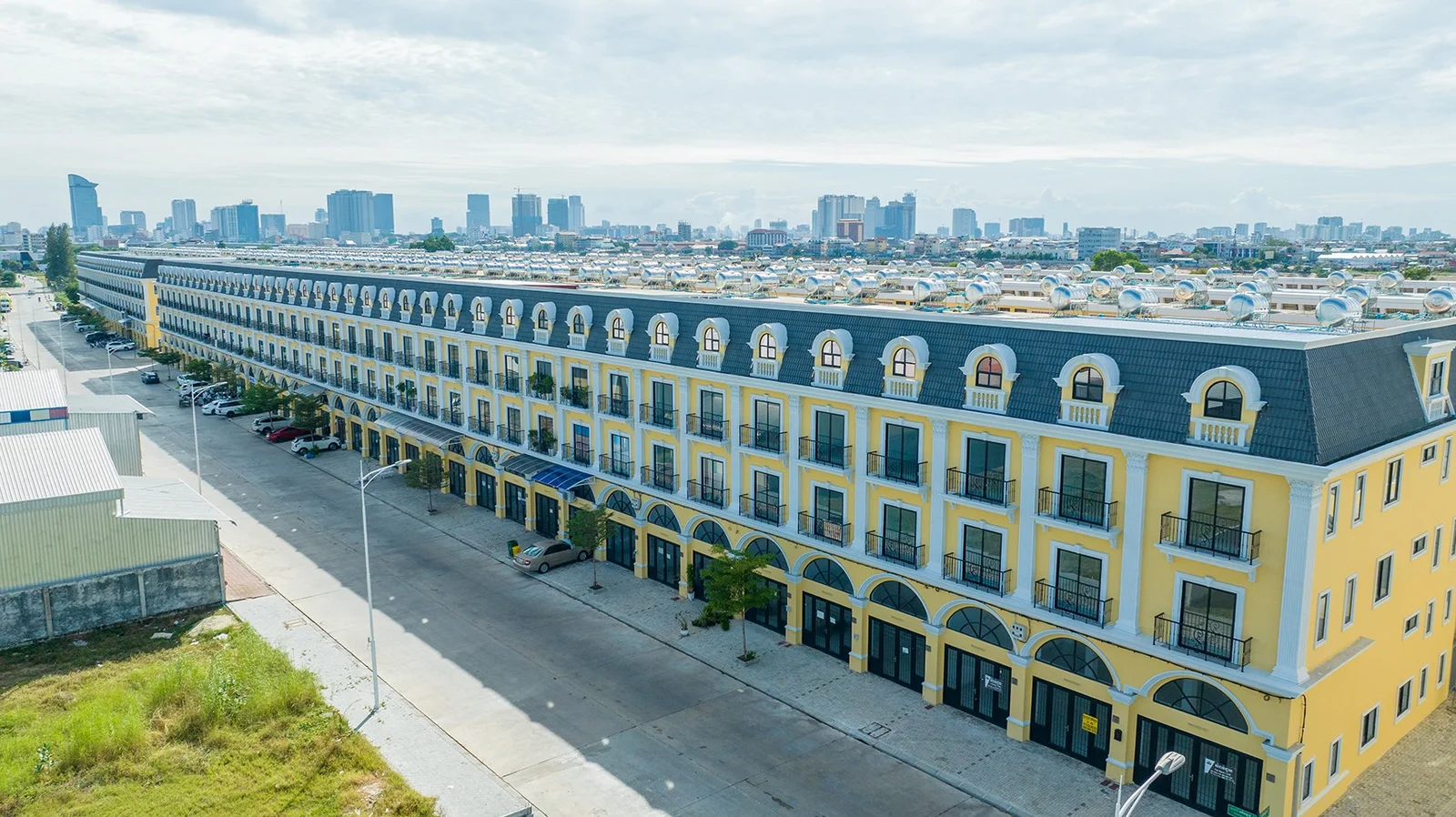
Quick answer: OCIC (Overseas Cambodian Investment Corporation) is a premium-band Cambodian master-developer behind Koh Pich (Diamond Island), the Koh Norea satellite city, and a major stake in the company behind Techo International Airport. Foreign entry typically starts near $106,000 and trades above the $1,800 per sqm Phnom Penh average, well above the entry tier where Megakim launches from about $40,000. Buy OCIC for capital quality and brand-led demand, not for the lowest ticket size, and verify quota and net yield before deposit.
Invest Cambodia Editorial profiles OCIC against what it has actually delivered on Koh Pich and Koh Norea, which is an unusually visible record. This page is an independent profile of OCIC rather than promotional copy, and it covers what OCIC builds, what its premium stock costs, how it sits against the entry tier, and the diligence that any premium purchase still requires.
Read this alongside Koh Pich, Koh Norea and Megakim versus OCIC on entry price. OCIC builds into a Phnom Penh market of 76,000 to 80,000 condo units absorbing 3% to 4% a year, and its masterplans add supply to that number rather than drawing from it.
Who is OCIC and what does it build in Cambodia?
OCIC’s defining trait is scale. Reclaiming and master-planning Koh Pich turned a sandbar at the confluence of the Tonle Bassac and Mekong rivers into a high-density mixed-use district with towers, a convention centre, schools and retail. The same model carried into Koh Norea, a larger satellite city further east along the river, and into the company structure behind Techo International Airport south of the city. The group’s landlocked, longest-running central quarter, Olympia City beside the Olympic Stadium, building in phases since 2013, is the completed evidence of what an OCIC master plan looks like a decade in. For a buyer, this matters because OCIC’s stock is concentrated in branded, amenity-rich districts that command end-user demand and price premiums. That premium is the trade-off, because OCIC is a capital-quality story whose entry prices sit far above the entry-tier launches covered in Megakim World Corp.
| 2026 metric | Indicative value | Buyer use |
|---|---|---|
| Phnom Penh avg price | $1,800 per sqm | Baseline vs district premium |
| Foreign quota cap | 70% per building | Above ground floor only |
| Banking NPL ratio | 8.9% | Developer completion risk |
| Stamp duty window | Through 31 December 2026 | Registration timing |
How does OCIC compare to Megakim on entry price?
| Factor | OCIC (premium tier) | Megakim (entry tier) |
|---|---|---|
| Indicative entry | From about $106,000 | From about $40,000 |
| Positioning | Master-planned districts | Single towers in BKK3 and city |
| Flagship | Koh Pich, Koh Norea | Time Square series, Square Castle |
| Price vs market | Above $1,800 per sqm | At or below average |
| Payment plans | Project specific | 20% down, up to 40-month plans |
| Best for | Capital quality, end users | Lowest ticket, yield hunters |
The comparison is not about which developer is better but which tier fits your budget and hold plan. A buyer with under $50,000 cannot realistically enter OCIC stock and should read the entry-tier profile instead. A buyer with $120,000 weighing capital preservation against absolute yield is exactly the OCIC versus Megakim decision laid out in Megakim VS OCIC Entry Price.
What is OCIC’s flagship Koh Pich (Diamond Island) project?
Koh Pich works as a premium location because it combines a central position, a self-contained amenity set and brand recognition that supports both resale and rental demand from end users. Towers there typically trade above the $1,800 per sqm city average, and units rarely appear in the entry budget bands. For a foreign buyer the appeal is liquidity of demand: a recognisable, walkable district tends to hold tenant and buyer interest better than an isolated tower. The trade-off is yield. Because entry prices are high, gross yields on Koh Pich stock usually run below those marketed on cheaper units, so the case rests on capital quality and end-user demand rather than headline income. The district detail sits in Koh Pich, and the underwriting discipline in Phnom Penh Rental Yield Guide.
What is the Koh Norea satellite city development?
Koh Norea is an off-plan and early-phase proposition for most buyers, which changes the risk profile relative to a completed Koh Pich tower. The upside narrative is infrastructure-led: a satellite city on the river with improved road and bridge connectivity can reprice as amenities mature and the district fills out. The risk is that early-phase districts carry construction and absorption timing risk, and liquidity stays thin until the area is established. A buyer attracted to Koh Norea is effectively betting on OCIC’s delivery record and the corridor’s build-out, which is why the off-plan playbook in Off Plan Property Cambodia Guide and the project-level view in OCIC Koh Norea matter before committing. Tie any instalments to verified construction milestones.
How is OCIC linked to the Techo International Airport JV?
The airport link matters to a property buyer for two reasons. First, it signals OCIC’s standing as a developer trusted with national-scale infrastructure, which supports the brand premium attached to its residential stock. Second, the new airport reshapes where future demand and connectivity concentrate, giving the southern corridor an infrastructure-led thesis similar to the eastern river corridor around Koh Norea. The caution is that infrastructure-led areas can stay illiquid until supporting amenities, transport and population actually arrive, so an airport-corridor purchase is a longer-hold, patience-required bet rather than a quick flip. The corridor detail is in Techo Airport Corridor, and the strategic view sits in Cambodia Property Market Outlook 2026.
What does an OCIC unit actually cost a foreign buyer?
| Cost line | Indicative range | Buyer action |
|---|---|---|
| Unit price (entry premium) | From about $106,000 | Confirm exact stack and floor |
| Legal review | $800 to $2,500 | Use a Cambodia property lawyer |
| Transfer and stamp duty | Lower through 31 Dec 2026 | Model under the incentive window |
| Furnishing | $5,000 to $15,000 | Budget for rental readiness |
| Management fee | $40 to $80 per month | Confirm sinking fund |
| Vacancy allowance | 1 to 2 months per year | Stress-test net yield |
The premium positioning changes the maths. On a $106,000 entry unit the soft costs are a smaller percentage than on a $40,000 unit, but the absolute capital at risk is higher, so the quality of the developer and district has to justify it. OCIC stock is phased, so only blocks registering this year reach the 31 December 2026 stamp duty window, while the 2027 capital gains regime reaches every later exit. Both dates belong in the model before you commit to a phased block: see the taxes and fees page.
Can foreigners buy OCIC condos within the 70% quota?
The ownership path does not change because the developer is premium. What can differ in a sought-after OCIC building is quota pressure: popular towers on Koh Pich can fill their foreign allocation faster, which both narrows availability and affects your future resale pool, because once the 70% ceiling is near, onward buyers skew toward Cambodian purchasers who may price differently. Always request the building’s official foreign quota ledger rather than accepting a salesperson’s scarcity claim. What a foreigner holds in an OCIC tower is a strata freehold above the ground floor, with the detail in foreign ownership and strata title.
What rental yield can OCIC stock realistically deliver?
The yield logic is simple arithmetic. A premium unit costs more per square metre, while achievable rent does not rise in the same proportion, so gross yield compresses relative to cheaper stock. That does not make OCIC a weak buy; it makes it a different buy. The premium-tier case rests on end-user demand, brand resilience and the chance of stronger capital performance in a recognisable district, not on out-yielding a $40,000 entry unit. Model with realistic occupancy near 85%, verified management fees and one to two months of annual vacancy, exactly as the income discipline in Phnom Penh Rental Yield Guide requires. Foreign tenant demand still concentrates in BKK1, BKK3 and Tonle Bassac near schools and offices.
Comparing Koh Pich against Koh Norea? We will pull quota headroom and lease comps for both before you choose an island.
Compare the two islandsWhat are the advantages and disadvantages of buying OCIC?
OCIC’s advantages are brand strength, master-planned districts, deep delivery capability and end-user demand; its disadvantages are high entry prices, compressed gross yields and early-phase risk on newer districts. The premium positioning is the source of both the strengths and the weaknesses.
| Advantages | Disadvantages |
|---|---|
| Master-planned districts with full amenities | High entry from about $106,000 |
| Strong brand supports resale and rental demand | Gross yields lower than entry tier |
| National-scale delivery record (Koh Pich, airport) | Early-phase Koh Norea carries timing risk |
| Recognisable, walkable central locations | Premium price not matched by premium yield |
| Infrastructure-led upside on Koh Norea and Techo | 70% quota can fill fast in popular towers |
| Capital-quality story for longer holds | Thin resale market still applies citywide |
OCIC’s scale is both the reassurance and the risk: a developer large enough to finish a masterplan is also large enough to compete with you on resale. The brand and amenities that protect demand also push the entry price above the reach of entry-tier buyers and below the gross yield such buyers can chase. A disciplined buyer treats OCIC as a capital-quality and longer-hold decision, weighed against the affordability and yield-hunting case for the entry tier in Megakim World Corp.
What are the risks and red flags with premium OCIC stock?
- Brand-premium overpay: Verify the exact stack, floor, view and finish; a famous district does not justify every individual unit’s price.
- Infrastructure over-reliance: Treat airport and bridge narratives as long-hold theses, since the amenities that would lift near-term yield can lag.
- Early-phase timing: On Koh Norea and other off-plan phases, tie instalments to verified construction milestones and use escrow where available.
- Quota pressure: Request the written foreign quota ledger in a popular building before deposit; near-full towers narrow your resale pool.
- Yield inflation: Any gross yield above the high single digits on premium stock needs line-item proof of rent comps, fees, vacancy and furnishing.
Insider tip: On Koh Pich, visit at two different times on a weekday and again on an event day at the convention centre. The same unit can feel calm on a Tuesday morning and congested during a major exhibition, and that swing directly affects the short-stay and end-user demand you are underwriting.
Which buyer scenarios fit OCIC versus Megakim?
OCIC fits buyers prioritising capital quality, end-user demand and longer holds with budgets above roughly $100,000, while Megakim fits buyers prioritising the lowest ticket size, payment-plan accessibility and gross yield. Match the developer to your budget and hold period rather than to brand prestige alone.
| Profile | Goal | Better fit | Starting point |
|---|---|---|---|
| Premium end-user | Capital quality | OCIC | Koh Pich |
| Entry investor under $50k | Lowest ticket | Megakim | Megakim World Corp |
| Infrastructure bettor | Long-hold upside | OCIC (Koh Norea) | Techo Airport Corridor |
| Yield hunter | Higher gross yield | Megakim entry tier | Phnom Penh Rental Yield Guide |
| Comparison shopper | Tier decision | Either | Megakim VS OCIC Entry Price |
Scenario A: A buyer with $130,000 seeking a recognisable central address for end-user resale focuses on a completed Koh Pich tower, accepting a lower gross yield in exchange for brand resilience and demand depth.
Scenario B: A buyer with $45,000 cannot enter OCIC stock and instead evaluates the Megakim entry tier with a 20% down, 40-month payment plan, accepting higher completion and liquidity risk for a lower ticket.
Scenario C: A patient buyer with a five-plus-year horizon takes an early-phase Koh Norea unit as an infrastructure bet, ties payments to milestones, and treats illiquidity as the price of the corridor thesis.
How should you run due diligence on an OCIC purchase?
Premium and brand do not replace verification; they raise the stakes of skipping it. Because an OCIC entry unit ties up materially more capital than an entry-tier purchase, the cost of a contract, quota or title oversight is larger in absolute terms. Beyond the showroom, visit a finished OCIC tower on Koh Pich to judge how the brand actually ages and maintains, and apply the same red-flag screen used for any developer in Developer Due Diligence Red Flags Cambodia. The transfer-day sequence on an OCIC unit is in due diligence step by step.
What OCIC has launched most recently
OCIC’s pipeline moves faster than a guide can, and the launch terms on a new tower are the terms you will actually be offered. Our latest write-up covers the Norea Square launch on Koh Norea, with the launch terms and project detail on Norea Square Condominium and the district context on Koh Norea. Launch pricing on a master-planned island is set against the master plan’s own comparables rather than against the wider city, so read the district page before you accept that a launch discount is a discount.
Closing verification checklist
Before you transfer funds for an OCIC unit: confirm the construction licence and land title with a Cambodia lawyer, request the building’s remaining foreign quota ledger in writing, inspect a completed OCIC building rather than only the showroom, model net yield with realistic occupancy and verified fees, account for the stamp duty incentive through 31 December 2026, and for any Koh Norea or early-phase unit tie instalments to verified construction milestones with escrow where available. Compare the premium-tier case against the entry tier in Megakim VS OCIC Entry Price before committing.
Frequently Asked Questions
OCIC (Overseas Cambodian Investment Corporation) is one of Cambodia's largest master-developers, best known for reclaiming and developing Koh Pich (Diamond Island), the Koh Norea satellite city, and for its role in the company behind Techo International Airport. It builds premium master-planned districts rather than single condo towers.
OCIC premium stock typically starts from about $106,000 and rises well above the $1,800 per sqm Phnom Penh average. That sits far above the entry tier, where Megakim launches such as Time Square Ocean View start near $40,000, so OCIC is a premium-band, not entry-band, decision.
Neither is universally better. OCIC offers premium master-planned districts and brand-led end-user demand at a higher entry price, while Megakim offers low absolute ticket sizes from about $40,000 with payment plans. The right choice depends on budget, hold period and whether you prioritise capital quality or affordability.
Yes, foreigners can buy strata co-ownership units above the ground floor within the 70% foreign quota per building, the same rule that applies across Cambodia. Always verify the remaining foreign quota in the specific building before you pay a deposit.
OCIC yields are quoted against masterplan districts whose tenant base is still arriving, so treat any figure as a forecast about a location rather than a measurement of a building. Premium Koh Pich and Koh Norea units usually deliver lower gross yields than entry stock because of higher entry prices, so underwrite net yield after vacancy, management and maintenance.
Techo International Airport was delivered by the company structure in which OCIC holds a major stake alongside the state, rather than by OCIC alone. The airport corridor is one reason OCIC's south and east Phnom Penh landbank carries an infrastructure-led growth narrative.
Get a Cambodia property shortlist
Share your budget, target district (BKK1, Koh Pich, Koh Norea, Siem Reap), and goal. We reply within one business day with matched stock and next steps.