Morgan Tower Review: What 210 Metres Costs to Run
Morgan Group's 48-storey Koh Pich landmark and its 54-storey riverfront sibling. Height is a maintenance bill and a lift schedule before it is a view.
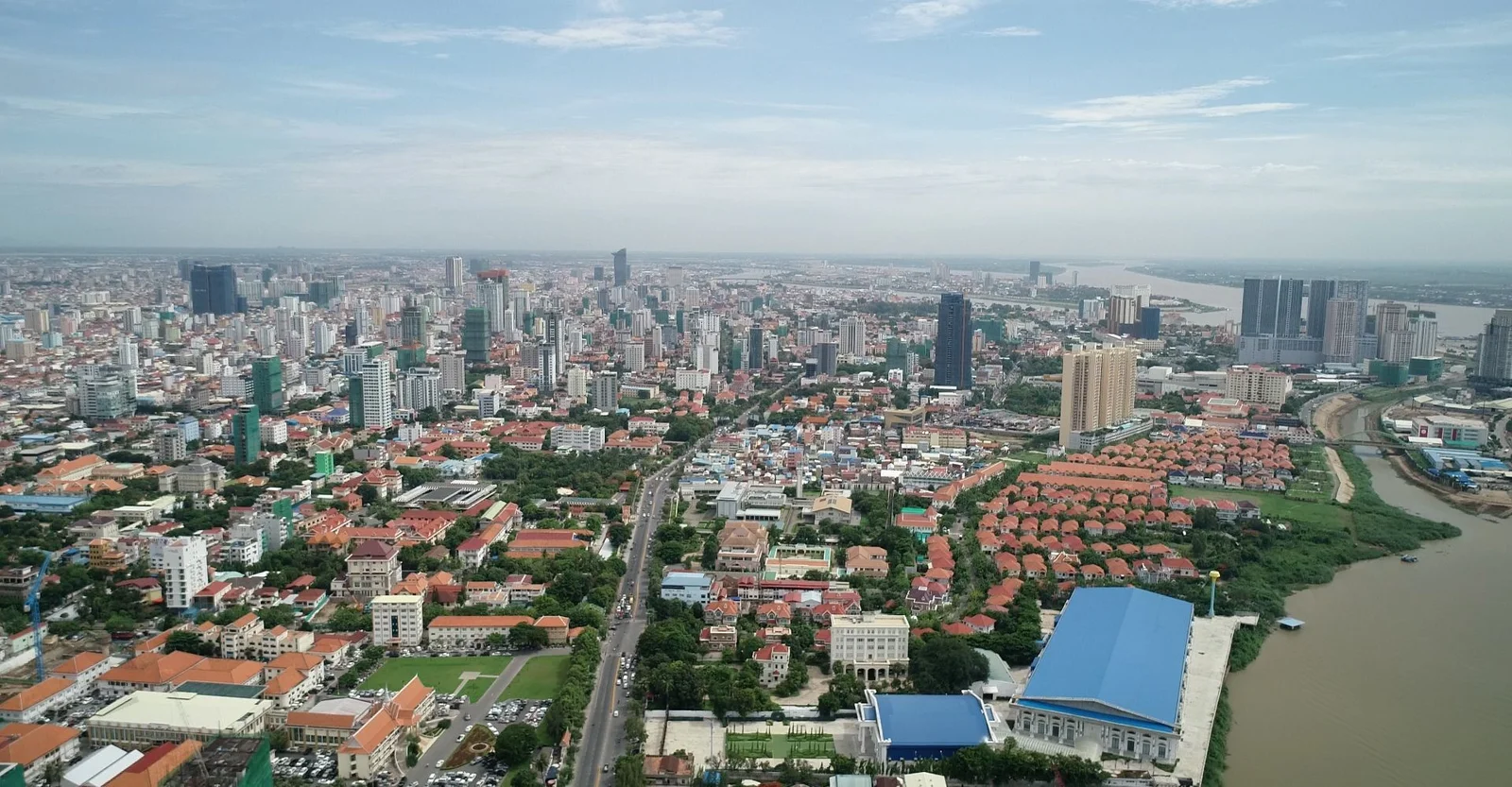
Quick answer: There is no Morgan Living. Morgan Group’s Phnom Penh landmarks are Morgan Tower, 48 storeys, about 210 metres, completed on Koh Pich in 2022 with a reported $160 million behind it, and the 54-storey Morgan EnMaison on the Mekong. At that height the view is the easy part; the plant that makes the view habitable is the recurring cost nobody quotes.
This page previously reviewed a building called “Morgan Living” that appears in no record. Morgan Group’s actual buildings are Morgan Tower and Morgan EnMaison, and what follows is about them, led by the operating question that height creates and marketing never mentions.
What Morgan Group has actually built
Morgan Group, founded in 2008, has delivered two landmark towers in Phnom Penh: Morgan Tower on Koh Pich, 48 storeys and roughly 210 metres, completed in 2022 with a reported investment near $160 million; and Morgan EnMaison, 54 storeys on the Mekong riverfront. Morgan Tower is mixed-use across its height.
| Fact | Verified position | Note |
|---|---|---|
| Developer | Morgan Group, founded 2008 | Named counterparty |
| Morgan Tower | 48 storeys, ~210 m, Koh Pich | Completed 2022 |
| Investment | Reported ~$160 million | Scale of the project |
| Uses | Residences, offices, five-star hotel, restaurant, sky bar | Spread across the tower |
| Morgan EnMaison | 54 storeys, Mekong riverfront | The group’s second landmark |
| ”Morgan Living” | Not found | No developer or portal record |
Our read starts with what 48 storeys means physically, because that is the part of the purchase a buyer signs up to permanently. A tower of this height is a piece of infrastructure: it needs lifts fast enough that the top floors are usable and numerous enough that they can be serviced without stranding residents, water pressurised in zones with pumps and tanks partway up, a facade that can only be cleaned and repaired from suspended equipment, and fire, smoke and evacuation systems that a ten-storey building never installs. None of that is optional and none of it is cheap. It is also the reason a tall tower’s service charge cannot be compared with a low-rise’s on a per-square-metre basis without accounting for what the money is actually buying.
The island it stands on is documented in the Koh Pich profile, and the island’s earliest condominium, a useful older comparison, in D.I. Riviera. The recurring-cost framework this page leans on is the sinking fund and fees guide, and the commercial component’s market is described in the office investment guide.
How does ownership work in a vertical mixed-use tower?
What a foreign buyer actually holds is a strata freehold above the ground floor, and the building may allocate no more than 70% of its total private-unit area that way. In a tower stacking residences, offices and a hotel, the practical first question is not the cap but the component: which co-ownership entity your unit sits in decides which regulations bind you and which budget you fund.
| Ownership item | Position | What to demand |
|---|---|---|
| Legal basis | Strata co-ownership, Sub-Decree 126 | Certificate for your component |
| Foreign cap | 70% of total private-unit area | Dated extract, in square metres |
| Components | Residential, office, hotel, F&B | Which one holds the unit |
| Shared plant | Lifts, pumps, fire systems, facade access | The apportionment schedule |
| Hotel operations | Continuous, high consumption | Cost and access implications |
| Title | Individual strata title | Land Office verification |
What we could verify about the legal position is that it is standard; the tower-specific work is understanding a cost structure that stacks vertically. In a mixed-use high-rise the components rarely use the shared systems equally: a hotel runs its lifts and water around the clock, offices concentrate lift demand into two sharp peaks a day, and residences spread theirs across mornings and evenings. A charge apportioned purely by floor area ignores all of that and will usually leave residential owners subsidising the heavier users. A charge apportioned by a negotiated formula, or with separated risers and lift banks by component, does not. Which arrangement applies is written down, and it is the difference between a predictable holding cost and an annual argument. Ask for the schedule and the lift-bank layout together; the second explains the first.
The framework is set out in can foreigners buy property in Cambodia and foreign ownership and strata title, with the working order in due diligence step by step and registration in strata co-ownership registration.
What height actually costs, month after month
Phnom Penh condominium service charges cluster near $1.50 per sqm per month, and that figure is drawn overwhelmingly from buildings well under thirty storeys. A 48-storey tower with hotel and office components is funding a different machine, and a buyer should expect the number to reflect it rather than hoping it will not.
| Cost driver | Why height changes it | Owner’s exposure |
|---|---|---|
| Lifts | High-speed, multiple banks, heavy contracts | Largest single plant cost |
| Water | Pressure zones, pumps, intermediate tanks | Continuous energy and maintenance |
| Facade | Access only by suspended equipment | Cleaning and eventual replacement |
| Fire and smoke | Pressurised stairs, detection, pumps | Statutory, non-deferrable |
| Standby power | Generators sized for lifts and pumps | Fuel, testing, replacement |
| Benchmark | ~$1.50 per sqm per month citywide | Drawn from lower buildings |
Insider tip: ask for the lift maintenance contract’s value and its renewal date, because in a tall tower that single contract is often the largest line in the budget and its renewal is the moment a service charge jumps, a building four years past completion is approaching exactly that conversation. Our analysis of high-rise cost structures keeps returning to the same asymmetry: the capital cost of height is paid by the developer and shows in the sale price, while the operating cost of height is paid by owners forever and shows in nobody’s brochure. On a 100 sqm apartment, the difference between a well-run tall building and a poorly-provisioned one can exceed a thousand dollars a year in recurring charges, before any special levy for facade or lift replacement. The red flag is a service charge conspicuously below the citywide norm in a building with this much plant: that is not efficiency, it is a bill being postponed onto whoever owns the unit when the postponement ends.
The costs are broken down in the sinking fund and fees guide, and the insurance dimension in the property insurance guide. What the commercial floors contribute is described in the office investment guide, and the island’s private infrastructure charge in the Koh Pich profile.
Who pays a premium to live high?
A high floor in a landmark tower rents to a specific tenant: corporate placements, senior expatriates and local buyers for whom the address and the view are the product. That tenant exists in Phnom Penh but is not deep, and above a certain rent the pool narrows quickly.
| Income input | Position | Note |
|---|---|---|
| Central rent band | $400-$1,000/month, standard 1-2BR | Landmark stock prices above it |
| Premium tenant | Corporate, senior expatriate, prestige-led | Real but shallow pool |
| View premium | Genuine on high floors | Diminishes on lower ones |
| Vacancy backdrop | ~15% citywide | Longer searches at the top |
| Service charge | Above the $1.50 benchmark expected | Height and mixed use |
| Modelled net | 3%-5%, tighter at the top | Charges compress it |
The methodology this corpus applies to landmark towers is to test the rent ceiling before the price, and we tracked the same pattern across the city’s tallest stock: the view commands a premium, the premium attracts a narrow tenant band, and the service charge takes a larger bite out of that premium than owners expect. A high-floor unit letting well above the central band can still net less than a well-chosen mid-rise apartment once a tall building’s charges are subtracted, which is why height flatters gross yield and rarely flatters net. Where the tall tower genuinely wins is on days-on-market at the top end and on owner-occupier demand: the people who want the highest floors in a named landmark are not price-shopping, and they are a durable, if small, constituency. Underwrite that honestly, a shallow pool paying well, with charges that scale with the building, and the numbers are sound. Underwrite it as a central apartment with a better view and they will not be.
Income modelling is in the Phnom Penh rental yield guide with the honest distinction in net vs gross yield. Managing the letting from abroad is covered in the management guide, and the tax in rental income tax.
Considering a high floor at Morgan Tower? We will get the lift contract and renewal date, the component apportionment schedule and the fund's position against the plant it must replace.
Price the running costsHow does it compare with the island’s other stock?
On Koh Pich, Morgan Tower is the height play. The island’s other completed condominiums are shorter, simpler and cheaper to run, which is the trade a buyer is actually making.
| Option | Profile | The trade |
|---|---|---|
| Morgan Tower | 48 storeys, mixed use, 2022 | Landmark and view, highest running costs |
| D.I. Riviera | 32 storeys, island’s first | Longest record, phased competition |
| Diamond Bay Garden | 39 floors, recent handover | Newer, residential-led, simpler budget |
| Mainland Tonle Bassac | No island infrastructure charge | Cheaper to hold |
| City average | ~$1,800 per sqm | The anchor |
| The decision | View and address, or running cost | It is genuinely one or the other |
Our underwriting of the island’s set produces a clear buyer scenario. Somebody who wants the view and the address, will occupy the unit themselves or let to the narrow band that pays for prestige, and can absorb a service charge that reflects real plant, is buying exactly the right thing here, and the 2022 completion means they can inspect all of it before committing. Somebody optimising net yield on the same island will do better in a shorter, residential-led building where the budget funds a lobby and a pool rather than pressure zones and suspended facade rigs. The mistake to avoid is buying the landmark for the yield: height reliably raises gross rent and just as reliably raises the cost of collecting it, and on the evidence the second effect usually wins. Decide which of the two things you are buying, then buy it deliberately.
The island’s alternatives are covered in D.I. Riviera and Diamond Bay Garden, with the island itself in the Koh Pich profile and the wider choice in best condos to buy in Phnom Penh.
What we could verify, and the correction
| Claim | Classification | Evidence |
|---|---|---|
| Morgan Group, founded 2008 | Verified | Developer records |
| Morgan Tower: 48 storeys, ~210 m, Koh Pich | Verified | Project and market reporting |
| Completed 2022 | Verified | Reported at 100% construction |
| Reported investment ~$160 million | Reported | Developer-side figure |
| Mixed use: offices, hotel, restaurant, sky bar | Verified | Project documentation |
| Morgan EnMaison: 54 storeys, Mekong front | Verified | Project documentation |
| A project called “Morgan Living” | Not found | No developer or portal record |
| Lift contract, apportionment, fund position | Must obtain | Management documents |
The “Morgan Living” row is the correction. This page previously reviewed that name and attributed it to a “Morgan En Maison / local JV”, conflating the group’s two real buildings into one that does not exist. The slug still carries the old name and is queued for renaming with the next approved redirect batch.
Advantages and disadvantages
For the purchase: a completed 2022 landmark with four years of operating records; a developer with two delivered towers rather than one; genuine view scarcity on the upper floors; a hotel and restaurant operation that keeps shared areas to a standard; and an island address with a settled amenity base.
Against it: the highest running costs of any residential format, funded monthly and forever; a lift contract renewal approaching for a building at this age; facade maintenance that requires specialist access; a mixed-use apportionment that can quietly shift cost onto residences; and a premium tenant pool that is real but shallow, which lengthens letting at the top of the range.
Buyer scenarios and decision framework
An owner-occupier who wants the view and will consume it daily gets the clearest value, and should still read the fund’s position. A prestige-focused landlord with patience for longer searches can make the top floors work. A yield-focused investor should buy a shorter building on the same island. And any buyer told the service charge here matches the citywide $1.50 benchmark should ask what plant that figure is funding, because a 210-metre tower does not run on a low-rise budget.
Closing verification checklist
Before an offer: establish which component and co-ownership entity holds the unit; obtain the apportionment schedule and the lift-bank layout together; get the lift maintenance contract value and renewal date; read the sinking fund against the plant it must eventually replace; ask when the facade was last accessed and what it cost; request closed transfers inside the residential component only; run the Land Office title and encumbrance search; and time the transfer against the 2026-12-31 duty window, with the 20% capital gains regime from 2027 in the exit model.
Frequently Asked Questions
No. Earlier versions of this page reviewed one, and no developer or portal record contains it. Morgan Group's Phnom Penh buildings are Morgan Tower on Koh Pich and Morgan EnMaison on the Mekong riverfront.
A 48-storey landmark of about 210 metres on Koh Pich, completed in 2022 with a reported investment near $160 million. It combines residences with offices, a five-star hotel, a restaurant and a sky bar across its floors, a vertical mixed-use building rather than a simple condominium.
Morgan Group, founded in 2008. Its second landmark, Morgan EnMaison, is a 54-storey tower on the Mekong riverfront, so the group's two buildings sit among the tallest residential-led structures in Phnom Penh.
It is an operating cost before it is a view. At 48 storeys the building needs high-speed lifts on real maintenance contracts, pressurised water zones and pumps, suspended access for the facade, and fire and smoke systems a low-rise never installs, all funded monthly by owners.
Yes, above the ground floor and inside the cap of 70% of total private-unit area. In a mixed-use tower, first establish which component and co-ownership entity holds the unit, because that decides which budget you fund and which regulations bind you.
The lift maintenance contract and its renewal history; the facade access arrangement; the sinking fund against the plant it must replace; how costs are apportioned between residences, offices and the hotel; and closed transfers inside the residential component only.
Frequently Asked Questions
No. Earlier versions of this page reviewed one, and no developer or portal record contains it. Morgan Group's Phnom Penh buildings are Morgan Tower on Koh Pich and Morgan EnMaison on the Mekong riverfront. This page now covers those.
A 48-storey landmark of about 210 metres on Koh Pich, completed in 2022 with a reported investment of some $160 million. It combines residences with offices, a five-star hotel, a restaurant and a sky bar distributed across its floors, making it a vertical mixed-use building rather than a simple condominium.
Morgan Group, founded in 2008 and one of the more visible developers in the Cambodian market. Its second landmark, Morgan EnMaison, is a 54-storey tower on the Mekong riverfront, so the group's two buildings are among the tallest residential-led structures in the city.
Because it is an operating cost long before it is a view. At 48 storeys a building needs high-speed lifts with real maintenance contracts, pressurised water zones and pumps, facade access equipment for cleaning and repair, and fire and smoke systems that a low-rise never installs. All of it is funded by owners, every month.
Yes: strata co-ownership above the ground floor, inside the cap of 70% of the building's total private-unit area. In a mixed-use tower, first establish which component and which co-ownership entity your unit belongs to, because that determines which budget and which regulations apply to you.
The lift maintenance contract and its renewal history; the facade access arrangement; the sinking fund's balance against the plant it has to replace; how costs are apportioned between residences, offices and the hotel; and closed transfers inside the residential component rather than across the whole tower.
Get a Cambodia property shortlist
Share your budget, target district (BKK1, Koh Pich, Koh Norea, Siem Reap), and goal. We reply within one business day with matched stock and next steps.