Phnom Penh Office Investment: Rents, Vacancy, Returns
Grade A, B and C office rents turned into a strata purchase yield, against stock heading for 1.3 million sqm and occupancy that never recovered.
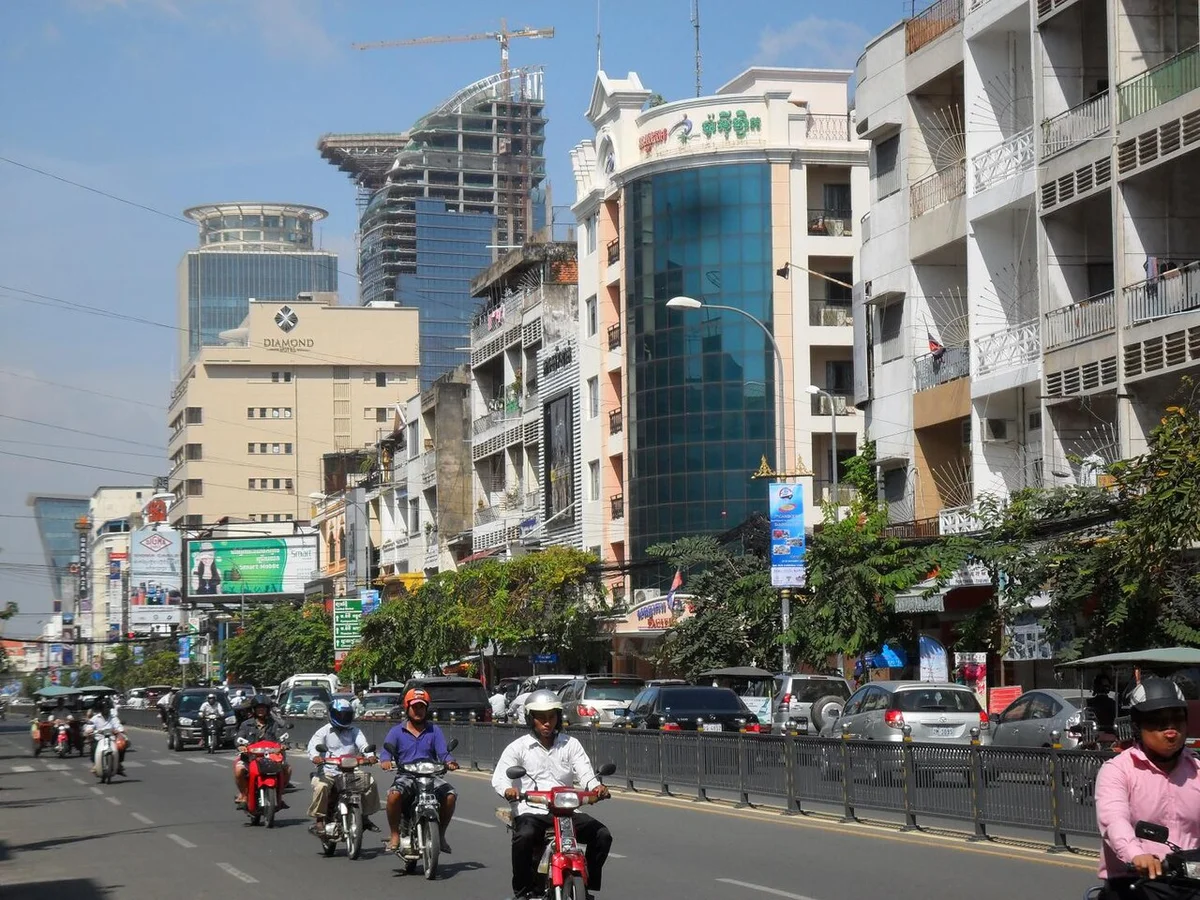
Quick answer: A foreigner can own a Phnom Penh office floor outright if it is a strata unit above the ground floor. The economics are a tenant’s market: Grade B rents of $18 to $29 per sqm per month against stock heading for 1.3 million sqm, which produces a strong headline yield and a void risk that decides the actual return.
Phnom Penh’s office market is the clearest example in Cambodia of a sector where the tenant story and the investor story point in opposite directions. For an occupier, this is the best leasing environment in a decade. For an owner already holding stock, it has been four difficult years. For a buyer entering now, it is a question of whether the entry price compensates for the vacancy.
This page prices that question. It covers what a foreigner can own, what the grades actually rent for, how deep the oversupply runs, and what an 80 sqm floor returns once the costs that do not exist in a residential purchase are applied line by line.
Scale explains most of what has happened to Phnom Penh office rents since 2019. A city of roughly 2.2 million people added more than 500,000 sqm of office space in four years, taking total stock past a million square metres by 2023 and toward a forecast 1.3 million sqm during 2026. Tenant demand grew, but nothing like that fast, and the arithmetic of an occupancy rate does the rest: the same number of leases spread across twice the floor area halves the occupancy figure without a single tenant leaving the market. Asking rents about 20% below their 2019 level are the direct consequence, and our underwriting reads them as a supply event rather than a demand collapse, which matters because the two conditions resolve on very different timetables.
Can foreigners own office space in Phnom Penh?
Foreign buyers can hold a Phnom Penh office floor freehold when it is registered as a strata unit above the ground floor. The Law of 24 May 2010 with Sub-Decree No. 126 (2009) caps foreign ownership at 70% of the total area of private units in the building, and roughly 40% of Phnom Penh’s graded towers are strata-titled rather than single-owner. The clearest completed example is the Flatiron in Daun Penh: 272 freehold strata offices sold to investors, and the off-plan pipeline’s benchmark is Odom Tower on Norodom.
| Office format | Foreign freehold? | Practical note |
|---|---|---|
| Strata floor above ground level | Yes | The only structure-free route |
| Strata unit on the ground floor | No | Excluded as land-attached |
| Whole floor in a single-owner tower | No | Lease only, commonly to 50 years |
| Converted villa office | No | Holds land, needs a structure |
| Shophouse used as an office | No | Holds land, see the shophouse guide |
| Co-working desk or suite | Not applicable | A service contract, not a property interest |
Single-owner towers are the trap. Several of Phnom Penh’s best-known buildings, including much of the prime CBD stock associated with the Vattanac group, are held and leased by their developer rather than sold floor by floor. An investor can occupy those buildings but cannot own in them, and our underwriting rules them out at the shortlist stage rather than after a viewing.
- Confirm strata registration on the title, not in the brochure.
- Ground-floor exclusion applies to commercial units exactly as it does residentially.
- Whole-building purchases require a landholding company or a commercial trust.
- A 50-year renewable lease is the realistic alternative where freehold is closed.
- Eligibility detail sits in the foreign ownership guide.
What does Phnom Penh office space rent for by grade?
Grade A office space in Phnom Penh asks $28 to $40 per sqm per month, Grade B ranges from $18 to $29 and Grade C from $9 to $18, with a service charge of $2 to $5 per sqm added on top. The all-grade average asking rate reported for 2026 is about $27, a figure prime towers pull upward and which no Grade B landlord should plan around.
| Grade | Asking rent per sqm per month | Service charge | Typical tenant |
|---|---|---|---|
| Grade A | $28 to $40 | $3 to $5 | Banks, embassies, regional corporates |
| Grade B | $18 to $29 | $2 to $4 | Local corporates, NGOs, mid-market firms |
| Grade C | $9 to $18 | $2 to $3 | Small business, back office, storage-adjacent |
| Villa office | $12 to $25 | Usually none | Creative firms, small professional practices |
Treat every band above as an indicative agency range rather than transacted evidence. Cambodia has no published transaction series for office leases, so all four rows come from listing sets and broker guidance, and the spread inside each grade is wide enough that our analysis always re-derives a building-specific rent from comparable floors in the same tower before underwriting a purchase.
- Asking rent and achieved rent diverge sharply in a tenant’s market.
- Incentive packages of two to three rent-free months are common in Grade B.
- Service charge is charged on gross area, so the effective cost per usable sqm is higher.
- Grade definitions are informal here; two agencies will grade the same tower differently.
- Rent is almost always quoted in US dollars, per the dollarization guide.
How oversupplied is the Phnom Penh office market?
Phnom Penh office stock doubled from roughly 500,000 sqm in 2019 to more than 1,000,000 sqm by 2023 and is forecast to reach about 1.3 million sqm during 2026 after more than 144,000 sqm of new supply. Occupancy fell from a pre-supply peak near 90% to about 64%, and asking rents sit roughly 20% below their 2019 level.
| Measure | 2019 | 2023 | 2026 |
|---|---|---|---|
| Total stock | About 500,000 sqm | Over 1,000,000 sqm | About 1.3 million sqm forecast |
| Occupancy | Near 90% at peak | About 64% | Grade A improving, Grade B and C under pressure |
| Asking rent direction | Baseline | Down | About 20% below the 2019 baseline |
| New supply in year | Moderate | Heavy | More than 144,000 sqm |
The 64% figure needs a caveat our analysis always attaches to it. It is the last clean published all-grade reading rather than a live 2026 number, and the market has bifurcated since: Grade A occupancy has improved quarter on quarter through the first half of 2026 while Grade B and C leasing weakened, particularly outside the core. Averaging a bifurcating market produces a number that describes no actual building.
- Absorption has not kept pace with delivery in any year since 2019.
- Quality flight means Grade A gains tenants that Grade B loses.
- Non-core districts carry the weakest occupancy and the deepest discounts.
- New towers arrive with incentive packages that reset the whole submarket.
- The wider market cycle is covered in the 2026 market outlook.
Insider tip: ask the building manager how many floors are currently dark after 7pm and walk the car park at 10am on a Tuesday. Occupancy quoted by a leasing agent counts signed leases; the car park counts staff who actually turned up, and in Phnom Penh the gap between those two numbers has been the most reliable vacancy indicator we have found.
Send the tower name, floor area and asking price. We return the grade we would assign it, the realistic achieved rent and the net yield after a full void cycle.
Model this office floorWhat yield does a strata office floor actually produce?
An 80 sqm Grade B strata floor bought at $120,000 and let at $18 per sqm per month produces $17,280 of annual gross rent, a headline yield of 14.4%. Our underwriting brings that to about 7.8% net across an average year once a realistic void cycle, incentives, agency fees, service charge during vacancy and 14% non-resident rent tax are applied.
| Line | Annual amount |
|---|---|
| Gross rent, 80 sqm at $18 per sqm per month | $17,280 |
| Void allowance, three months every third year | minus $1,440 |
| Fit-out contribution, two months per new tenancy | minus $960 |
| Agency fee, one month per new tenancy | minus $480 |
| Service charge carried while vacant, $3 per sqm | minus $240 |
| Rental income tax, 14% of gross for a non-resident | minus $2,419 |
| Annual immovable property tax at 0.1% | minus $120 |
| Repairs and reinstatement provision | minus $1,200 |
| Net | About $9,421, or 7.8% on cost |
That 660 basis point gap between the headline and the net is the entire subject of office underwriting in this market. Six of the seven deduction lines above exist only because the tenant is a business rather than a household, and none of them appear in the yield an agent quotes. The residential equivalent of this calculation, with its own much shorter deduction stack, sits in the net versus gross guide.
- A Grade B floor at $18 per sqm is the base case, not the optimistic case.
- Every new tenancy costs roughly three months of rent in incentives and fees.
- Rent tax is charged on gross, so a bad year is taxed like a good one.
- Longer leases improve the net materially by spreading the tenancy cost.
- District rental yields for the residential comparison sit in the district yield guide.
What does an office tenancy cost an owner that a condo does not?
An office tenancy adds four cost lines a residential landlord never meets: a fit-out contribution worth one to three months of rent, an agency fee of about one month, service charge carried through voids, and reinstatement obligations at lease end. Together they consume roughly 15% of gross rent across a full tenancy cycle on our model.
| Cost line | Residential condo | Strata office |
|---|---|---|
| Tenant incentive | None | One to three rent-free months |
| Agency fee | Half to one month | About one month, sometimes more |
| Service charge during voids | Owner pays, void is short | Owner pays, void can run a quarter |
| Fit-out or reinstatement | Cosmetic | Structural, negotiated, expensive |
| Lease negotiation | Standard form | Lawyer-drafted, per tenancy |
| Rent review mechanism | Renew or re-let | Contractual, often to a formula |
The reinstatement clause is the line our analysis flags most often, because it is the one buyers never price. A tenant who installed partitioning, cabling and a server room may be contractually obliged to restore the floor to shell condition, or may have negotiated that obligation away three landlords ago. A buyer who does not read that clause inherits either a valuable asset or a $15,000 bill, and there is no way to tell which from the rent roll alone.
- Read the reinstatement clause in every inherited lease before offering.
- Confirm which party owns installed air conditioning and cabling.
- Check whether service charge is capped or open-ended for the tenant.
- Ask whether the rent quoted is net of a current rent-free period.
- Management practicalities are covered in the property management guide.
Which office buyer does this market suit?
Phnom Penh office suits a buyer with at least $120,000, a five-year horizon and the temperament to hold a vacant floor for a quarter without panic. Our analysis of the current cycle is that it rewards entry price rather than income, which makes it a poor fit for anyone who needs the asset to pay from month one.
| Buyer profile | Fit | Reasoning |
|---|---|---|
| Overseas passive, $120,000 to $200,000 | Good, Grade B | Best yield per dollar, structure-free ownership |
| Overseas passive, above $400,000 | Good, Grade A | Weaker yield, far better tenant retention and exit |
| Buyer needing income from month one | Poor | Void risk makes early income unreliable |
| Owner-occupier business | Excellent | Removes the void risk entirely from the equation |
| Buyer under $100,000 | Poor | Below realistic strata office entry in a graded tower |
Owner-occupation is the profile the market currently serves best, and it is worth stating plainly because almost nobody markets it. A business paying $1,440 a month for an 80 sqm Grade B floor is spending $17,280 a year on rent it will never recover. Buying the same floor at $120,000 converts that expense into an owned asset, removes the void risk from the calculation entirely, and leaves the business exposed only to capital value rather than to capital value and occupancy together. Over five years the rent avoided comes to $86,400 against a purchase price of $120,000, which means roughly 72% of the entry cost is recovered before any capital movement is counted. On that arithmetic it is the single strongest office case in Phnom Penh, and it is available to any foreign-owned company that can hold strata title above the ground floor.
Advantages and disadvantages of Phnom Penh office
Office investment here trades residential predictability for a stronger headline yield and much better negotiating leverage at entry. The trade is legible: longer leases and lower prices against longer voids, heavier tenancy costs and a smaller pool of buyers when the time comes to sell.
| Advantage | Disadvantage |
|---|---|
| Gross yields well above the condo band | Voids measured in quarters |
| Leases of three to five years | Fit-out and incentives cost about three months per tenancy |
| Asking rents about 20% below 2019 at entry | Falling rents also cut the owner’s income |
| Very little foreign buyer competition | Thin resale market for strata floors |
| Owner-occupier case is genuinely strong | Grade definitions are informal and self-assigned |
| Structure-free where strata title exists | Most prime towers are single-owner and unavailable |
Liquidity is the disadvantage that deserves the most weight, because it is the one a spreadsheet cannot model. A Phnom Penh condo in a well-known building has a buyer pool of foreign individuals, local families and investors, and a realistic marketing period measured in months. A strata office floor has a buyer pool of businesses wanting to occupy it and investors wanting to let it, which in a market at roughly 64% occupancy is a much shorter list. Our analysis treats the office exit as requiring twelve months rather than the four to six a condo needs, and prices that into the holding period rather than the yield. A buyer who cannot commit to a five-year minimum should read the resale liquidity guide and stay residential.
Buyer scenarios and red flags
Three scenarios cover most office enquiries from foreign investors, and the red flags repeat: a rent quoted before its rent-free period, a grade assigned by the seller, and a floor described as first when the title records it as ground.
| Scenario | Buyer wants | What we would recommend |
|---|---|---|
| $150,000, passive, yield-led | Grade A prestige | Grade B floor in a well-managed tower |
| $500,000, wants liquidity at exit | Highest yield available | Grade A, accept 5% to 6% net for the exit |
| Business paying $1,500 a month rent | To keep renting | Buy the floor; the payback case is the strongest here |
The failure pattern in Phnom Penh office is a rent roll that flatters the asset. A buyer is shown a floor with a signed three-year lease at $22 per sqm and calculates a yield on that number. What the lease actually contains is four rent-free months at the front, a fit-out contribution the previous owner paid, and a break clause at month eighteen. The achieved rent across the term is closer to $19, the tenant may leave halfway, and the buyer has priced neither. Our underwriting reads the lease before the rent roll for exactly this reason, and on the floors we have reviewed the gap between headline rent and effective rent across a term has run between 8% and 18%. On an 80 sqm floor at a headline $22 per sqm, an 18% gap is $3,801 a year of income that exists on the rent roll and nowhere else, which is enough on its own to move a purchase from sensible to marginal.
- Never underwrite a rent roll without reading the leases behind it.
- A break clause inside 24 months makes the tenancy an option, not an income.
- Ask which party paid the current tenant’s fit-out and whether it is amortised.
- Confirm the floor’s registered level on the strata title before offering.
- Closing costs and transfer duty follow the closing costs guide.
Office sits alongside six other commercial classes in the commercial property pillar, and the two nearest alternatives at a similar ticket are shophouse and street retail and serviced apartments. District context for the CBD sits in the Daun Penh area page and the Tonle Bassac area page.
Tell us your budget and whether the floor is for letting or for your own business. We name the grade, the tower shortlist and the rent we would actually underwrite.
Talk to our Cambodia deskFrequently Asked Questions
Yes, where the office is a strata unit above the ground floor, inside the 70% total-area cap. Whole-building and ground-floor offices are closed to foreign freehold.
Grade A $28 to $40, Grade B $18 to $29, Grade C $9 to $18 per sqm per month, plus $2 to $5 service charge. The reported all-grade average asking rate for 2026 is about $27.
Yes. Stock went from about 500,000 sqm in 2019 to over 1,000,000 sqm by 2023 and is forecast near 1.3 million sqm in 2026. Occupancy fell from near 90% to roughly 64%.
An 80 sqm Grade B floor at $120,000 let at $18 per sqm shows 14.4% gross and about 7.8% net after voids, incentives, agency fees and 14% non-resident rent tax.
Fit-out contributions of one to three months, an agency fee near one month, service charge carried through voids, and reinstatement obligations at lease end.
Grade B for yield, Grade A for tenant retention and exit liquidity. The rent gap narrowed after 2019 while the price gap did not.
Send the tower, floor area, asking price and any existing lease. We return our assigned grade, the realistic rent band and the net yield after a full void cycle.
Get a Cambodia property shortlist
Share your budget, target district (BKK1, Koh Pich, Koh Norea, Siem Reap), and goal. We reply within one business day with matched stock and next steps.