Daun Penh Phnom Penh: A District That Works, Not Lives
Daun Penh is Cambodia's working CBD. Offices, ministries and heritage set the rents here, and residential is a minority use in a commercial district.
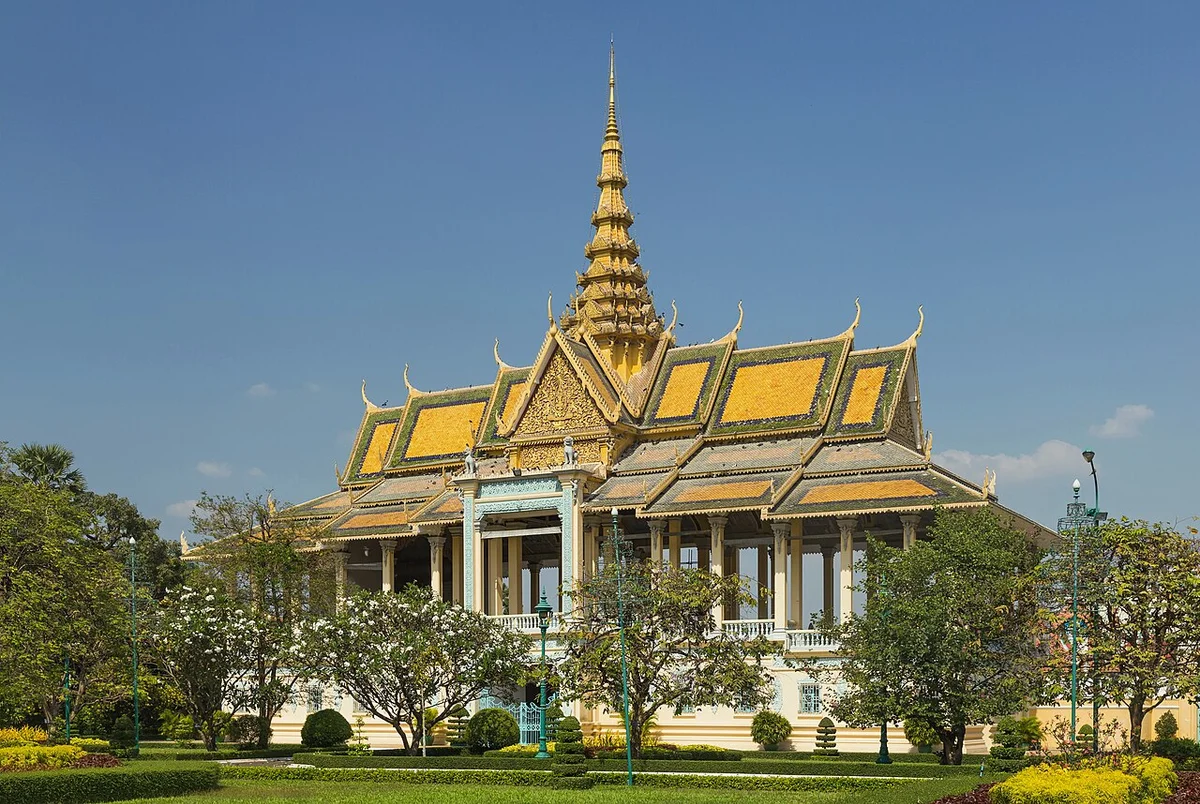
Quick answer: Daun Penh is where Phnom Penh works. Ministries, the National Assembly, the older banking core, the riverfront and most of the city’s heritage stock sit here, and residential property is a minority use inside that. A buyer who prices it as a residential district has priced the wrong thing.
BKK1 is a residential district with commerce in it. Daun Penh is the reverse, and almost every consequence for a buyer follows from that single fact rather than from anything about the individual buildings.
What sits in this district
Daun Penh’s inventory is unlike any other sangkat in Phnom Penh, and the mix is the reason its property market behaves differently.
| Component | Presence in Daun Penh |
|---|---|
| Government | Ministries, the National Assembly, administrative offices |
| Commercial | The older banking and corporate core |
| Heritage | The largest concentration of colonial-era architecture |
| Tourism | Riverfront, Wat Phnom, the Royal Palace approach |
| Residential | Present, but a minority use |
| Newer strata offices | Including the city’s clearest completed example |
This composition makes Daun Penh the one Phnom Penh district where a residential buyer should read the office market before the rent comparables. The weekday population that fills these streets is the tenant pool for nearby apartments, and it is employed by a commercial sector currently running well below its own peak. That is not a reason to avoid the district: scarce heritage and riverfront positions here are genuinely irreplaceable, but it does mean a residential yield model built purely on residential comparables is missing the variable that actually moves it.
The commercial picture is set out in the Phnom Penh office investment guide, with the district’s landmark strata-office scheme reviewed in the Flatiron. The residential district immediately south is profiled in BKK1.
The office market is the district’s weather
Daun Penh’s commercial condition is measurable, and it has been soft since a supply wave that the city has not yet absorbed.
| Indicator | Reading |
|---|---|
| Office occupancy | About 64%, against a pre-supply peak near 90% |
| Asking rents | Roughly 20% below 2019 |
| Grade A rents | $28-$40 per sqm per month |
| Grade B rents | $18-$29 per sqm per month |
| Office service charge | $2-$5 per sqm per month on top of rent |
| Stock trajectory | Toward 1.3 million sqm citywide in 2026 |
For a residential purchase in this district, walk the surrounding office buildings at lunchtime and count how many floors are actually occupied, that half-hour tells you more about your future tenant pool than any residential comparable, because the people who will rent your apartment work in those towers. That linkage is the single most under-modelled factor in central Phnom Penh residential investment. When occupancy falls from ninety per cent to the mid-sixties, the weekday population that supports nearby letting falls with it, and residential landlords experience that as longer void periods without ever identifying the cause. The buildings that hold up best are those closest to the ministry cluster, whose employment base is considerably more stable than the private commercial core.
The commercial market’s data is in the office investment guide and the broader case in the commercial property investment guide.
What is genuinely scarce here
Heritage and riverfront are the district’s real assets, and unlike apartment stock they cannot be added to.
| Asset | Why it is scarce |
|---|---|
| Colonial-era buildings | A fixed stock; nothing new is built |
| Riverfront frontage | A finite line along the Tonle Sap and Mekong |
| Ministry proximity | Employment that does not relocate |
| Wat Phnom surrounds | Protected character, tourist footfall |
| Ordinary residential towers | Not scarce; supply responds to demand |
| The distinction | Buy the first four, price the fifth carefully |
Daun Penh’s permanent features are institutional and geographic rather than commercial, and those are the ones that hold value through a soft office cycle. A riverfront position or a heritage building near Wat Phnom is competing against a supply that cannot grow, which is a fundamentally different investment from a new apartment two streets inland competing against everything else built in the last decade. The corollary matters just as much: a modern residential tower in Daun Penh carries the district’s tenant-pool risk without any of its scarcity, which is close to the worst combination available and is priced as though it were the best.
The riverfront corridor south is described in Tonle Bassac; pricing method for a specific unit is in the resale valuation guide.
Considering Daun Penh? We will assess the specific building against the office cluster it depends on, and tell you whether you are buying scarcity or ordinary stock in a commercial district.
Check what you are buyingForeign ownership, and the district’s unusual option
The rules are national, strata title above the ground floor inside the 70% area cap, but Daun Penh offers something most districts do not.
| Product | Foreign-eligible? | Note |
|---|---|---|
| Apartments above ground floor | Yes | Standard strata route |
| Strata offices above ground floor | Yes | Same law, different underwriting |
| Ground-floor retail | No | Excluded as land-attached |
| Heritage buildings on land | No freehold | Land ownership requires citizenship |
| Apart-hotel units | Yes, where strata-titled | Operator agreement binds the unit |
| Cap measurement | 70% of total private-unit area | Per co-ownership building |
The strata-office option is this district’s genuinely distinctive opportunity for a foreign buyer, and almost nobody arrives looking for it. A foreign individual can own an office floor here on the same title basis as an apartment, letting to a company on a multi-year term rather than to a household on a twelve-month one. That is a different income machine with a different void profile and a thinner resale market, and it is the appropriate response to a district whose economy is commercial. It also comes with the office market’s current softness attached, which is exactly why the entry pricing is worth examining now rather than after occupancy recovers.
The mechanism is explained in foreign ownership and strata title; the completed example to study is the Flatiron.
Buyer scenarios
An investor who wants scarcity should buy riverfront or heritage-adjacent and accept that the yield will be ordinary, because irreplaceable positions rarely yield well. A commercially-minded buyer should look seriously at strata offices, where this district has depth no other has. An occupier working in government or the banking core gets a short commute and a quiet weekend, which some people want and others emphatically do not. And a residential investor buying an ordinary modern tower here should first satisfy themselves that they are being paid for the tenant-pool risk, because the district’s office occupancy is the number that will decide their void periods.
Before you commit
Establish which cluster your building actually depends on, ministry, commercial core, riverfront or tourist, since each behaves differently. Walk the surrounding offices on a weekday and estimate real occupancy. For residential, obtain closed transfers from the same building and compare against BKK1 rather than against the district’s own asking prices. For strata offices, read the co-ownership rules on commercial use and the service-charge regime before the price list. Get the quota extract in square metres. Registration and duty timing is common to every district and is set out in Cambodia property taxes and fees.
What the heritage stock can and cannot do for a foreign buyer
The colonial-era buildings are the district’s most photographed asset and the one most likely to disappoint a foreign purchaser, for a reason that has nothing to do with their condition.
A heritage shophouse or villa sits on land, and land ownership in Cambodia requires citizenship. That places the entire heritage category outside foreign freehold regardless of price, condition or intent, and it is why the buildings that appear in every article about Daun Penh are almost never what a foreign buyer ends up owning. The workable routes, a registered long lease, a Cambodian spouse’s title, a land-holding company, or a trust, all exist and all carry cost and risk that this corpus prices elsewhere. None of them converts a heritage building into the clean, transferable asset that a strata unit already is.
There is a second practical obstacle worth naming. Heritage stock in this district is frequently held in family ownership across generations, with title histories that are complicated rather than defective, and restoration is expensive in a market with a thin supply of specialists. A buyer attracted by the architecture should be honest about whether they want an investment or a project, because the two require very different budgets and very different holding periods.
The realistic foreign play in Daun Penh therefore remains strata: an apartment in a building near a stable employment cluster, or an office floor let to a company. Both are ordinary purchases with ordinary paperwork, and both are available today without a structure.
Frequently Asked Questions
A working central business district rather than a residential one. It holds the ministries, the National Assembly, the riverfront, Wat Phnom, the older banking core and most of the city's heritage architecture. Apartments are a minority use in a commercial district.
The district's rhythm is weekday commercial activity, so the tenant pool is people who want to be near work rather than near amenities. Evening and weekend life is thinner than BKK1, and buildings closest to the office and ministry clusters let best.
Generally yes for residential stock, and the gap is real. BKK1 trades at roughly $2,800 to $3,500 per sqm; Daun Penh residential sits below that, with the premium concentrated in riverfront and heritage-adjacent positions rather than spread evenly.
It is the more important market in this district and it is soft: occupancy reads about 64% against a pre-supply peak near 90%, with asking rents roughly 20% below 2019. That reaches residential owners through a smaller weekday tenant pool.
Yes, on the usual terms: strata title above the ground floor inside the cap of 70% of a building's total private-unit area. The district also holds Cambodia's clearest example of foreign-owned strata offices, available under exactly the same law.
It suits someone who understands they are buying into a commercial district's cycle. Heritage and riverfront positions have genuine scarcity; ordinary residential stock carries the tenant-pool risk without it, which is the thing to price.
Get a Cambodia property shortlist
Share your budget, target district (BKK1, Koh Pich, Koh Norea, Siem Reap), and goal. We reply within one business day with matched stock and next steps.