Kampot Property 2026: Riverside, Bokor and Cheap Land
Land from $7 per sqm and a $165,000 median, against rents of $100 to $250 a month. Kampot is an appreciation and lifestyle market, not a yield one.
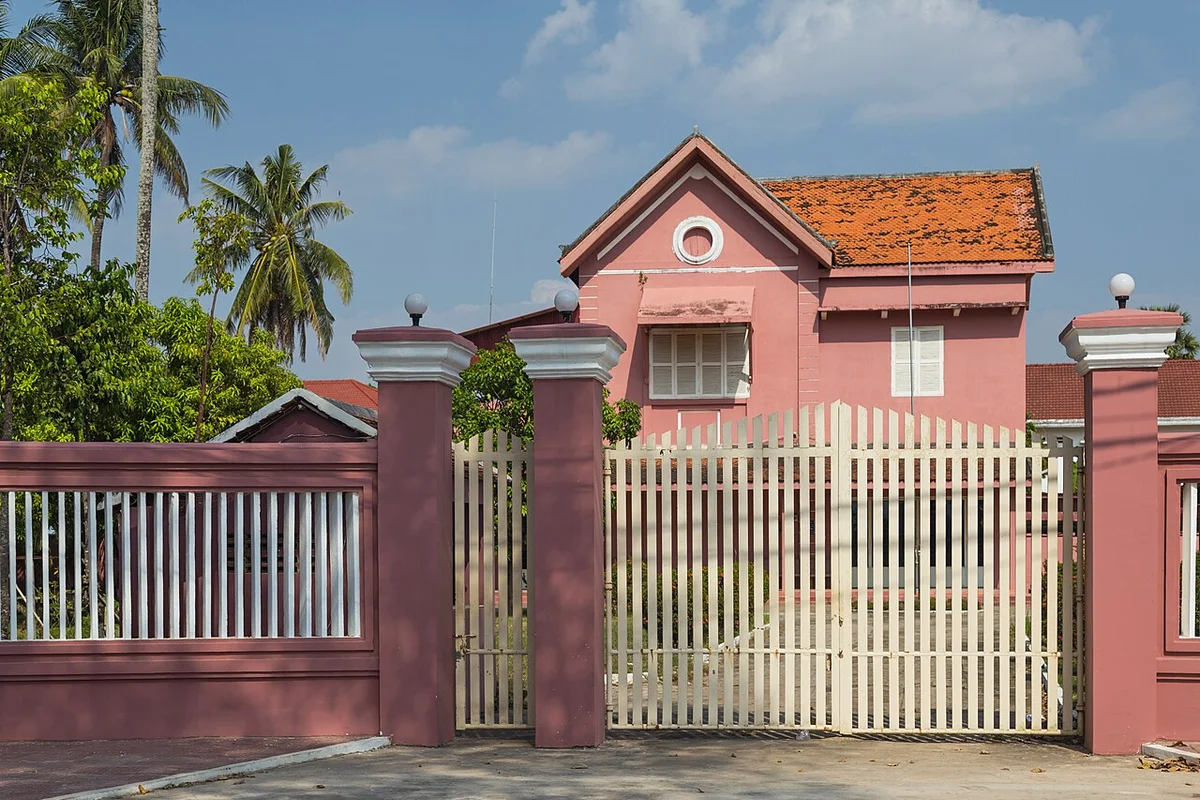
Quick answer: Kampot is the cheapest market on this site and one of the least suited to a yield investor. Land starts near $7 per square metre and the median property is around $165,000, while a modern one-bedroom lets for $100 to $250 a month. Those two facts do not combine into an income case.
Kampot is the market most likely to be sold to a foreign reader on atmosphere. The river, the pepper farms, the colonial shophouses and Bokor above the town are all genuinely attractive, and every agency page leads with them. None of that is an investment argument.
This page takes the atmosphere as read and does the arithmetic instead. Kampot has a real case, it is simply not the one usually made for it, and separating the two is the whole job here.
The arithmetic is unusually stark and can be stated in one paragraph. Kampot’s median property sits near $165,000 and its land starts from about $7 per square metre, which makes it the cheapest entry point of any market covered on this site by a wide margin. A modern one-bedroom in the town lets for $100 to $250 a month and a riverside house for $200 to $400. Take the median price against a $300 monthly rent and the gross yield is roughly 2.2%, before the 14% non-resident withholding on rent, before a structure’s annual compliance if the asset holds land, and before a season that is genuinely quiet. Our analysis has never been able to make those numbers into an income case, which is why this page argues Kampot on lifestyle and land rather than on yield.
Where is Kampot and who is buying there?
Kampot is a riverside provincial town on Cambodia’s south coast, sitting below Bokor mountain roughly two hours from both Kep and Sihanoukville. The buyer base is Cambodia’s growing middle class alongside a long-established expatriate community, and the town is described as booming with construction and activity rather than with institutional capital.
| Characteristic | Kampot |
|---|---|
| Position | South coast, riverside, below Bokor |
| Distance to Kep and Sihanoukville | Roughly two hours to each |
| Buyer base | Cambodian middle class, expatriate residents |
| Median property | About $165,000 |
| Land entry | From about $7 per sqm |
| Market type | Lifestyle, appreciation, tourism-linked |
The buyer base row is the most useful line for an investor to read, because it tells you who sets prices here. A market cleared by residents and lifestyle buyers prices on what people will pay to live somewhere, not on what a yield calculation supports, and our analysis treats that as the reason Kampot’s rents and its capital values have drifted so far apart.
- Residents and lifestyle buyers, not investors, set the price level here.
- The town is small enough that individual projects move the market.
- Tourism growth is expected to hold through 2026 to 2030.
- The neighbouring coastal market is covered in the Kep guide.
- The larger coastal market sits in the Sihanoukville guide.
Can a foreigner buy property in Kampot?
Foreign buyers can own strata units above the ground floor in Kampot, capped at 70% of the total area of private units in the building, and there is very little such stock. The market is land, riverside houses, colonial shophouses and boutique resorts, essentially all of which hold land and therefore need a lease, a landholding company or a commercial trust.
| Kampot stock | Holds land? | Route for a foreigner |
|---|---|---|
| Land plots from about $7 per sqm | Yes | Lease, landholding company at 51/49, or trust |
| Riverside house | Yes | Same three routes, none freehold |
| Colonial shophouse in town | Yes | Same three routes |
| Boutique resort or guesthouse | Yes, plus a licence | Structure plus a trading business |
| Strata condominium | Rare | Freehold where it exists |
The fourth row is where Kampot enquiries most often actually land, because the town’s appeal and its guesthouse economy pull foreign buyers toward hospitality rather than toward a condo. That is a business purchase with payroll, licensing and seasonality attached, and it is priced and analysed in the hotel and guesthouse guide rather than here.
- Strata stock is rare, so most purchases need a structure.
- Structure costs $3,000 to $8,000 to form plus $2,000 to $3,000 a year.
- Guesthouse purchases are businesses, not property investments.
- Structure options are compared in the lease, nominee and trust guide.
- Land limits generally sit in the land ownership guide.
What does Kampot property and land cost?
Kampot’s median property sits near $165,000 and land starts from about $7 per square metre, the cheapest entry point of any market covered on this site. The spread inside that is wide, because proximity to the river and to the town centre does most of the pricing work.
| Measure | Figure | Basis |
|---|---|---|
| Median property | About $165,000 | Listing set, indicative |
| Land entry | From about $7 per sqm | Listing set, rural and outlying |
| One-bedroom rent | $100 to $250 a month | Rent data, indicative |
| Riverside house rent | $200 to $400 a month | Rent data, indicative |
| Structure cost if land | $3,000 to $8,000 plus annual carry | Owned by the land banking guide |
| Kep comparison median | About $327,500 | Owned by the Kep guide |
Set the rent rows against the median and the problem states itself. A $165,000 property letting at $300 a month grosses $3,600 a year, which is about 2.2% before any cost at all, and that is before the 14% non-resident withholding and before a structure’s annual compliance if the asset holds land. Our underwriting does not treat Kampot as an income market on those numbers, and would rather say so than dress a 2% gross yield as a coastal opportunity.
- All figures here are indicative listing and rent data, not transacted evidence.
- A six-figure purchase letting at $300 a month is not a yield asset.
- Rent tax at 14% of gross applies to non-residents regardless.
- Yield methodology sits in the net versus gross guide.
- Land carrying cost is set out in the land banking guide.
Insider tip: ask what the property rented for in the low season, not the average. Kampot’s rental and guest demand is seasonal in a way Phnom Penh’s is not, and an owner quoting a twelve-month average is smoothing over the months that decide whether a small property covers its costs.
Send the location, plot or unit size, asking price and title document. We confirm land or strata, price the structure if one is needed, and set realistic rent against the carry.
Assess a Kampot propertyWhat rent does a Kampot property actually achieve?
A modern one-bedroom in Kampot lets for roughly $100 to $250 a month, and a riverside house for $200 to $400. Those are the numbers that decide whether this market works for a given buyer, and they are an order of magnitude below what the same capital rents for in central Phnom Penh.
| Property | Kampot rent | Phnom Penh reference |
|---|---|---|
| Modern one-bedroom | $100 to $250 a month | $400 to $700 in prime districts |
| Riverside or better house | $200 to $400 a month | Not comparable stock |
| Gross on a $165,000 median at $300 | About 2.2% | Central strata materially higher |
| Seasonality | Pronounced, tourism-linked | Mild |
| Tenant base | Residents and expatriates | Corporate, NGO, expatriate |
Our analysis is that Kampot’s rents are not a market failure, they are an accurate reflection of a small town where housing is abundant and incomes are provincial. Nothing about the town suggests those rents are about to converge on capital-city levels, and a buyer whose case depends on that convergence is making a much more speculative bet than the low entry price makes it feel.
- Model the low season explicitly rather than an annual average.
- Rents here reflect provincial incomes and abundant housing supply.
- A guesthouse is a different model, covered in the hotel guide.
- Short-term letting mechanics sit in the short-term rental guide.
- District rent comparisons for the capital are in the district yield guide.
Seasonality is the line most likely to break a Kampot income model, and it behaves differently here from the capital. Phnom Penh’s rental demand comes from corporate and NGO tenants on twelve-month contracts, so a landlord’s year is flat. Kampot’s comes from residents, long-stay expatriates and a tourism economy that thins out for months at a time, which means a property quoted at $300 a month on a twelve-month average may be earning $400 in the busy months and sitting empty in the quiet ones. On a $165,000 asset producing roughly 2.2% gross at the average, two empty months take that to about 1.8%, and our underwriting therefore models Kampot on low-season figures rather than on annual averages, for exactly that reason.
Is the coastal rotation from Sihanoukville real?
The rotation is a real narrative with real construction behind it. Kampot and Kep are consistently described as the next coastal investment zones as Sihanoukville’s boom slows under oversupply, with resilient tourism growth expected through 2026 to 2030 and rising expatriate demand for mid-range housing. For foreign buyers the question is whether that shift is already in a $165,000 median price.
| Element of the thesis | Evidence quality |
|---|---|
| Sihanoukville slowing on oversupply | Well documented across the market |
| Kampot and Kep named as successors | Consistent commentary, not hard data |
| Tourism growth 2026 to 2030 | Forecast, not delivered |
| Expatriate demand for mid-range housing | Observable on the ground |
| Construction activity in Kampot | Observable, described as booming |
| Already priced in? | Median $165,000 against $7 per sqm land suggests partly |
Our analysis separates the two halves of that thesis, because they are not equally solid. Sihanoukville’s difficulties are documented and their causes are known, which makes the first half close to fact. That capital and buyers therefore rotate to Kampot and Kep specifically, in volume, on a timetable, is commentary, and it is the half that a purchase actually depends on. Treat it as a direction of travel that justifies looking, not as a forecast that justifies paying up.
- Sihanoukville’s oversupply is documented; the rotation to Kampot is inferred.
- A thesis you cannot date should not be paid for in the entry price.
- Sihanoukville’s own market sits in the Sihanoukville guide.
- The beach sub-market is covered in the Otres Beach page.
- Wider market direction is in the 2026 outlook.
Which buyer does Kampot suit?
Kampot suits someone who wants to live there, or who is buying a long-horizon land position and can fund the carry from elsewhere. Our analysis is that it suits a yield-seeking investor poorly, because a $165,000 median against $300 monthly rents produces roughly 2.2% gross before any cost.
| Buyer profile | Fit | Reasoning |
|---|---|---|
| Buyer relocating or semi-retiring | Strong | The lifestyle case is genuine and cheap |
| Long-horizon land banker, structured | Viable | Land at $7 per sqm is a real entry point |
| Guesthouse operator living locally | Good | Fits the town’s actual economy |
| Yield investor | Weak | About 2.2% gross before costs |
| Remote owner wanting hands-off income | Poor | Small market, seasonal, thin management depth |
The first row is the honest headline and it is not a criticism of the market. A buyer who wants to live beside a river below a mountain in a town with a functioning expatriate community, at a median of $165,000, is getting something genuinely difficult to find at that price anywhere in the region. That is a consumption decision with an investment tail, and describing it accurately is more useful than converting it into a yield table that does not hold.
Advantages and disadvantages of Kampot
Kampot offers the lowest entry price on this site and the weakest rental economics. The trade is unusually clean, and the mistake buyers make is treating a low price as though it implied a high yield.
| Advantage | Disadvantage |
|---|---|
| Land from about $7 per sqm | Rents of $100 to $250 a month on a one-bedroom |
| Median property about $165,000 | Roughly 2.2% gross at a $300 rent on the median |
| Genuine lifestyle appeal and expatriate community | Small market; individual projects move it |
| Tourism growth expected 2026 to 2030 | That growth is a forecast, not delivered |
| Coastal rotation narrative has real substance | The rotation itself is commentary, not data |
| Cheapest entry into Cambodian property anywhere | Strata is rare, so most purchases need a structure |
Liquidity deserves the closing note, because it compounds every other disadvantage on that list. Kampot’s buyer pool is Cambodian residents and a modest expatriate community, neither of them large or fast-moving, in a town where a $165,000 median already sits above what most local households finance. A foreign owner exiting a structured land position is looking for a buyer who wants the plot, will accept the vehicle holding it, and happens to be in the market in a town of this size, which is a narrow intersection. Our underwriting assumes a marketing period longer than the nine to eighteen months it applies to Phnom Penh land, and on a $165,000 median that illiquidity is the real cost of the low entry price. Kampot is a market to enter only with capital that has no schedule attached to it.
Buyer scenarios and red flags
Three scenarios cover most Kampot enquiries, and the red flags repeat: a low entry price presented as a high yield, an annual rent average that hides the low season, and a coastal rotation thesis priced as though it had already happened.
| Scenario | What they want | What we would recommend |
|---|---|---|
| Semi-retiring, $150,000, wants to live there | A riverside house | Strong fit; lease or structure, and enjoy it |
| $200,000, wants coastal yield | Rental income on the coast | Wrong market; the rents do not support it |
| $400,000, ten-year land thesis | Land ahead of the rotation | Viable; structure it and fund the carry |
The failure pattern is a cheap price mistaken for a good yield. A buyer sees land at $7 per square metre and a median property at $165,000, compares both against Phnom Penh, and concludes that the same rental economics must apply at a lower entry cost. They do not. A $165,000 Kampot property letting at $300 a month grosses about 2.2%, against which the 14% non-resident withholding, a structure’s $2,000 to $3,000 of annual compliance if the asset holds land, and pronounced seasonality all apply. The result is frequently a negative net on an asset the buyer chose specifically because it looked inexpensive. Our underwriting has never been able to make a Kampot yield case work on published rents, and says so rather than producing a table that implies otherwise.
- Convert every Kampot price into a gross yield before going further.
- Ask for low-season rent, never the twelve-month average.
- Price the structure and its annual carry into the entry cost.
- Do not pay today for a rotation whose timing nobody can date.
- Confirm hard title; soft title is common in provincial markets.
The neighbouring coastal market is covered in the Kep guide, and the hospitality route in the hotel and guesthouse guide.
Tell us whether you plan to live there or to let it. In Kampot those two answers lead to completely different advice, and we will give you the one that fits.
Talk to our Cambodia deskFrequently Asked Questions
A riverside town on the south coast below Bokor, about two hours from Kep and Sihanoukville. Buyers are Cambodia's middle class and a long-established expatriate community.
Only strata above the ground floor, and such stock is rare. The market is land and landed houses, so most purchases need a lease, a company or a trust.
Median about $165,000, land from about $7 per sqm, the cheapest entry of any market on this site. Proximity to the river and town does most of the pricing.
A modern one-bedroom $100 to $250 a month, riverside houses $200 to $400. On a $165,000 median that is roughly 2.2% gross before any cost.
Sihanoukville's oversupply is documented; the rotation to Kampot specifically is commentary. Treat it as a reason to look, not a reason to pay up.
Kampot is cheaper and more of a working town at a $165,000 median. Kep is a smaller second-home market near $327,500. Kampot suits living, Kep suits a view.
Send the location, plot or unit size, asking price and title document. We confirm land or strata, price any structure and set realistic rent against the carry.
Get a Cambodia property shortlist
Share your budget, target district (BKK1, Koh Pich, Koh Norea, Siem Reap), and goal. We reply within one business day with matched stock and next steps.