Cambodia Condos Under $50k vs $100k: Full 2026 Guide
Cambodia condos under $50k vs $100k in 2026: Megakim entry units versus BKK1 mid-market on unit size, tenant quality, yield, and resale liquidity.
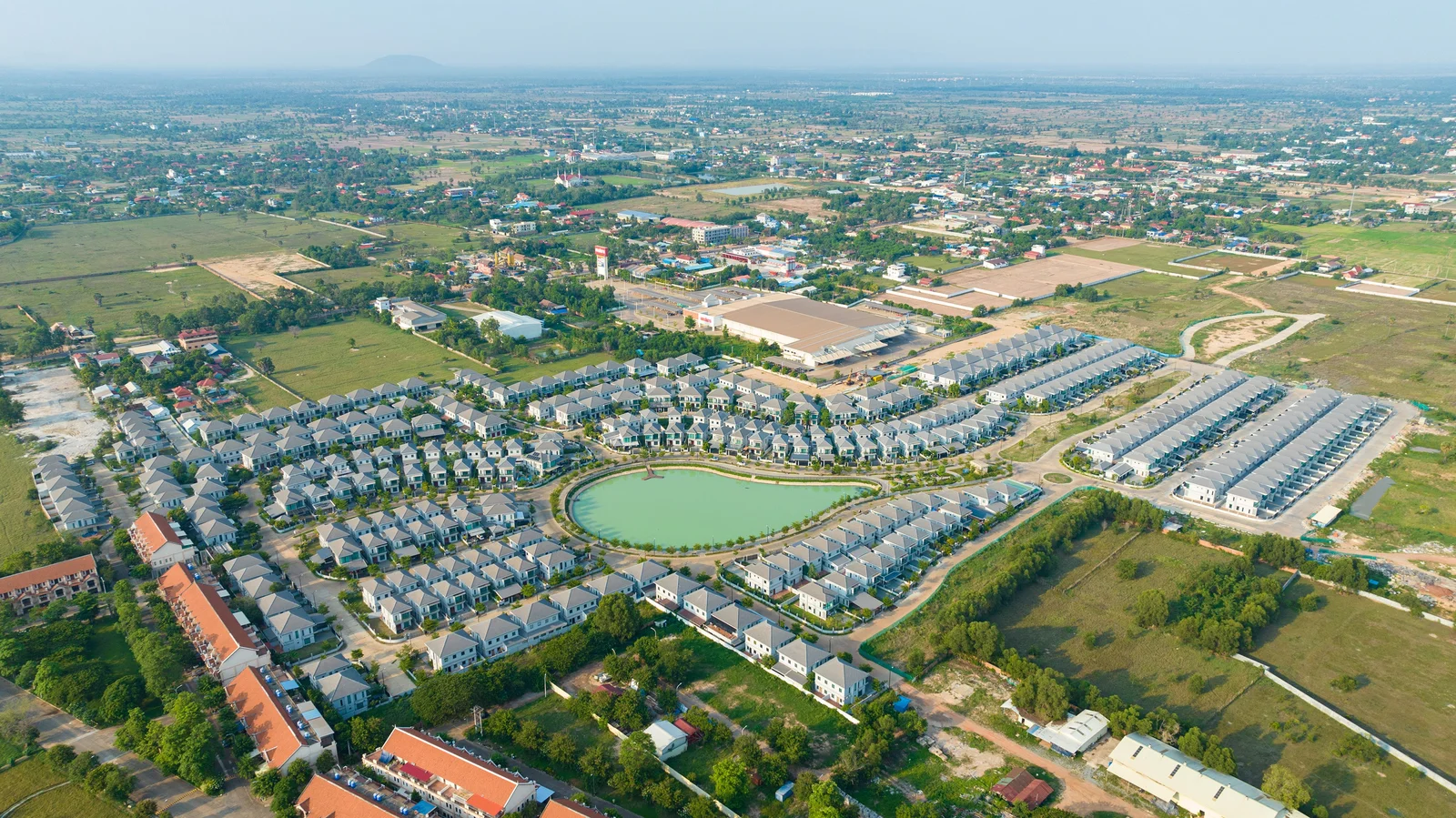
Quick answer: Under $50,000 buys compact entry-tier units, mostly studios and small one-bedrooms in Megakim-class launches from about $40,000, often on a 20% down payment and 40-month plan, with higher headline yield but weaker resale. The $50,000 to $100,000 tier buys larger, better-located units in BKK1, BKK3, and Tonle Bassac with stronger tenant quality and easier resale, against a market averaging near $1,800 per sqm. Choose the tier by tenant quality and exit, not by the lowest sticker price.
Invest Cambodia Editorial tracks Phnom Penh strata condos, Megakim and OCIC launches, and realistic net yield for foreign buyers. This page compares under $50k vs $100k Cambodia condo budgets with tables on unit size, tenant quality, yield, and resale, then links to deeper guides on invest-cambodia.com. For the entry-tier deep dive read Under 50000 Condo Phnom Penh; this router page sets the two budget tiers side by side.
What each budget actually buys in 2026
The $50,000 to $100,000 budget moves you into the mid-market: a genuine one-bedroom or a compact two-bedroom, in stronger districts like BKK1, BKK3, and Tonle Bassac, with better finishes, a more credible developer, and the kind of location that attracts higher-quality tenants. Against a Phnom Penh average near $1,800 per sqm, the extra capital mostly buys square metres and address quality rather than a fundamentally different asset class. The foreign ownership rule is the same in both tiers: foreign freehold above the ground floor, capped at a 70% quota per building, covered in Can Foreigners Buy Property Cambodia.
| Factor | Under $50,000 | $50,000 to $100,000 |
|---|---|---|
| Typical unit | Studio, small 1-bed | 1-bed, compact 2-bed |
| Typical district | Mid or outer | BKK1, BKK3, Tonle Bassac |
| Developer profile | Entry-tier launches | Stronger track record |
| Payment | 20% down, 40 months | Mixed, more on transfer |
| Tenant quality | Budget, variable | Corporate, expat |
| Resale appeal | Narrower | Broader |
What changes in size, location and tenant at each tier?
A $50,000 to $100,000 unit in BKK1 or Tonle Bassac draws corporate and expat tenants who sign longer leases, treat the unit better, and tolerate a higher rent for proximity to offices and international schools. That tenant base is the real reason the mid-market often produces a steadier net result despite a lower headline yield. Compare the districts directly through the area guides BKK1 Phnom Penh, BKK3 Phnom Penh, Tonle Bassac, and the value-oriented Toul Tom Poung and Toul Kork, so you can see where each budget lands.
| Quality factor | Under $50,000 | $50,000 to $100,000 |
|---|---|---|
| Tenant type | Budget, students | Corporate, expat |
| Lease length | Shorter, turnover | Longer, stable |
| Void risk | Higher | Lower |
| Finish standard | Basic | Better |
| Address quality | Mid or outer | Prime districts |
| Wear and turnover | Higher | Lower |
What yield does each tier actually produce?
Mid-market units in prime districts often print a lower gross yield but convert more of it to net, because occupancy is steadier and tenants are stickier. Model both tiers honestly with Phnom Penh Rental Yield Guide, assuming 85% occupancy and one to two months of vacancy per year, and compare net yields rather than headline gross. The single-bedroom segment, which straddles both budgets, is analysed in 1 Bedroom Condo Investment Phnom Penh and is often the sweet spot for foreign buyers who want tenant quality without overpaying for space.
| 2026 metric | Indicative value | Buyer use |
|---|---|---|
| Phnom Penh avg price | $1,800 per sqm | Baseline vs district premium |
| Foreign quota cap | 70% per building | Above ground floor only |
| Banking NPL ratio | 8.9% | Developer completion risk |
| Stamp duty window | Through 31 December 2026 | Registration timing |
Which tier is easier to sell?
Across both tiers, Phnom Penh resale is slower than mature regional capitals, so plan a five-year-plus hold. If liquidity matters to you, the mid-market is the safer base, and completed stock with a working owners committee resells more reliably than an entry-tier off-plan contract. Our deep dive Resale Liquidity Cambodia Condos sets out realistic time-to-sale, and Off Plan VS Resale Cambodia shows how acquisition route interacts with budget.
Deciding which rung to buy on? We will produce the completed total and the modelled net for both, so you compare finished numbers.
Compare both tiersAdvantages and disadvantages of each tier
The choice is a trade between the lowest possible entry and a stronger, more liquid asset. The entry tier minimises capital at risk but concentrates the downsides; the mid-market costs more but smooths tenant quality and exit.
| Advantages | Disadvantages |
|---|---|
| Under $50k: lowest entry from about $40,000 | Under $50k: budget tenants, higher void risk |
| Under $50k: 20% down, 40-month plan eases cash | Under $50k: weaker resale under the 70% quota |
| Under $50k: easiest first step into the market | Under $50k: outer location, smaller unit |
| $50k to $100k: stronger tenant quality | $50k to $100k: more capital needed up front |
| $50k to $100k: better resale liquidity | $50k to $100k: lower headline gross yield |
| $50k to $100k: prime districts and finish | $50k to $100k: premium stock can still overprice |
Risks, red flags, and what to verify
Run these checks before committing in either tier.
- Developer track record: The cheapest stock often comes from the weakest promoters; cross-check handover history and read the cautionary case Prince Group Cambodia Warning.
- Foreign quota: cheaper towers fill their foreign allocation faster, so ask what remains before you treat the low ticket as the easy option.
- True unit size: Confirm the usable area versus the saleable area, because entry units quote space generously and small differences matter at this price.
- All-in cost: Add legal review of $800 to $2,500, furnishing of $5,000 to $15,000, transfer costs under the December 2026 window, and management of $40 to $80 per month; see Cambodia Property Taxes Fees 2026.
- Yield inflation: at the bottom of the ladder the percentage looks best because the denominator is small, not because the rent is strong.
Insider tip: Do not let a small headline price flatter the percentages. A $42,000 studio at a stated 10% gross can net far less than a $90,000 BKK1 one-bedroom at a stated 6% gross once you account for voids, tenant turnover, and the harder resale, so always compare the two tiers on net dollars and time-to-sell.
Buyer scenarios and decision framework
Match the tier to your capital, your need for tenant quality, and your exit horizon.
| Buyer profile | Lean toward | Starting point |
|---|---|---|
| Smallest possible entry | Under $50k | Under 50000 Condo Phnom Penh |
| Tenant quality and stability | $50k to $100k | BKK1 Phnom Penh |
| Best resale liquidity | $50k to $100k | Resale Liquidity Cambodia Condos |
| Highest headline yield | Under $50k, cautiously | Phnom Penh Rental Yield Guide |
| One-bedroom sweet spot | Either, mid leaning | 1 Bedroom Condo Investment Phnom Penh |
| Full process detail | Either, verify first | Due Diligence Process Cambodia Step By Step |
A buyer whose hard limit is roughly $45,000 belongs in the entry tier, ideally choosing the strongest available developer and a district with some end-user demand rather than the cheapest outer unit. A buyer with $80,000 to $100,000 should almost always step up to a prime-district one-bedroom, because the better tenant base and resale audience usually outweigh the lower gross yield. A buyer torn between the two should let exit liquidity break the tie, since the mid-market is materially easier to sell when life changes.
What is the real entry budget at each tier?
This matters because buyers often stretch to the absolute edge of the entry tier and then have no buffer for furnishing or a vacancy month. A more honest plan sets the all-in budget first, then works backward to the unit price the budget actually supports. A buyer who can fund $50,000 all-in might be better placed with a smaller, cheaper unit and a healthy reserve than with the largest unit the headline number allows and no cushion for the first soft rental month. The same logic scales up: a buyer with a true $100,000 all-in budget should reserve perhaps $10,000 to $20,000 for fees, furnishing, and a vacancy buffer, then shop for a unit priced accordingly rather than spending the full sum on the sticker and scrambling for the rest later.
How to step up a tier without overpaying
Use the marginal-dollar test: for every extra $10,000, ask whether it buys a better address, a stronger developer, or just more floor area, and prefer the first two. Reading the district guides for BKK3 Phnom Penh and Toul Tom Poung alongside the entry-tier breakdown in Under 50000 Condo Phnom Penh makes that trade concrete, so the budget decision rests on tenant quality and exit liquidity rather than on hitting a round number.
Each budget also has a signature mistake worth naming. At the entry tier, the classic error is buying the cheapest unit from an unknown promoter in an outer district purely for the headline yield, then discovering that voids and turnover eat the margin and that the unit barely resells. At the mid tier, the classic error is overpaying for a premium-branded unit whose rent does not scale with its price, so the gross yield slips below what a sensible entry unit would have earned. Avoiding both mistakes comes down to the same discipline: underwrite net dollars and realistic time-to-sell, verify the developer and the foreign quota, and let the comparable buildings nearby set your sense of fair value before you commit to either budget.
Where the two tiers meet: the prime one-bedroom
What does the extra $50,000 actually buy?
It buys tenant quality and exit liquidity rather than square metres, and that is the honest answer most listings avoid. A sub-$50,000 unit and a $100,000 unit can differ by 15 square metres and by an entire tenant class, because the second sits in a district where salaried expatriate tenants already live.
| What changes between the tiers | Under $50,000 | Around $100,000 |
|---|---|---|
| Typical district | Outer or entry-tier tower | BKK3, Tonle Bassac, mid-tier BKK1 |
| Typical tenant | Price-sensitive, local or junior expat | Salaried expatriate on a 12-month lease |
| Vacancy behaviour | Longer gaps between tenants | Shorter, more predictable |
| Foreign resale pool | Thin | Materially wider |
| Gross yield on paper | Often higher | Often lower |
| Net yield in practice | Frequently lower after vacancy | Frequently higher |
Our analysis has repeatedly found the headline yield inverts once vacancy is priced honestly. An entry unit quoting a strong gross on a $400 rent loses the advantage the moment it sits empty for two months between tenants, while a $700 unit on a twelve-month lease to a salaried tenant collects twelve times. The buyer scenario that works at the lower tier is the one with a long horizon and no need for the money, because the exit is the part that stays thin regardless of how the rent performs.
- The extra money buys the tenant and the exit far more than the floor area.
- Price vacancy honestly before comparing the two gross figures.
- Entry stock is listed in the sub-$50,000 guide.
- Ticket sizes sit in the condo price guide.
- Occupancy data is in the occupancy guide.
Frequently Asked Questions
Mostly compact studios and small one-bedroom units in entry-tier launches such as Megakim's Time Square Ocean View from about $40,000 and Square Castle from about $50,000, often on a 20% down payment and 40-month plan in outer or mid districts.
Larger and better-located units: genuine one-bedroom or compact two-bedroom condos in stronger districts like BKK1, BKK3, and Tonle Bassac, with better tenant quality, finish, and resale appeal, against a market averaging near $1,800 per sqm.
Entry units can show a higher gross yield on paper, but treat 12% to 15% claims as marketing only. Mid-market units often deliver a steadier net yield because tenant quality and occupancy are stronger in prime districts.
The $50,000 to $100,000 tier in prime districts is usually easier to resell. Sub-$50,000 entry stock competes with a heavy launch pipeline and a narrower foreign buyer pool, so resale can be slower under the 70% quota.
Not always, but the cheapest stock concentrates the risks: weaker developers, outer locations, smaller units, and thinner resale. Verify developer track record and foreign quota before buying any entry-tier unit on price alone.
Budget legal review of $800 to $2,500, furnishing of $5,000 to $15,000, transfer costs under the December 2026 stamp duty window, and a management fee around $40 to $80 per month, on top of the headline unit price.
Get a Cambodia property shortlist
Share your budget, target district (BKK1, Koh Pich, Koh Norea, Siem Reap), and goal. We reply within one business day with matched stock and next steps.