The Phnom Penh Viewing Trip: A 3-Day Working Plan
A 3-day buyer-controlled itinerary: districts at pricing hours, on-site document checks, lawyer and bank on day three, and why free tours cost more.
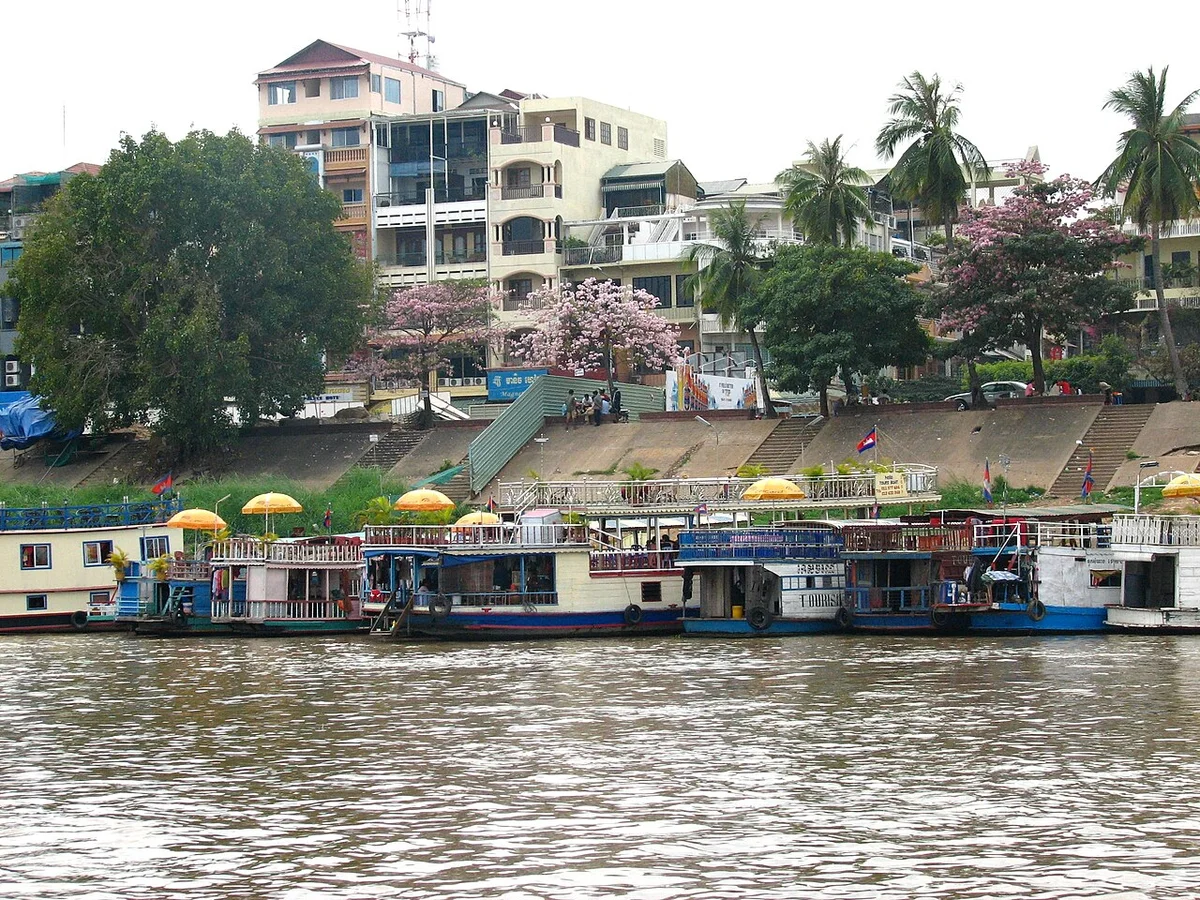
Quick answer: A Phnom Penh viewing trip earns its airfare when the buyer controls the itinerary: 3 working days, a pre-built shortlist of 3 to 5 documented buildings, viewings at the hours that expose districts, documents requested in writing on the spot, and the lawyer and bank booked before the flight. The free tour is the alternative, and the most expensive option in the city.
Most buyers fly in, get collected at the hotel by whoever answered their portal enquiry, and see that firm’s inventory for a week. This page is the other trip: shorter, cheaper, run by you, and built backwards from the documents this site teaches buyers to demand. The remote counterpart, for those who will not fly, is the remote buying workflow.
Why does the viewing trip pay for itself?
A viewing trip typically costs $800 to $1,500 all-in from most source countries, flights, 4 nights, transport, against a purchase of $100,000 or more, which prices the trip at about 1% of the ticket. What the 1% buys is the category of information this market never puts in writing: the things cameras avoid.
| What the trip buys | Remote equivalent | Gap |
|---|---|---|
| The street at 8:00 and 21:00 | None | Total |
| The corridor, lift and lobby in person | Proxy inspection, partial | Large |
| Bank KYC done in person | Usually impossible remotely | Structural |
| Documents requested face-to-face | Email requests, slower | Speed and tells |
| The second visit at a different hour | Rarely arranged by proxy | Large |
| Negotiating presence | A signed offer letter | Meaningful |
Our analysis of the trip’s economics treats it as the cheapest risk-reduction available anywhere in the purchase: 1% of the ticket to close the exact information gaps that this market’s failure cases exploit, the karaoke bar behind the “quiet” tower, the light-well view sold as a city view, the ground floor that floods every September. The arithmetic sharpens against the alternative costs: a mispriced district costs 10% of value at resale, a building that cannot let costs $400 to $1,000 of foregone rent monthly, and the remote buyer’s substitute stack, proxy inspections, extended legalisation, courier rounds, runs $1,500 to $4,000 anyway. The buyer scenario where the trip is optional is narrow and honest: a completed building from the documented shortlist, bought for income at entry price, with proxy inspection and retention, the remote guide’s Scenario A. Everyone else is buying information they have not seen, and 3 days is what seeing costs.
- The remote alternative, honestly priced: buying remotely.
- What the failure cases look like: the scam checklist.
- The shortlist to fly with: the verified buildings list.
- Cost context for the whole purchase: the total cost calculator.
- Living costs while you scout: cost of living in Phnom Penh.
What do you arrange before you fly?
Preparation converts 3 days from a tour into a transaction, and the rule is simple: everything that can be requested, booked or sent in advance, is. Foreign buyers who land with a shortlist, appointments and document requests already moving spend their trip verifying instead of discovering.
| Item | When | Why before, not during |
|---|---|---|
| Shortlist: 3-5 documented buildings | 2-3 weeks out | The trip verifies; it does not browse |
| Document requests to each finalist | 7-10 days out | Answers land while you are there |
| Lawyer meeting, day 3 | 2 weeks out | Good counsel books ahead |
| Bank KYC appointment | 2 weeks out | In-person opening is the trip’s rarest asset |
| Viewings at your hours | 1 week out | Evening slots expose what noon hides |
| Wet-season dates if possible | At booking | June-October is honest season |
Insider tip: send every finalist the same three requests a week before flying, the quota ledger in square metres dated within 30 days, the last 12 months of building accounts, and the draft SPA or resale title copy, then read the responses as data before reading them as documents. In our underwriting experience the building that produces all 3 inside 5 working days is showing you its governance, the one that asks why you need them is showing you its defaults, and the one still silent when you land has cleared a spot on your schedule for a better candidate. The wet-season booking rule earns its table row: June to October, the city demonstrates its drainage rather than describing it, and a street’s September behaviour is a fact about a ground-floor unit that no dry-season viewing and no brochure will volunteer.
- Build the shortlist from the verified buildings and the area pages.
- What each document proves: due diligence step by step.
- Choosing the lawyer before the trip: do I need a lawyer.
- The bank appointment’s value: opening a bank account.
- Requests by email, answered in person: the remote workflow has the templates.
Day one: how do districts price themselves at the right hours?
Day one is a car, a driver and 4 districts at the 2 hours that price them: 8:00, when commutes and school runs define what tenants pay to avoid, and 21:00, when a district shows who actually lives there. Drive-time, not distance, prices half of Phnom Penh for foreign buyers, and a $40 day of driving prices it honestly.
| Hour | Route | What it prices |
|---|---|---|
| 7:30-9:30 | Chroy Changvar bridge, Toul Kork school ring | Commute reality vs map distance |
| 10:00-12:00 | BKK1 walk, Tonle Bassac strip | The premium on foot, not from a car |
| 15:00-17:00 | Koh Pich end to end | Built-out side vs completing side |
| 19:00-21:00 | Finalist districts again | Lit windows, street life, noise |
| Wet season bonus | Any heavy shower | Which streets flood, live |
| All day | Your notes, not the driver’s commentary | You are the instrument |
Our read on day one is that it exists to test this site’s district claims against your own eyes for about $40, before those claims price a 6-figure decision: the corpus says Chroy Changvar is bridge-dependent, sit on that bridge at 8:15 and time it; the corpus says BKK1 rents at $650 to $1,350 against a city band of $400 to $1,000 because embassy-quarter walkability is real, walk it at 10:00 and at 21:00 and decide; the corpus says Koh Pich’s built-out side and its completing side rent differently, drive the 4 kilometres and watch the streetlights change. The evening pass is the day’s highest-value hour and the one no tour includes: a tower with 30% of its windows lit at 21:00 is publishing its occupancy in a way no marketing deck can restate, and counting lit windows from a parked car is the cheapest occupancy audit this market allows.
- The district claims to test: BKK1, Toul Kork, Koh Pich, Chroy Changvar.
- Why drive-time prices the north bank: Chroy Changvar’s page makes the argument.
- Occupancy context for the window count: occupancy rates.
- Rent bands the districts must justify: the rental yield guide.
- District-to-building logic: best areas to invest.
Day two: how do you work the buildings and the documents?
Day two runs the shortlist: 3 to 5 buildings, 60 to 90 minutes each, with the building inspected before the unit and the document requests filed in writing on the spot. The unit’s finish is the least durable thing you will see all day; the building’s governance is the most.
| Check | Where | What it tells you |
|---|---|---|
| Lobby at arrival | Who passes in 15 minutes | Occupiers, tenants or nobody |
| Lift and corridor | Wear, lighting, smell at unit’s floor | Management’s real standard |
| The unit | Net sqm against the plan, aspect, noise | What the tenant experiences |
| The view | From every window, photographed | What “river view” faces across |
| Management office | Quota ledger and accounts, requested in writing | Governance under mild pressure |
| Same building, 20:00 | Second visit for 2 finalists | The evening truth |
What we could verify from years of this market’s disputes is that almost none of them are about finishes and almost all of them are about things visible on day two to a buyer who looked: the quota position nobody re-checked, the sinking fund nobody asked for, the building whose “management office” was a sales desk. The written request is the day’s core move, quota ledger in square metres dated within 30 days, 12 months of accounts, the sinking-fund balance, made politely, on paper, at the office, because the response you get standing there is faster and more honest than the one your email got, and a refusal delivered to your face is diligence gold at $0 cost. The second-visit rule closes the day: 2 finalists, revisited after 20:00, because the corridor at 21:00 and the corridor at 11:00 are different buildings, and the tenant only ever rents the first one.
- The full building checklist: due diligence step by step.
- What the accounts reveal: the sinking fund guide.
- Quota mechanics behind the ledger request: the strata guide.
- Net vs gross square metres on the plan: the strata guide again.
- Pricing what you saw: the resale valuation guide.
Flying in? Send us your dates and budget: we will pre-build the 3-day itinerary, file the document requests a week ahead, and book the viewings at the hours that actually show you the buildings.
Pre-build my tripDay three: lawyer, bank, and the final look?
Day three converts the trip into infrastructure: a lawyer meeting that scopes verification at $800 to $3,500 with the fee agreed in writing, the bank’s in-person KYC that takes about 90 minutes and no remote workaround fully replaces, and the second finalist visit that confirms the purchase or cancels it. Foreign buyers who skip day three flew in for a tour.
| Slot | Task | Output |
|---|---|---|
| 9:00 | Lawyer: verification scope on the finalist | Engagement letter, fixed scope, fee agreed |
| 11:00 | Bank: account opening, KYC in person | The account remote buyers cannot get |
| 14:00 | Finalist: second visit, different hour | Confirmation or a cheap escape |
| 16:00 | Offer drafting with counsel, if earned | A written offer with workings |
| Alt slot | Developer meeting on off-plan finalist | Milestone schedule discussed face-to-face |
| Never | Signing anything same-day | The showroom rule survives the trip |
Our underwriting checklist for day three exists because the trip’s two structural assets, in-person KYC and an engaged local lawyer, outlast the trip by years, and buyers who leave without them routinely pay for the omission within months: the account that would have taken 90 minutes in person becomes a second flight, and the lawyer hired remotely under deadline pressure is chosen worse than the one interviewed across a desk with a $800 to $3,500 fee scoped in writing. The final-look discipline carries the day’s other lesson: the finalist is revisited at a different hour with day two’s notes in hand, and the honest outcomes are exactly 2, the building confirms itself and the written offer follows the negotiation guide’s method the same afternoon, or something surfaced twice and the trip just earned its airfare by subtraction. Signing nothing same-day stays absolute; a reservation that cannot wait for tomorrow morning is a reservation designed not to.
- Scoping the lawyer properly: do I need a lawyer.
- The KYC appointment’s mechanics: opening a bank account.
- The offer, method and letter: the negotiation guide.
- The form you will be handed: the reservation agreement guide.
- Off-plan finalists: the payment schedule discipline into the meeting.
What is the free-tour problem?
The free inspection tour is funded by the 3% to 5% commission on whatever it sells, which makes its itinerary a distribution channel and its economics the most expensive “free” in Phnom Penh. The tour is not a scam; it is a sales format, and the difference matters only if you know which one you boarded.
| Tour feature | Function | Your counter |
|---|---|---|
| Hotel pickup, full schedule | No gaps for your own checks | Keep half of every day yours |
| Showroom-heavy itinerary | Inventory, staged at noon | Demand the actual building, evening |
| ”Special price this week” | Trip-deadline pressure | The 15,000-20,000 vacant units disagree |
| Lunch with the team | Rapport as leverage | Enjoy it; sign nothing |
| The Saturday reservation | Fee before flight home | The reservation guide’s rule: SPA attached or no |
| Free | Funded by the commission on you | Documented bands do not take tours |
Our analysis of the format is unchanged from the agents guide that maps its economics: a tour funded by developer commissions shows developer inventory, staged at the hours that flatter it, sequenced so the best-commissioned project lands after rapport and before the flight home, and none of that requires bad faith, only incentives doing what incentives do. The counter-move is not refusing tours; a tour is a free car with door-opening privileges, genuinely useful for seeing inside 3 buildings on your shortlist if you can route it there. The counter-move is refusing the format’s two levers: the full schedule, by keeping half of each day for your own itinerary, and the trip deadline, by internalising that a market carrying 15,000 to 20,000 vacant units at 3% to 4% absorption will still be there, with the same unit, statistically, on the Monday after you land home and think.
- The commission map behind the tour: the agents guide.
- The Saturday form, dissected: the reservation agreement guide.
- Deadline pressure vs market reality: the negotiation guide.
- The market’s actual scarcity: occupancy rates.
- What the tour will not show: the NPL warning.
What do you bring home in writing?
The trip’s product is a file of 6 artefact classes, and the file is leverage: dated requests with response times, photo records per building, obtained documents, engaged professionals, the rejections with reasons, and, if a finalist earned it, 1 written offer. Foreign buyers who land home with this file negotiate from evidence for 6 months; buyers with memories negotiate from hope.
| Artefact | Contents | Later use |
|---|---|---|
| Request log | Every document request, dated, with response times | Governance evidence per building |
| Photo record | Per building: views, corridors, meters, defects | The comparison memory decays; files do not |
| Documents obtained | Ledgers, accounts, title copies, draft SPAs | The verification file, started |
| Professional infrastructure | Lawyer engaged, account opened | The remote purchase, enabled |
| The offer, if made | Written, with workings, per the method | A standing option on the finalist |
| The rejections | Why each candidate fell | The filter, reusable next trip |
What we could verify across this market’s happier files is how often the trip’s written record decided a purchase 3 to 6 months later, from a different continent: the offer left behind that a seller accepted in week 6 at the buyer’s number; the September photo of a flooded frontage that vetoed a “bargain” relisted at 10% off in dry season; the request log that let a buyer re-engage the building that answered in 5 days and skip the one that never answered at all. The file’s quiet power is that it converts the trip from an event into infrastructure: the account is open, the lawyer is scoped, the buildings are ranked on evidence, and the purchase can now complete through the remote workflow on rails built in person, which is the 2-trip architecture this site recommends collapsed into 1 trip and a file. A buyer scenario to end on: the strongest negotiating position in Cambodian resale is a written offer from someone who has visibly done all of this, because sellers read preparation as certainty, and certainty is the commodity this market pays for.
- The offer that keeps working: the negotiation guide.
- Filing into verification: due diligence step by step.
- Completing from home afterwards: the remote workflow.
- If the finalist is off-plan: the off-plan guide before the wire.
- The timeline from here: the buying timeline.
Advantages and disadvantages of the self-run viewing trip
| Advantages | Disadvantages |
|---|---|
| ~1% of ticket for the unphotographable facts | 3 disciplined days of work, not holiday |
| In-person KYC, the rarest remote asset | Wet-season booking is less comfortable |
| Documents requested face-to-face move faster | Requires the shortlist built in advance |
| Evening visits audit occupancy for free | A driver and early starts |
| The file becomes months of leverage | Tour comfort is genuinely tempting |
| Signing nothing same-day is easier solo | Solo means nobody opens doors for you |
Buyer scenarios and decision framework
Scenario A, first trip, budget defined, no shortlist yet. Wrong order: build the shortlist from the documented pages first, then fly. A trip spent browsing is a tour you drove yourself.
Scenario B, shortlist ready, one trip possible this year. This page is your itinerary. Book wet season, send the requests a week out, and protect day three: it is the trip’s compounding half.
Scenario C, already toured, reserved on the Saturday, now unsure. Read the reservation guide tonight: the refund triggers, the document deadlines and the escape arithmetic are all there, and a $2,500 exit from the wrong building remains the cheapest mistake in this market.
Closing verification checklist
Before flying: shortlist of 3 to 5 documented buildings, document requests sent 7 to 10 days ahead, lawyer and bank booked for day three, viewings at your hours, wet-season dates if possible. During: districts at 8:00 and 21:00, buildings before units, requests in writing on the spot, second visits for 2 finalists, nothing signed same-day. Before the flight home: the file assembled, requests, responses, photos, engagements, and, if a finalist earned it, one written offer with workings, left standing.
Frequently Asked Questions
Three working days covers it, if the shortlist and appointments exist before the flight: day one for districts at the hours that price them, day two for buildings and document requests, day three for the lawyer, the bank and a second look at the finalist. A week wanders; three prepared days decide.
A shortlist of three to five documented buildings, viewing appointments at your hours rather than the agent's, a lawyer meeting booked for day three, a bank appointment for KYC if you plan to open an account, and document requests sent a week ahead so answers land while you are in the city.
Understand what it optimises for first. A free tour is funded by the 3% to 5% commission on what it sells, so its itinerary is inventory, its showrooms are staged, and its schedule leaves no gap for second visits or documents. Use tours to see inside buildings if you like, never as the itinerary.
The building before the unit: the corridor at 21:00, the lobby's tenants, the lifts' condition, the street's flooding history in wet season, and the drive-time to the tenant pool at 8:00. Then the unit against its net square metres, its aspect and its noise, and then the documents, requested in writing on the spot.
Wet season, June to October, is honest season: streets that flood are flooding, buildings with damp problems show them, and the city demonstrates its drainage instead of describing it. Dry-season viewing is more comfortable and less informative, if you must view then, ask every building manager which nearby streets flood.
Dated document requests to every finalist with their responses, your own photo record per building, quota ledger and building-account requests in progress, a lawyer engaged with the verification scope agreed, a bank account opened or the trust-account route confirmed, and one written offer, if a finalist earned it.
Get a Cambodia property shortlist
Share your budget, target district (BKK1, Koh Pich, Koh Norea, Siem Reap), and goal. We reply within one business day with matched stock and next steps.